
Top Aerospace Startups in India: Leading Innovators
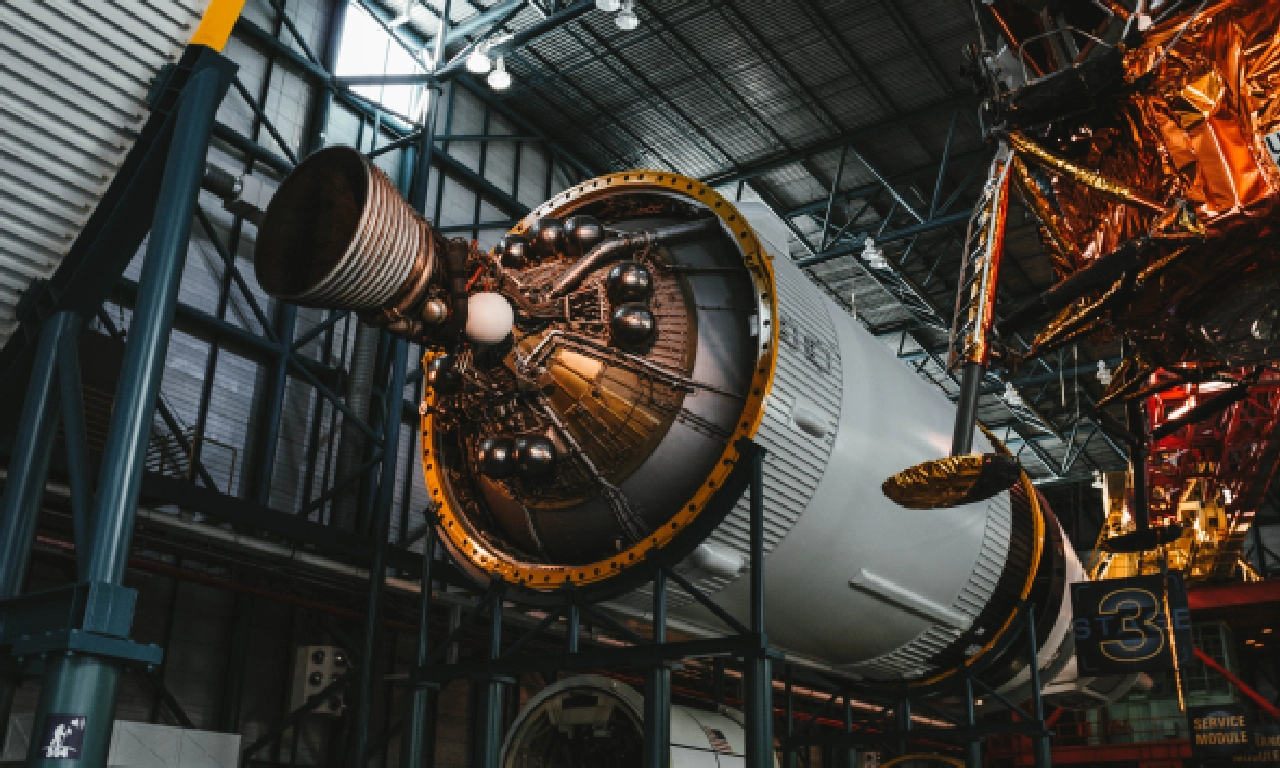
India’s space-tech ecosystem has expanded dramatically, driven by government support and private funding. After reforms in 2020–2021 that opened the sector to private firms, the number of registered Indian space startups skyrocketed into the hundreds. IN-SPACe, the national space regulator, reports over 1,200 firms on its portal by early 2025.
The government has also created dedicated funds, including a ₹1,000 cr allocation announced in 2024, and eased regulations to nurture launch vehicle, propulsion, satellite and UAV ventures. As a result, India is emerging as a global hub for cost-efficient aerospace innovation, powered by a new generation of rocket builders, satellite manufacturers and defence-tech companies.
Top Aerospace Startups India
Several deep‑tech startups now stand out for their advanced capabilities, market progress and partnerships with ISRO and global firms. The key players span rocket launchers, satellite platforms, propulsion, space situational awareness and defence UAVs.
We focus on companies with strong technology, funding or track record. Below is an overview of the Top 10 Aerospace Startups in India (see table), which include proven launchers, imaging constellations and drone/UAV leaders.
Top 10 Aerospace Startups
| Startup | Headquarters | Funding (approx) | Focus / USP |
|---|---|---|---|
| Skyroot Aerospace[1] | Hyderabad | ~$95 M (total) | Developing Vikram series small-sat launchers; first private Indian rocket (Vikram S in 2022). Modular, cost-efficient designs with 3D-printed engines. |
| Bellatrix Aerospace[2] | Bengaluru | ~$8 M (Series A) | In-space propulsion (electric and green thrusters) and orbital transfer vehicles. Pioneer in high-efficiency green propellant engines in India. Collaborating with ISRO; building a US manufacturing unit. |
| Agnikul Cosmos[3] | Chennai | ~$40 M (total) | Customizable small rocket (Agnibaan) with single-piece 3D-printed semi-cryogenic engine. First private launchpad; achieved India’s first private suborbital launch in 2024. |
| Pixxel[4] | Bengaluru | ~$71 M (total) | Hyperspectral Earth-imaging satellites; Google (Alphabet) invested in its $36 M Series B. Building a constellation (Firefly) for daily global monitoring. |
| Dhruva Space[5] | Hyderabad | ₹123 Cr (~$15 M) | Full-stack nanosatellite and microsatellite maker (missions LEAP, Thybolt). Already launched several satellites and has international EO contracts. Developing P30/P90 platforms; expanding manufacturing facility. |
| Digantara Aerospace | Bengaluru | ~$12.5 M (total) | Space situational awareness (SSA) and debris tracking platform (“Space-MAP”). Raised $10 M Series A in 2023. Developing a constellation of cubesats and analytics to map objects in orbit. |
| The ePlane Company | Hyderabad (IIT campuses) | (early stage) | Electric aviation tech – designing energy-efficient small aircraft for training and transport. (One of India’s first e-plane demonstrators.) |
| Tonbo Imaging | Mumbai | ₹475 Cr+ (total) | Advanced electro-optics and IR imaging for defence. Raised ₹175 Cr (~$20 M) in 2025. Supplies night-vision and reconnaissance sensors to military and civilian markets. Preparing for a pre-IPO. |
| IdeaForge | Mumbai | $20 M (Series B) | India’s largest drone manufacturer (founded 2007). Produces military and enterprise UAVs. Closed a $20M round in 2022 led by Florintree. Drones widely used by Indian Army, police forces, and enterprises (150+ patents). |
| Inspeq AI / Kawa Space | Bengaluru | (seed/angel) | Inspeq AI: (Bengaluru) AI safety/ops tools (now also solar propulsion R&D). Kawa Space: (Bengaluru) EO analytics & satellite startup. Early-stage, angel-backed ventures in space data and AI. |
List of Aerospace Startups India
Beyond the top-10, India’s aerospace startup sector is broad. Key categories include:
Launch Vehicle Startups: Private rocket firms like Skyroot Aerospace and Agnikul Cosmos develop small-lift orbital launchers. They target India’s emerging market for dedicated satellite launches.
Satellite Manufacturing: Companies such as Pixxel, Dhruva Space and Kawa Space build or operate small satellites/constellations for Earth observation and communications.
Space Situational Awareness: Startups like Digantara focus on tracking space debris and providing collision warning services.
UAV & Defence Tech: IdeaForge, NewSpace Research and others design drones, lidar and sensor systems for surveillance and defence. These dual-use technologies bolster India’s border security and civilian mapping needs.
Propulsion & Mobility: Firms like Bellatrix (electric/chemical thrusters) and Inspeq (AI in rocket testing) advance engine and spacecraft maneuvers.
Each category aligns with India’s aerospace goals. For example, low-cost launchers enable more domestic satellites; satellite imaging startups support agriculture and disaster management; UAV makers aid defense modernization; and propulsion innovators contribute to heavier-lift rocket and satellite networks. Collectively, these companies help India scale up its space economy.
Top 10 Aerospace Startups India
Skyroot Aerospace
Website: https://skyroot.in[6]
Address: Hyderabad, Telangana
Employee Size: 250–300
Funding Raised: ~$95M
Investors: GIC, Greenko, Sherpalo, Solar Industries
About:
Skyroot Aerospace is India’s first private company to successfully launch a rocket, the Vikram-S mission in 2022. The company focuses on small satellite launch vehicles built using advanced carbon composites and 3D-printed engines. By designing modular and cost-efficient launch systems, Skyroot aims to serve the global small-satellite market. Its R&D-driven culture and strong investor backing make it a central player in India’s rapidly expanding commercial space sector.
USP:
Skyroot’s key differentiator is its modular small-lift launch vehicle architecture that allows rapid configuration for different satellite payloads. The company extensively uses 3D-printed engines, carbon composites, and all-electric avionics for faster manufacturing cycles and lower launch costs. The Vikram series is optimised for quick turnaround missions, making Skyroot commercially competitive in emerging markets. Its ISRO-tested technologies enhance mission reliability for global satellite operators.
Bellatrix Aerospace
Website: https://bellatrixaerospace.com[7]
Address: Bengaluru, Karnataka
Employee Size: 80–120
Funding Raised: ~$11M
Investors: BASF Venture Capital, Inflexor, StartupXseed
About:
Bellatrix Aerospace specialises in in-space propulsion systems, electric thrusters, and orbital transfer vehicles. The company develops high-efficiency propulsion units used in satellites, orbital manoeuvring, and deep-space mobility. Its green propulsion technology and mission-agnostic design approach make it a preferred partner for satellite manufacturers. Bellatrix has collaborated with ISRO and multiple global operators, advancing India’s capabilities in mid-orbit mobility and in-orbit manoeuvring solutions.
USP:
Bellatrix stands out for its electric propulsion systems including microwave plasma thrusters and green propellants. These systems extend satellite life while reducing fuel mass. The company’s Orbital Transfer Vehicle helps reposition satellites more efficiently, lowering the cost of space access. With proprietary propulsion chemistry and compact engine designs, Bellatrix delivers lightweight systems suitable for modern NewSpace missions where efficiency and longevity are critical.
Agnikul Cosmos
Website: https://agnikul.in[8]
Address: Chennai, Tamil Nadu
Employee Size: 200–250
Funding Raised: ~$27M
Investors: Rocketship.vc, Pi Ventures, Speciale Invest
About:
Agnikul Cosmos focuses on ultra-customisable, small-lift orbital launches using its Agnibaan rocket, powered by India’s first fully 3D-printed rocket engine. Operating from India’s only private launchpad at Sriharikota, Agnikul has built a flexible mission architecture for satellites under 300 kg. Its engineering breakthroughs and early ISRO partnership position it as a critical innovator in India’s commercial launch ecosystem.
USP:
Agnikul’s USP is its single-piece 3D-printed engine, Agnilet, which simplifies manufacturing and accelerates launch readiness. Its modular launch vehicle design allows tailored mission profiles and rapid reconfiguration. With control over its private launchpad, Agnikul can minimise scheduling delays and offer quick-turn missions for global small-satellite operators. Its additive manufacturing approach sets a benchmark for next-gen lightweight launch systems.
Pixxel
Website: https://pixxel.space[9]
Address: Bengaluru, Karnataka
Employee Size: 120–150
Funding Raised: ~$71M
Investors: Google, Accenture, Lightspeed, Omnivore
About:
Pixxel builds a constellation of hyperspectral satellites capable of capturing Earth data across hundreds of spectral bands. Its analytics platform supports use cases across climate, agriculture, energy, and environmental monitoring. With clients including global agencies and enterprises, Pixxel is positioning India as a major supplier of high-resolution space analytics. Its long-term aim is to create a dense hyperspectral imaging network offering continuous planetary monitoring.
USP:
Pixxel’s hyperspectral imaging captures significantly richer data than traditional multispectral satellites, enabling detection of pollutants, crop stress, mineral presence, and environmental changes with high precision. The company offers a full-stack pipeline from satellite hardware to analytics, positioning itself uniquely in the global market. Its early entry into hyperspectral tech gives Pixxel a strong advantage as demand for precise environmental intelligence grows.
Dhruva Space
Website: https://druvaspace.com[10]
Address: Hyderabad, Telangana
Employee Size: 150–200
Funding Raised: ~$9M
Investors: Indian Angel Network, Blue Ashva Capital
About:
Dhruva Space builds satellite platforms, ground stations, and deployment systems for commercial and defence clients. Offering design, engineering, launch integration, and mission operations, the company supports end-to-end space mission needs. It has worked closely with ISRO and multiple international partners. Dhruva’s modular satellite architecture and mission-as-a-service offerings help organisations access space without requiring large technical teams or capital.
USP:
Dhruva Space offers modular satellite buses and plug-and-play services that significantly reduce development time. Its CubeSat and microsatellite platforms are designed for flexible mission goals, and its ground segment tools enable full lifecycle management. The company also provides launch integration and deployment, creating a complete mission ecosystem for clients seeking rapid and reliable space access.
Digantara
Website: https://digantara.co.in[11]
Address: Bengaluru, Karnataka
Employee Size: 70–100
Funding Raised: ~$12M
Investors: Peak XV Partners, Kalaari Capital
About:
Digantara builds Space Situational Awareness (SSA) systems to track space debris and provide real-time orbital insights. Its technology supports safer navigation for satellites in increasingly crowded low-Earth orbits. By combining sensors and advanced data analytics, the company is developing a global space traffic management layer. Digantara works with government agencies, satellite operators, and defence stakeholders to reduce collision risk and improve mission safety.
USP:
Digantara’s SSA platform uses a combination of ground-based sensors, in-orbit payloads, and proprietary algorithms to map orbital objects with high accuracy. Its DISHA mission aims to create one of the world’s most detailed debris-tracking systems. This data helps satellite operators perform efficient manoeuvres, enhancing operational safety. As orbital congestion increases, Digantara’s real-time tracking becomes essential infrastructure for spaceflight.
The ePlane Company
Website: https://eplane.ai[12]
Address: Chennai, Tamil Nadu
Employee Size: 120–160
Funding Raised: ~$6M
Investors: Speciale Invest, 3one4 Capital
About:
The ePlane Company builds electric aerial vehicles focused on lightweight logistics and future urban transport. Its e200 aircraft is designed for short-range cargo movement with VTOL capability. Originating from IIT Madras, the company aims to make aerial mobility practical within dense cities. Its aircraft combine efficient propulsion with compact sizing to enable rooftop-to-rooftop mobility and rapid intracity logistics.
USP:
The company’s USP is its compact, low-energy VTOL design optimised specifically for urban India’s tight spaces. Unlike heavy air taxis, its aircraft are engineered for short hops and rooftop operations. The hybrid thrust model offers longer endurance and lower operational cost. By strategically targeting logistics before passenger transport, ePlane builds a realistic adoption pathway for intracity aerial mobility.
Tonbo Imaging
Website: https://tonboimaging.com[13]
Address: Bengaluru, Karnataka
Employee Size: 200–300
Funding Raised: ~$25M
Investors: Artiman Ventures, Qualcomm Ventures
About:
Tonbo Imaging develops electro-optic and infrared imaging systems used across aerospace, defence, and security platforms. Its sensors support UAVs, night-vision scopes, missile seekers, and battlefield imaging systems. Using proprietary processing algorithms, Tonbo delivers high-clarity visuals in low-light, fog, and harsh environments. It supplies multiple global defence agencies and contributes to India’s indigenous advanced imaging ecosystem.
USP:
Tonbo’s USP is its fusion imaging technology, which blends infrared, visible, and computational imaging to produce clear visuals in extreme conditions. Its lightweight, rugged sensors integrate easily with drones, vehicles, helmets, and weapon systems. Backed by strong R&D and export-quality manufacturing, Tonbo offers high-performance imaging solutions at competitive cost, strengthening India’s aerospace and defence tech capabilities.
IdeaForge
Website: https://ideaforge.co.in[14]
Address: Mumbai, Maharashtra
Employee Size: 300–350
Funding Raised: ~$20M
Investors: Qualcomm, Infosys, Florintree Advisors
About:
IdeaForge is India’s leading UAV manufacturer, known for defence-grade drones used by the military, police, and disaster-response teams. Its UAVs offer long endurance, stable flight, and autonomous capabilities for surveillance and mapping. Thousands of IdeaForge drones operate across India, supporting high-stakes missions daily. The company is recognised for its indigenous design, rugged engineering, and reliable mission performance.
USP:
IdeaForge specialises in long-endurance UAV design and field-ready drones that perform in high-altitude and high-wind environments. Its proprietary controllers, carbon-fibre airframes, and AI-supported mission systems provide superior reliability. Designed for rugged terrains, IdeaForge UAVs deliver real-time intelligence crucial for defence and public-safety operations. Their proven deployment record makes them India’s strongest drone manufacturer.
Kawa Space
Website: https://kawa.space[15]
Address: Mumbai, Maharashtra
Employee Size: 50–80
Funding Raised: ~$2M
Investors: Paytm, 100x.VC, Others
About:
Kawa Space builds satellite-powered data platforms for finance, agriculture, insurance, and climate-related use cases. Rather than manufacturing satellites, the company aggregates and processes space-based datasets into ready-to-use intelligence. Its products help enterprises model risk, forecast operations, and automate decision systems. Kawa Space aims to make space analytics accessible to everyday industries that traditionally lack specialised geospatial expertise.
USP:
Kawa Space differentiates itself through a software-first approach to satellite analytics. It integrates multi-source space data with machine learning, converting raw imagery into sector-specific insights such as risk indicators and climate intelligence. Its scalable architecture enables rapid deployment across industries, offering actionable outputs without requiring clients to work directly with satellite data.
Space Startups in India Listed in Stock Market
Currently no pure space-focused startup is publicly traded on Indian markets. Instead, the closest equivalents are larger defense and aerospace companies. Publicly listed firms such as Hindustan Aeronautics (HAL) and Bharat Electronics (BEL) are PSU giants involved in satellites and launch programs. Specialized suppliers like Data Patterns (India) Ltd. offer satellite electronics and are listed on the NSE/BSE. Others include Bharat Dynamics (missiles and space systems), Apollo Micro Systems (avionics), and MTAR Technologies (rocket engine and propulsion components), all of which cater directly to India’s space and defense ecosystem.
For example, MTAR manufactures cryogenic engine parts and satellite valves for ISRO. In short, while startups themselves are not yet listed, several public aerospace and defense companies provide indirect exposure to India’s space sector.
Growth of Space Startups in India
India’s space ecosystem has expanded at an unprecedented pace. Government officials noted that the country had only a “single-digit” number of private space ventures a few years ago; by 2024, the count crossed 200+ space startups, with the rise documented in government briefings on private space participation. IN-SPACe further reports 1,200+ space-sector companies registered by early 2025, reflecting broader industry formalisation[16].
This surge is driven by India’s 2020 space policy reforms, improved access to ISRO facilities[17], and the government’s ₹1,000 Cr space startup fund to advance private innovation. Venture capital now flows into launch vehicles, satellites, propulsion, Earth observation and mission operations. Startups like Skyroot, Agnikul, Dhruva Space, Pixxel and IdeaForge now contribute directly to India’s commercial launch capacity, defence imaging, and satellite-based services - marking a shift from a government-only sector to a competitive private space economy.
Engineering and Defence-Focused Aerospace Startups
India’s aerospace progress also relies on engineering-first companies developing propulsion systems, avionics, sensors, AI-driven test automation and advanced materials. Firms such as Manastu Space, Vyoma Space, SpaceFields and Inspeq AI build critical subsystems that support national missions - ranging from high-efficiency propulsion and satellite components to mission-control software and testing frameworks. By enabling domestic development of engines, control electronics, satellite structures and test facilities, they reduce reliance on foreign suppliers and strengthen India’s strategic autonomy.
A parallel segment consists of defence and dual-use innovators. IdeaForge, NewSpace Research, Tonbo Imaging and Digantara deliver UAV platforms, imaging systems and space-situational-awareness tools used by armed forces and government agencies. Defence procurement reforms and innovation programs have accelerated their adoption, creating steady demand for drones, sensors and surveillance systems. This dual-use dynamic—civil applications plus defence-grade performance forms a significant driver of India’s aerospace manufacturing and R&D capability.
Emerging and Next-Generation Aerospace Startups
Startups founded between 2022 and 2025 represent India’s future deep-tech wave. Examples include Starling Space Technologies (rocketry) and Orbit Beyond (reusability), alongside early-stage teams developing micro-thrusters, electric-propulsion modules, autonomous drone swarms, satellite-swarm coordination, lightweight composites and orbital-refueling technologies. Many originate from university research or defence labs and benefit from seed funding and challenge grants.
These ventures tackle high-risk, frontier problems - AI-driven mission planning, new propulsion architectures, reusable launch concepts and advanced avionics. While still small, they signal India’s transition toward next-generation space technologies, ensuring that the pipeline of innovation remains strong as demand grows for on-orbit services, affordable launches and advanced defence systems.
Conclusion
India’s aerospace startup scene is being transformed by supportive policies, deep‑tech funding and international collaboration. Government initiatives like IN-SPACe and the new space focused venture funds are nurturing innovation and giving first-time founders the support they need to start a startup and grow in the aerospace ecosystem.. Meanwhile, private capital flows into rockets, satellites and propulsion systems are growing rapidly. In the next decade we can expect breakthroughs in reusable launchers, integrated defence-space platforms, and satellite-as-a-service models.
The 200+ start-ups already active are positioning India to become a top-5 space economy. As a full stack venture builder, GrowthJockey aims to channel global partnerships and funding into these ventures, helping India’s startups achieve global scale and
Related Blogs
If you’re exploring startup ideas, business models, or sector-specific opportunities, the guides below can help you go deeper. Each resource covers a different stage or industry within the startup ecosystem - making it easier to compare ideas, understand execution paths, and identify opportunities relevant to your goals.
FAQs
Q1. What are the leading aerospace startups in India?
The field is diverse. Leading names include Skyroot Aerospace (small-sat launchers), Pixxel (hyperspectral imaging satellites), IdeaForge (drones/UAVs), Agnikul Cosmos (custom rocket engines), and Bellatrix Aerospace (satellite thrusters). Each has demonstrated advanced tech and secured significant funding.
Q2. How many space startups does India have?
By late 2024 India had over 200 private space startups, and industry data show more than 1,200 companies registered on the space innovation platform. The count is rising fast with new firms emerging each year.
Q3. Are any aerospace startups listed on stock exchanges?
Not yet as pure space startups. Public players like Hindustan Aeronautics (HAL) and Bharat Electronics (BEL) are listed and work on space projects. Some listed companies, e.g. Data Patterns and MTAR Technologies, supply aerospace components. But the new private space companies remain unlisted for now.
Q4. How is the aerospace startup sector funded?
Mostly through venture capital and strategic investors. For example, Skyroot Aerospace has raised ~$95M from investors like Temasek, and Pixxel raised $36M with Google’s participation. The government is also funding the sector – in 2024 it launched a ₹1,000 Crore VC fund for space startups, and agencies like ISRO have schemes to support private R&D.
Q5. What makes India attractive for aerospace startups?
India offers lower development costs, strong engineering talent, and a growing domestic market. Government policies (IN-SPACe, ‘Make in India’) give startups access to ISRO facilities and regulatory support. The country’s concentration of IT and telecom firms also provides venture capital and partnerships. Plus, global collaborations (e.g. with U.S. and Israel) give Indian startups technology and market access. These factors combine to make India a leading hub for cost-efficient space innovation.
- Skyroot Aerospace - Link ↑
- Bellatrix Aerospace - Link ↑
- Agnikul Cosmos - Link ↑
- Pixxel - Link ↑
- Dhruva Space - Link ↑
- https://skyroot.in - Link ↑
- https://bellatrixaerospace.com - Link ↑
- https://agnikul.in - Link ↑
- https://pixxel.space - Link ↑
- https://druvaspace.com - Link ↑
- https://digantara.co.in - Link ↑
- https://eplane.ai - Link ↑
- https://tonboimaging.com - Link ↑
- https://ideaforge.co.in - Link ↑
- https://kawa.space - Link ↑
- early 2025, reflecting broader industry formalisation - Link ↑
- improved access to ISRO facilities - Link ↑









Industries
Growth
Operations
Technology