
AI, Automation, and the EV Efficiency Frontier
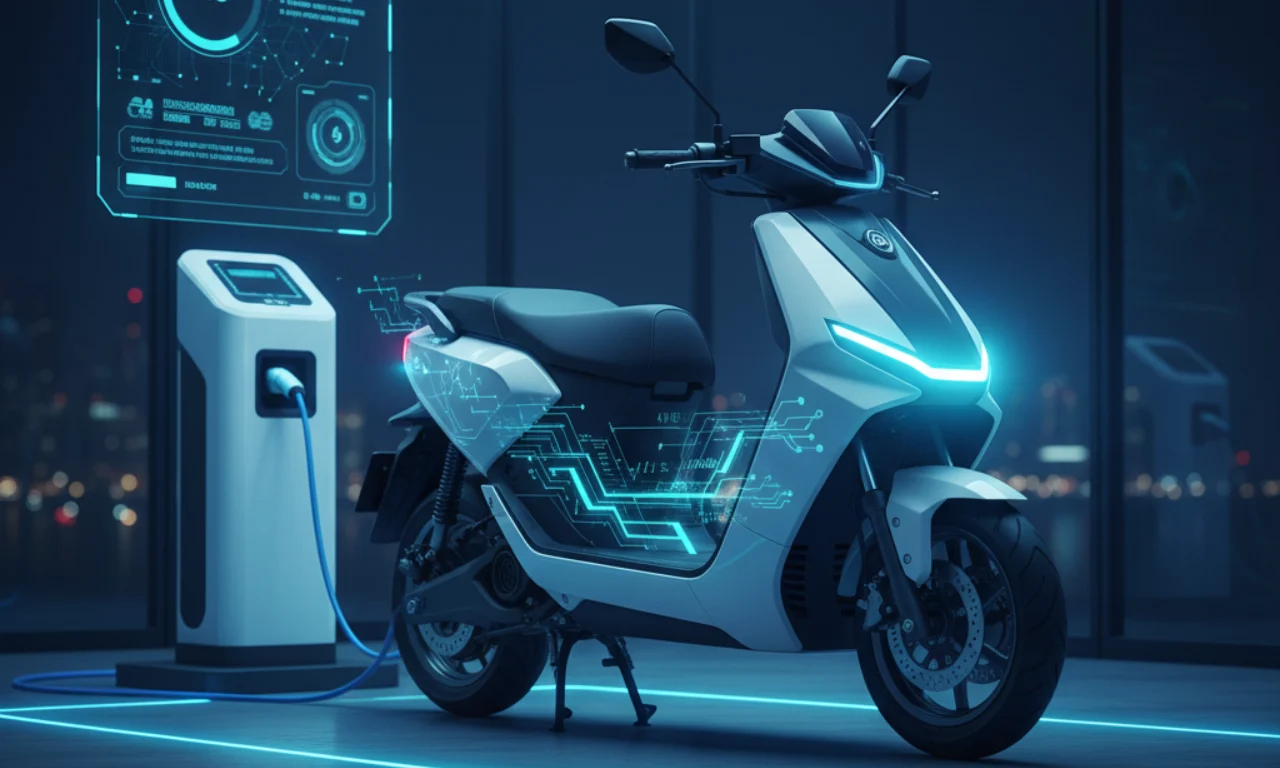
As India’s electric vehicle market matures, the conversation is shifting from growth to efficiency. The question is no longer how fast can we scale, but how smart can we scale.
That shift is being driven by AI and automation technologies transforming every layer of the EV value chain, from factory floors to connected vehicles.
The result is a new kind of competitiveness: one measured in data velocity, machine intelligence, and operational precision.
This is the EV efficiency frontier where automation reduces cost, AI amplifies insight, and every decision is powered by data.
Why Efficiency Defines the Future of Mobility
India’s EV industry is entering a capital-disciplined phase. Subsidies are tapering, margins are tightening, and investors now underwrite operational resilience instead of hype.
Efficiency is no longer a buzzword it’s survival.
Automation and AI deliver that edge by creating three layers of optimization:
-
Smarter production through digital manufacturing and robotics.
-
Predictive intelligence across battery, supply chain, and service.
-
Personalized engagement through connected data ecosystems.
The EV companies that master these layers will define the future of mobilityefficient, intelligent, and profitable.
AI in Manufacturing: Building Smarter Cars and Smarter Factories
The first efficiency revolution begins at the factory. Traditional automotive assembly relied on linear workflows and manual quality control. EV production, however, demands higher precision, tighter tolerances, and faster iteration cycles.
AI-driven manufacturing enables:
-
Real-time production analytics to detect anomalies before defects occur.
-
Computer-vision quality control that improves inspection accuracy by over 90%.
-
Robot-human collaboration for flexible assembly and adaptive production lines.
According to McKinsey’s automotive AI research, automation can increase equipment availability by 20% and reduce maintenance costs by 10–15%.
For OEMs, this isn’t just productivity it’s profitability.
Predictive Maintenance: The Hidden Efficiency Engine
Once vehicles leave the factory, AI’s role extends into the field.
EVs generate terabytes of performance data from battery cycles to braking patterns. By applying predictive analytics, OEMs can forecast component failures, optimize servicing schedules, and reduce downtime dramatically.
AI-powered maintenance transforms service economics by:
-
Anticipating failures before they occur.
-
Reducing unplanned downtime by 30–40%.
-
Improving spare-part planning and warranty cost management.
For fleet operators and logistics networks, predictive algorithms are becoming as critical as the vehicles themselves.
The goal isn’t just to fix faster it’s to never fail unexpectedly.
The Smart Battery: AI Meets Energy Intelligence
Battery performance is the soul of EV efficiency.
AI is now embedded in Battery Management Systems (BMS) to monitor health, predict degradation, and balance charging cycles.
Machine learning algorithms track parameters like temperature, charge rate, and driving conditions to:
-
Extend battery life by up to 15–20%.
-
Optimize charging patterns dynamically.
-
Predict and prevent thermal runaways.
This evolution is critical to India’s battery industry, where costs remain the biggest hurdle to profitability.
By turning energy storage into a data problem, AI converts uncertainty into longevity.
Automation in Supply Chains: From Just-in-Time to Just-in-Insight
EV manufacturing involves complex global networks cells from Korea, chips from Taiwan, and powertrain components from Pune. Manual coordination is no longer viable.
AI-led supply chain automation integrates real-time data from production, logistics, and inventory systems to forecast disruptions before they occur.
It identifies where risk lies whether in material shortages, delayed shipments, or geopolitical events and recalibrates procurement automatically.
The shift is from reactive sourcing to predictive sourcing.
For India’s OEM automotive industry, this means transforming the supply chain into a living network adaptive, transparent, and intelligent.
Connected Cars and the Customer Efficiency Loop
Automation doesn’t end at the factory gate it extends into customer relationships.
EVs are now connected devices on wheels, capable of sending continuous feedback loops to OEMs and service teams.
Through in-car telemetry, AI can personalize driver assistance, predict energy use, and automate maintenance scheduling.
Meanwhile, automation in CRM systems ensures every lead, service request, or software update is handled instantly.
This “closed-loop intelligence” builds retention while cutting cost-per-interaction by up to 40%.
In the future of automotive marketing, data becomes both the medium and the message.
The Economics of Automation: From Cost to Capability
AI and automation are not just technologies they’re economic multipliers.
Every hour saved, every fault predicted, and every insight automated compounds into capital efficiency.
For EV startups and OEMs, this translates into:
-
Shorter production cycles.
-
Lower service costs.
-
Higher energy and asset utilization.
-
Faster break-even on capex investments.
In a market moving from subsidy-led growth to profit-led competition, automation is the new profit center.
The Human Layer: Redefining Work in the EV Age
Automation doesn’t eliminate people it elevates them.
The most efficient EV companies are those retraining their workforce to manage data, analytics, and robotic systems.
AI augments human judgment by freeing teams from repetitive tasks and enabling more strategic decision-making.
The EV efficiency frontier is not man versus machine it’s man with machine.
The GrowthJockey View: Engineering the Next Efficiency Curve
The next frontier for India’s EV sector won’t be won on subsidies or speed—it will be won on intelligence.
AI and automation create that compounding advantage: efficient production, predictive maintenance, adaptive energy management, and digital customer engagement.
At GrowthJockey, we help enterprises design that intelligence stack linking AI analytics (Intellsys.ai) with operational execution and enablement platforms like Ottopilot. We transform EV operations into connected ecosystems.
GrowthJockey is a venture architect for enterprises helping OEMs and EV innovators build intelligent, efficient, and scalable systems.
We combine AI, automation, and operational design to deliver measurable outcomes improving efficiency, profitability, and customer experience across the automotive lifecycle.
Our mission is simple: make every EV smarter, faster, and more sustainable through intelligent design.
FAQs
Q1. How is AI improving EV manufacturing efficiency?
Ans. AI enables real-time quality control, predictive maintenance, and production automation reducing defects and downtime while optimizing throughput.
Q2. What role does automation play in EV supply chains?
Ans. Automation connects procurement, logistics, and inventory data to predict and prevent disruptions, ensuring reliability and cost control.
Q3. How do AI-driven batteries improve profitability?
Ans. Intelligent BMS extends battery life, optimizes charging, and lowers replacement costs, improving vehicle-level unit economics.
Q4. What is the EV efficiency frontier?
Ans. It’s the next phase of evolution in the EV industry, where data, automation, and intelligence create exponential improvements in cost and performance.









Industries
Growth
Operations
Technology