
Asset-Light Model for Interior Design Startups
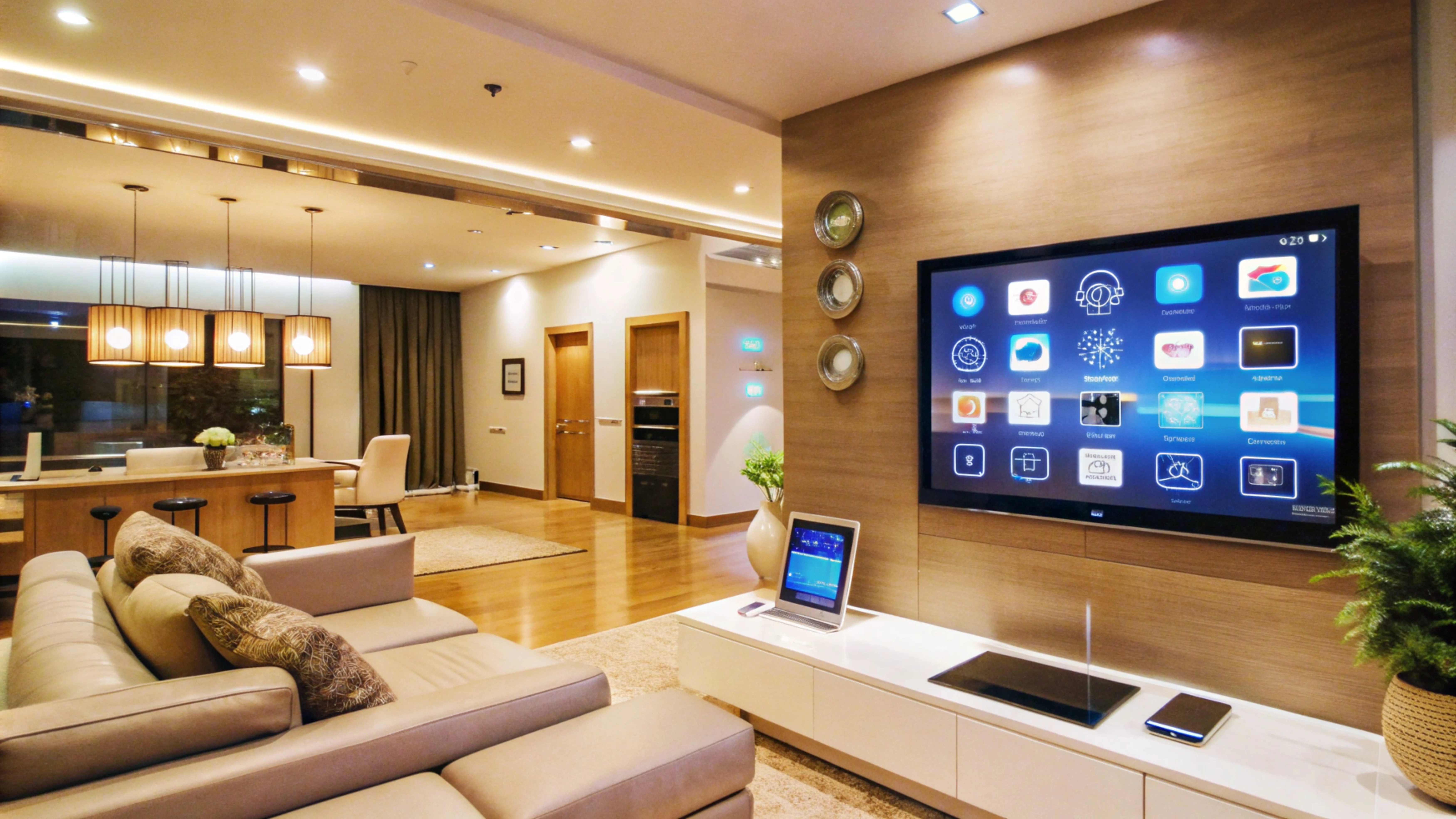
This guide is for founders and operators building ventures in the home improvement and interior design space, and for investors evaluating capital-efficient models in this category.
The interior design industry has long been associated with heavy capital requirements: physical showrooms, large inventories, and expensive skilled labour.
Yet a new wave of startups is proving that scale does not require ownership. By adopting capital-efficient, orchestration-led architectures, these ventures are growing faster, iterating at lower cost, and attracting capital-efficient investors.
What Is the Asset-Light Model in Interior Design
The asset-light model is a business architecture where a startup minimises ownership of physical infrastructure. Instead, it orchestrates third-party resources like suppliers, contractors, designers, and logistics providers, through a software layer.
Not all asset-light businesses are marketplaces. Some are service orchestrators with technology leverage: they manage the customer experience and delivery coordination without owning the underlying supply.
In the context of interior design, this means a startup may offer end-to-end home transformation services without owning a single piece of furniture, employing a full-time designer, or running a physical store. The value lies in curation, coordination, and customer experience, and not capital ownership.
Why It Matters for Founders and Investors
For a startup founder, this translates directly into better unit economics, a faster path to profitability, and a more attractive fundraising narrative. Structurally, asset-light businesses tend to outperform capital-intensive peers on return metrics because:
- Gross margins are more stable as there are no inventory write-offs or depreciation drag
- Contribution margins improve with scale as variable costs are distributed across a larger network
- Working capital cycles compress when payment terms are engineered correctly
Research on platform businesses consistently shows that orchestration-led models reach profitability materially faster than capital-intensive peers in consumer categories, and with significantly lower dilution risk for founders.
The Four Pillars of an Asset-Light Interior Design Venture
Asset-light is not simply a cost-cutting strategy. It is a deliberate architectural decision that reshapes how a business creates and captures value.
1. Marketplace Over Inventory Rather than stocking furniture and decor, asset-light startups build marketplaces that connect consumers with verified suppliers, artisans, and manufacturers. The startup earns through commissions, listing fees, or fulfilment margins without bearing inventory risk.
Pepperfry's early marketplace model demonstrated this clearly. By onboarding third-party sellers and managing the discovery and transaction layer, the platform avoided the working capital trap that plagues traditional retailers.
2. On-Demand Design Talent Over In-House Teams Instead of building large in-house design teams, asset-light ventures leverage freelance designer networks or creator marketplaces. Designers are onboarded, verified, and deployed on-project, earning per engagement rather than drawing fixed salaries.
This model scales design capacity without scaling headcount. A venture can serve 500 clients this quarter and 5,000 next quarter without proportional HR costs.
3. Technology as the Operating Core The connective tissue of any asset-light interior design startup is its software layer. From AR-powered room visualisers and AI-based design recommendation engines to project management dashboards and contractor coordination tools : technology replaces what physical infrastructure once did.
Platforms that layer actionable intelligence on top of customer interactions help design teams and operators make faster, data-backed decisions across the project lifecycle.
4. Modular Service Bundles Over Full-Suite Delivery Asset-light ventures do not attempt to own the entire value chain. Instead, they offer modular, stackable services:
- A basic consultation and moodboarding package
- A mid-tier 3D visualisation and procurement coordination service
- A premium end-to-end project management offering
This tiered approach lowers customer acquisition barriers while enabling clear upsell pathways which a key driver of lifetime value in the home improvement category.
Capital Efficiency: The Real Competitive Advantage
For founders and operators designing new ventures, the capital efficiency of this model offers a fundamentally different deployment thesis.
A traditional interior design firm may need several crores (INR 5–8 crore in many urban markets) to open a single experience centre with adequate inventory depth. An orchestration-led startup can achieve comparable geographic coverage and revenue potential with a fraction of that capital, deploying instead toward technology, brand, and customer acquisition.
This dynamic creates a flywheel effect:
- Lower burn enables longer runway
- Longer runway enables product iteration
- Better product enables improved unit economics
- Stronger unit economics attract superior capital
1. Working Capital Optimisation
One of the least-discussed advantages of this model is its impact on working capital cycles. When a startup does not hold inventory, it does not tie up capital in unsold stock. When it uses on-demand contractors, it does not pay labour before revenue is earned.
The result can be a negative or near-zero cash conversion cycle, if structured well. This is a trait shared by the world's most capital-efficient businesses, from Amazon Marketplace to Airbnb. Interior design startups that engineer this into their operating model from day one build a structural moat that capital-heavy competitors cannot easily replicate.
2. Where This Model Breaks
No model wins in every context. Founders should be clear-eyed about the conditions under which the asset-light approach faces real structural limits.
High-end luxury execution: At the premium end of the market, clients expect white-glove, seamlessly coordinated delivery. A fragmented contractor network, however well-rated, can introduce variance that damages brand perception irreparably.
Fragmented or unreliable contractor markets: In Tier 2 and Tier 3 cities, the supply of skilled, reliable contractors may be thin. An asset-light model that depends on a dense supply network cannot be transplanted directly into markets where that supply does not yet exist.
Weak supply standardisation: When product quality and delivery timelines vary significantly across suppliers, the burden of quality control falls back on the platform, negating some of the cost advantages of the model.
The fix in each case is not to abandon the model but to engineer mitigants: supplier exclusivity agreements at the premium end, supply development investments in thin markets, and standardisation protocols embedded into onboarding.
Case Studies: Who Is Building This Well
Several ventures globally and in India are demonstrating the viability of capital-efficient models in the interior design and home improvement space.
Houzz, once valued at over $4B, built a marketplace connecting homeowners with professionals, without owning design or construction delivery. The platform's monetisation came through software subscriptions for professionals and advertising, a high-margin revenue stack built on top of an asset-light foundation.
In India, platforms like HomeLane and Livspace have iterated toward asset-light elements, using technology to coordinate modular kitchen and interior projects with third-party factory networks, though both have also made selective vertical integration moves to address quality control challenges.
The next generation of ventures in this space will go further, embedding AI design agents, building creator-led design communities, and leveraging data from completed projects to improve matching algorithms and reduce project failure rates.
The Venture Architect's Lens: Where to Build Next
From a new venture design perspective, the asset-light interior design space presents several high-conviction whitespaces.
**1. B2B2C channel: ** It remains largely untapped. Real estate developers, co-living operators, and hospitality chains need recurring, scalable interior design solutions. A capital-efficient platform that serves these institutional buyers, aggregating design talent and supplier networks under a single SLA, can command significantly higher margins and lower CAC than consumer-facing alternatives.
**2. Vernacular design segment: ** It is another structural opportunity. India's diverse regional aesthetics, from Rajasthani haveli motifs to Kerala wooden architecture, remain poorly served by mainstream platforms. A venture that curates and commercialises these aesthetics through a marketplace model can build a globally differentiated brand while empowering local artisans.
**3. Subscription-based design services: ** It offering monthly or quarterly home refresh packages curated by AI and executed through on-demand designer networks, represent a model with strong recurring revenue characteristics and low churn potential.
Conclusion
The asset-light model is not simply a tactical choice for early-stage interior design startups. It is a strategic philosophy that shapes every dimension of how a venture creates value.
By decoupling service delivery from capital ownership, founders build businesses that scale with demand, survive market cycles, and generate the return profiles that attract institutional capital.
The interior design industry's transformation is underway. The ventures that will lead it are not those with the largest showrooms or the deepest inventories. They are the ones that have mastered orchestration, built trust at scale, and used technology to turn fragmented supply into seamless customer experiences.
Build Your Asset-Light Interior Design Venture with GrowthJockey
GrowthJockey partners with founders and enterprises to architect and scale ventures at the intersection of capital efficiency and market disruption. Here is what that looks like in practice:
- Validate your model: Test assumptions on unit economics, supply network viability, and market readiness before committing capital
- Design unit economics: Build contribution margin models that hold at 500 clients and at 5,000
- Build your technology stack: From customer-facing design tools to back-end contractor coordination platforms
Through Intellsys.ai[1], GrowthJockey enables design-led businesses to convert consumer insights into actionable growth strategies, building not just products, but enduring ventures.
→ Book a strategy session with GrowthJockey
FAQs
Q1. What is the asset-light model in the context of interior design startups? Ans. The asset-light model is a business architecture where startups minimise physical infrastructure ownership and instead orchestrate third-party designers, suppliers, and contractors through a software layer to deliver interior design services.
Q2. How do asset-light interior design startups maintain quality without owning delivery? Ans. Quality is maintained through rigorous supplier and contractor onboarding, real-time project tracking, milestone-based payment structures, and customer feedback systems that continuously rate and filter the network of service providers.
Q3. Is the asset-light model viable for premium or luxury interior design segments? Ans. It is viable at premium price points, but requires additional engineering: supplier exclusivity agreements, dedicated project managers, and high-trust customer experience infrastructure. The model faces real limits at the very top of the luxury market, where delivery variance is not tolerable.
Q4. What are the biggest risks of building an asset-light interior design venture? Ans. The primary risks are quality inconsistency across a distributed delivery network, brand commoditisation in a replicable model, and customer trust deficits in a high-stakes purchase category. Founders who invest early in trust infrastructure, supply standardisation, and brand differentiation are best positioned to mitigate these risks.









Industries
Growth
Operations
Technology