
The B-B-P Framework Explained: How Buy, Bundle, and Partner Strategies Build Captive Maturity
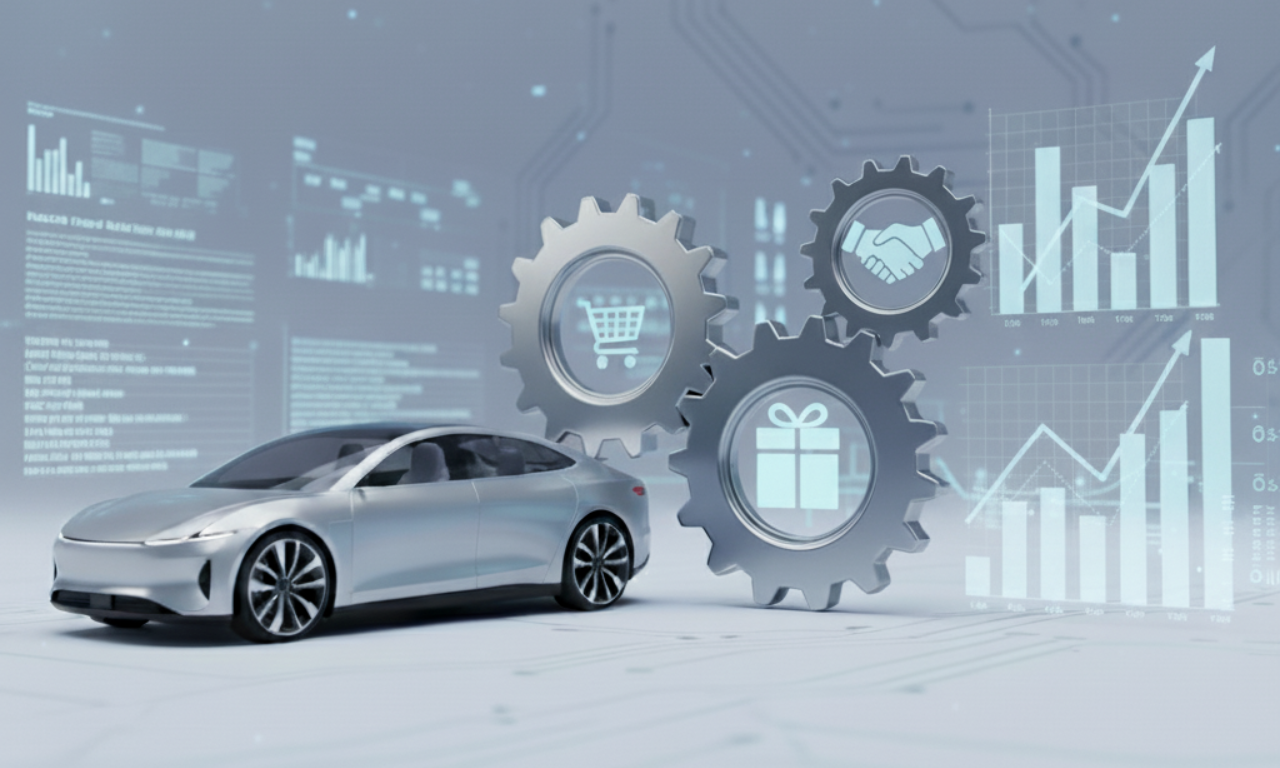
The race for EV profitability is no longer just about selling more vehicles it’s about owning the financial engine that powers those sales.
Across India’s fast-growing EV landscape, OEMs are discovering that financing is not a service to outsource but a strategy to master.
The question is how to mature that strategy without overextending capital or time.
The answer lies in a simple but powerful roadmap Buy, Bundle, Partner, or what we call the B-B-P Framework.
Why Captive Maturity Matters
India’s EV credit ecosystem is still young. Fewer than 10 % of EVs are financed by OEM captives, compared with more than 70 % globally.
Without captive maturity, OEMs remain dependent on third-party lenders, losing data, margins, and dealer control.
Captive maturity flips that dynamic. A mature captive doesn’t just fund vehicles it integrates finance, insurance, and service into one seamless customer loop.
The B-B-P framework provides a step-by-step pathway to reach that maturity, balancing ownership, scalability, and profitability.
Stage 1: Buy Owning the Credit Engine
From Outsourced Lending to In-House Control
“Buy” is where the captive journey begins. OEMs either acquire an existing NBFC or establish an in-house finance arm.
This ownership gives manufacturers visibility into underwriting, approvals, and dealer funding the levers that directly influence conversion rates and margins.
What OEMs Gain
-
Faster Approvals: Control over underwriting reduces turnaround from days to hours.
-
Dealer Liquidity: Captive oversight keeps stock-to-sale cycles tight.
-
Data Ownership: Every loan becomes a data point for pricing, risk, and retention.
When Tata Motors created Tata Motors Finance, it shifted from a sales-led to a finance-led growth model. In less than five years, its captive penetration doubled while EBIT margins rose by 170 basis points.
What to Watch
Owning the credit engine also means managing regulatory compliance, liquidity, and risk modeling. The goal is control, not over-exposure building a foundation strong enough to support the next layer of maturity.
Stage 2: Bundle - Turning Credit into Customer Lifetime Value
Once OEMs control credit, the next step is bundling connecting every financial touchpoint into a single value stack.
The Power of Bundling
-
Insurance + Finance: Integrate coverage during checkout.
-
Battery + Leasing: Stabilize EMIs through residual-value predictability.
-
Service + Subscription: Extend engagement beyond the sale.
Bundling converts a one-time transaction into recurring revenue. Every renewal, replacement, or upgrade flows through the same captive channel, multiplying lifetime value.
Why It Works
-
Predictable Cash Flow: Cross-sell and up-sell generate steady income.
-
Customer Stickiness: Integrated offerings make switching brands costly.
-
EMI Stability: Residual-value protection smooths payment volatility.
Captives that successfully bundle financial and ownership services see 2× higher cross-sell conversions and 4–5 % more stable EMIs.
The Digital Enabler
Digital platforms make bundling frictionless.
AI-driven analytics can suggest battery upgrades, trigger insurance renewals, or pre-approve service credit all inside one connected app.
When finance becomes embedded across ownership stages, customer loyalty becomes measurable.
Stage 3: Partner - Scaling Without Balance-Sheet Burden
Even the strongest captives can’t fund growth alone. That’s where Partner completes the framework.
The Co-Lending Revolution
Through co-lending, OEM captives collaborate with banks or fintechs to share risk and expand reach. The captive originates and manages the loan, while partners supply liquidity.
Benefits
-
40 % Faster Scaling: OEMs access new geographies without new licenses.
-
Capital Efficiency: Shared risk keeps balance sheets light.
-
Data Retention: OEMs keep the analytics while partners earn yield.
Strategic Partnerships in Action
-
Fintechs bring agility, AI underwriting, and user-centric UX.
-
Banks contribute regulatory depth and cheap capital.
-
OEMs contribute distribution and trust.
Together, they form an ecosystem where every player wins and the customer experiences near-instant credit at the point of sale.
The B-B-P Flywheel
When executed together, Buy → Bundle → Partner creates a self-reinforcing flywheel:
-
Buy builds the core credit engine.
-
Bundle multiplies customer value and retention.
-
Partner fuels exponential scale.
Each layer feeds the next, moving the captive from transactional financing to a full-stack profitability model.
Measuring Captive Maturity
As OEM financing evolves from Emerging (Buy) to Mature (Partner), credit control shifts from partial to a shared data loop, approval speed accelerates from 3–5 days to under 30 minutes, dealer liquidity moves from moderate to real-time, cross-sell rates grow from 1× to over 3×, and EBIT impact rises from +50 bps to above +170 bps.--
Common Pitfalls
Even strong captives stumble when they:
-
Scale Too Fast: Rapid AUM growth without risk controls strains liquidity.
-
Ignore Data Integration: Disconnected credit and CRM systems waste insights.
-
Undervalue Partnerships: Over-independence limits speed and innovation.
Avoiding these traps keeps the B-B-P flywheel stable.
The Digital Backbone of the B-B-P Framework
Technology glues every layer together.
From e-KYC and AI underwriting to predictive analytics, digital platforms ensure compliance, speed, and personalization.
A digital backbone turns captive maturity from a concept into an operational reality.
Beyond Captives: Building an Ecosystem Advantage
The B-B-P framework’s ultimate goal is not just profitable lending it’s ecosystem dominance.
When an OEM owns its financing flywheel, every stakeholder benefits:
-
Customers enjoy faster, cheaper credit.
-
Dealers gain liquidity and inventory turnover.
-
OEMs secure margins and recurring engagement.
-
Partners share growth without friction.
This is how financing evolves from a support service into a strategic moat protecting brand share and powering long-term growth.
The Future of Captive Maturity in India
By 2030, India’s EV finance opportunity may reach ₹3.7 lakh crore. OEMs that adopt the B-B-P framework early will capture disproportionate value owning not only vehicles sold but relationships sustained.
Captive maturity will separate OEMs that sell vehicles from those that build financial ecosystems.
Those ecosystems, in turn, will define the profitability architecture of India’s EV decade.
At GrowthJockey, we design frameworks that turn strategic intent into executable reality.
As full-stack venture architects, we help enterprises build and scale finance ecosystems grounded in data, design, and digital intelligence.
Our venture tools, including Intellsys.ai , OttoPilot and Ottoscholar, enable organizations to turn insights into action transforming finance, data, and experience into one connected growth engine.
FAQs
Q1. What does the B-B-P framework stand for?
Ans. It stands for Buy, Bundle, and Partner - a three-stage roadmap for OEMs to build mature captive finance models balancing control, value, and scale.
Q2. How does the framework improve OEM profitability?
Ans. By owning credit (Buy), monetizing the lifecycle (Bundle), and scaling through alliances (Partner), OEMs protect margins, grow cross-sell revenue, and cut financing costs.
Q3. Can smaller OEMs apply the B-B-P model?
Ans. Yes - OEMs can begin with digital partnerships, leveraging fintech alliances to gain data control and enhance customer experience without large capital outlay or full lending licenses.
Q4. What role does technology play in captive maturity?
Ans. Digital platforms drive faster approvals, AI-led risk management, and end-to-end visibility - making the Buy-Bundle-Partner framework scalable and profitable for modern OEMs.









Industries
Growth
Operations
Technology