
How Banks and NBFCs Are Powering EV Growth Through Green Loans
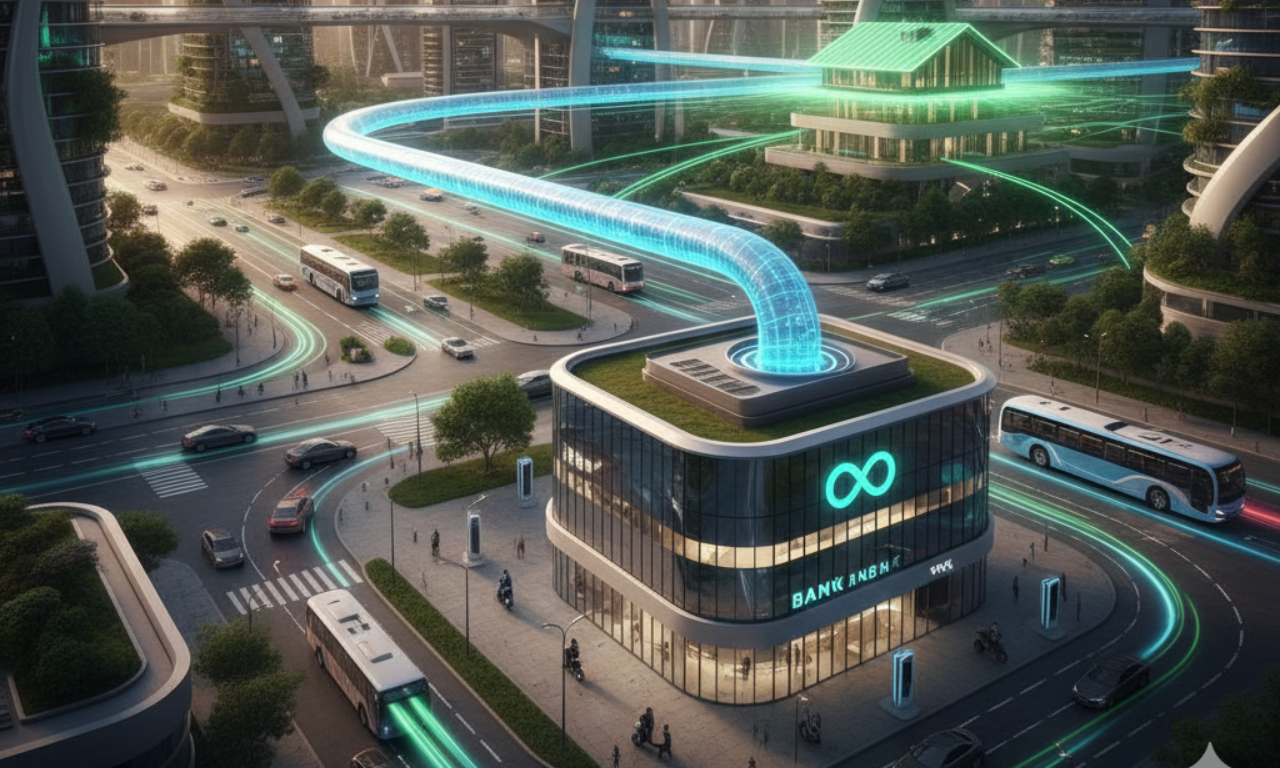
As India accelerates toward net-zero goals and sustainable transport, the financial sector finds itself at the center of this transformation. Electric vehicles (EVs) represent one of the most capital-intensive consumer transitions of this decade - and success depends heavily on how efficiently credit flows into the ecosystem.
In this equation, banks and non-banking financial companies (NBFCs) play the dual role of enablers and innovators. Their ability to scale green loans, embed AI in banking and finance systems, and partner with fintechs determines the pace at which India’s EV revolution unfolds.
This article explores how these institutions are leveraging technology, partnerships, and embedded finance to power the next wave of customer financing in the EV domain.
Why Financing Is the Engine of EV Growth
The financing bottleneck
EVs are fundamentally more expensive upfront than internal combustion engine (ICE) vehicles. Batteries alone account for 35–40 % of the cost, making customer financing indispensable. According to NITI Aayog and RMI India, India’s EV financing market could reach ₹3.7 trillion by 2030
However, most automobile financing is provided by traditional lenders using conventional risk models that often fail to capture the realities of EV ownership - variable residual value, uncertain resale market, and evolving technology risk.
The result: slower credit approvals, higher perceived risk premiums, and limited access for first-time buyers.
Why banks and NBFCs matter
Together, banks and NBFCs command over 90 % of India’s auto loan market. While banks bring low-cost capital and regulatory reach, NBFCs add agility, customer proximity, and niche underwriting capabilities. Their combined evolution will determine how green loans scale to mainstream adoption.
How Banks Are Adapting to the Green Shift
Green loan portfolios and ESG alignment
Major banks like HDFC, Axis, and SBI are aligning lending portfolios with environmental, social, and governance (ESG) principles.
-
State Bank of India (SBI): Offers “Green Car Loans” at concessional rates, leveraging its YONO platform for digital POS financing. It holds 25 % market share in auto loans.
-
HDFC Bank: Raised $300 million via green bonds to fund retail asset products in clean mobility
-
Axis Bank: Signed an MoU with VinFast in 2025 to provide ₹200 crore in dealer and customer financing for EVs.
These initiatives reflect recent trends in finance where sustainability is embedded into product design rather than appended as CSR.
AI-driven underwriting and digital transformation
Banks are integrating AI in banking and finance to digitize credit journeys:
-
Automated underwriting engines evaluate alternative data (UPI transactions, geolocation, telematics).
-
KYC remediation and kyc for high risk customers are handled via biometric verification and OCR.
-
AI-based risk models improve loan approval speed and reduce default rates by 20 % .
This marks a shift from document-heavy procedures to algorithmic importance of underwriting models that balance inclusion and compliance.
How NBFCs Are Scaling EV Credit
NBFC agility and last-mile reach
NBFCs remain the backbone of consumer finance loan distribution, especially in semi-urban and rural markets. They provide the connective tissue between OEMs, dealers, and consumers.
Key examples include:
-
Shriram Finance: Raised $150 million from ADB for clean mobility loans, focusing on electric 3Ws and LCVs.
-
Mufin Green Finance: India’s first listed EV-focused NBFC, deploying ₹800 crore in EV loans with fully digital, phygital underwriting via alternative data.
-
Bajaj Finance: Secured $400 million from IFC to 4× its climate loan book by 2027; integrates embedded finance at dealerships through POS financing and instant e-KYC.
By leveraging AI-led models, NBFCs expand customer financing to “credit-invisible” buyers - such as gig drivers, small traders, and rural households.
Phygital underwriting and hybrid engagement
The NBFC advantage lies in blending physical presence with digital tools. Branch networks enable customer trust, while AI in banking and finance enables scale. This digital transformation in finance industry ensures quick consumer finance approvals without sacrificing risk control.
These models demonstrate innovation in banking sector that extends inclusion beyond metro boundaries.
Collaboration Models: Banks, NBFCs, and Fintechs
Co-lending partnerships
Co-lending has emerged as a defining recent trend in banking sector. Banks supply liquidity, NBFCs handle origination, and fintechs deliver AI in banking analytics. Together, they create scalable customer financing ecosystems.
Example: HDFC Bank partners with fintechs like RevFin and CreditFair for embedded finance at dealerships, enabling POS financing in under five minutes.
Risk-sharing and data exchange
Modern co-lending models employ open APIs and secure consent frameworks under the Account Aggregator system. This enables real-time sharing of borrower data, importance of underwriting validation, and fraud checks.
By combining the role of technology in banking with regulatory oversight, these models mitigate risk while enabling agility.
Insurance and lifecycle financing
Banks and NBFCs are partnering with insurance aggregators to bundle protection with EV loans. Comprehensive packages include battery insurance, extended warranties, and theft coverage - strengthening both asset security and borrower confidence.
Such integration expands insurance distribution channels and deepens customer trust, echoing global recent trends in finance practices.
Embedded Finance: Converging Credit and Commerce
From separate silos to unified ecosystems
Previously, vehicle financing required multiple touchpoints - bank visits, document submissions, dealer coordination. Today, embedded finance dissolves these silos. OEMs, lenders, and fintechs integrate credit journeys directly into the sales interface.
This POS financing model allows pre-approved offers during vehicle booking. A buyer can test-drive an EV, scan a QR code, and receive an instant EMI quote - all powered by AI in banking and finance risk engines.
Data-driven underwriting
By embedding telematics, payment history, and UPI transaction data into underwriting models, lenders can dynamically assess risk. This approach allows partial underwriting and real-time repricing as new behavioral data emerges.
According to PwC (2025), lenders using behavioral analytics in consumer finance report 30 % higher approval rates and 25 % lower NPAs
Financing Innovations and New Credit Products
Battery subscription models
Some banks and NBFCs now finance EVs excluding battery costs, replacing them with battery-as-a-service subscriptions. This reduces upfront loan amounts and aligns with consumer finance types innovation.
Green bonds and securitization
NBFCs like Tata Capital and Hero FinCorp issue green bonds and asset-backed securities (ABS) backed by EV loan pools. This expands the scale of finance meaning and attracts ESG investors.
Fleet and commercial EV credit Banks and NBFCs collaborate with logistics platforms to finance fleet electrification. Automated AI in banking and finance tools assess route efficiency and utilization rates, improving advantages of underwriting accuracy.
Such research paper on banking-level innovations exemplify the fusion of analytics and sustainability.
Regulatory and Policy Enablers
RBI’s digital lending framework
The RBI’s 2022 guidelines formalized digital lending practices, mandating transparency and data security. They encourage banks and NBFCs to maintain direct borrower relationships even when partnering with fintechs. This supports importance of underwriting integrity.
Priority sector lending (PSL) for EVs
Classifying EV loans under PSL would ensure dedicated credit flow, lower interest spreads, and faster inclusion. This policy is under active consideration at NITI Aayog.
ESG mandates and reporting
The Securities and Exchange Board of India (SEBI) has made ESG disclosures mandatory for top companies. This incentivizes new finance products tied to sustainability, accelerating future of fintech in India integration.
Challenges in Scaling Green Loans
While the trajectory is positive, several constraints remain:
-
High cost of capital: Smaller NBFCs pay more for wholesale funding, limiting their ability to price competitively.
-
Thin margins: Green loans often carry lower rates, squeezing profitability.
-
Limited credit data: EV resale and performance data are still evolving.
-
Regulatory complexity: Overlapping guidelines for artificial intelligence in banking sector in India require consistent oversight.
To overcome these, lenders must invest in data science in banking, strengthen risk analytics, and collaborate with OEMs for telematics data sharing.
The Future: Toward a Unified Green Credit Infrastructure
By 2030, EV loans are expected to form over 10 % of India’s total retail loan book.To reach this milestone, banks and NBFCs must integrate AI in banking and finance at the core of their operations.
The roadmap includes:
-
Expanding embedded finance with OEM and fintech APIs.
-
Building open banking ecosystems for cross border payment India compatibility.
-
Encouraging insurance aggregators and carbon-credit-linked products.
-
Training lenders on kyc for high risk customers and sustainable underwriting standards.
Ultimately, EV financing will no longer be a niche green initiative but a central pillar of in finance industry.
Conclusion: Financing the Future of Mobility
India’s EV ambition will be realized not only through innovation in batteries or vehicles but through financial inclusivity. Banks and NBFCs empowered by AI in banking and finance and embedded finance - hold the key to transforming aspirations into access.
Their evolution from transactional lenders to strategic sustainability partners represents the impact of technology on banking industry in its purest form. As customer financing becomes faster, smarter, and greener, every approved loan will not just fund a vehicle - it will fuel a cleaner, data-driven future for India’s roads.
FAQs
Q1. Why are banks and NBFCs crucial for EV adoption?
Ans. They provide capital, customer reach, and agile underwriting to scale EV loans.
Together, they enable inclusive financing for first-time and thin-file buyers.
Q2. How are banks adapting to green loans?
Ans. Banks use AI-driven underwriting, digital KYC, and ESG-aligned credit products.
This reduces approval times and improves loan performance for sustainable vehicles.
Q3. How do NBFCs scale EV credit?
Ans. NBFCs combine physical presence with digital tools to reach semi-urban and rural markets.
They leverage AI and embedded finance for fast, inclusive consumer financing.
Q4. What are key collaboration models?
Ans. Co-lending and fintech partnerships integrate capital, AI, and origination.
Embedded finance at dealerships enables instant POS loans with lower friction.









Industries
Growth
Operations
Technology