
The Swap Revolution: How Battery-Sharing Is Powering India's EV Adoption Wave
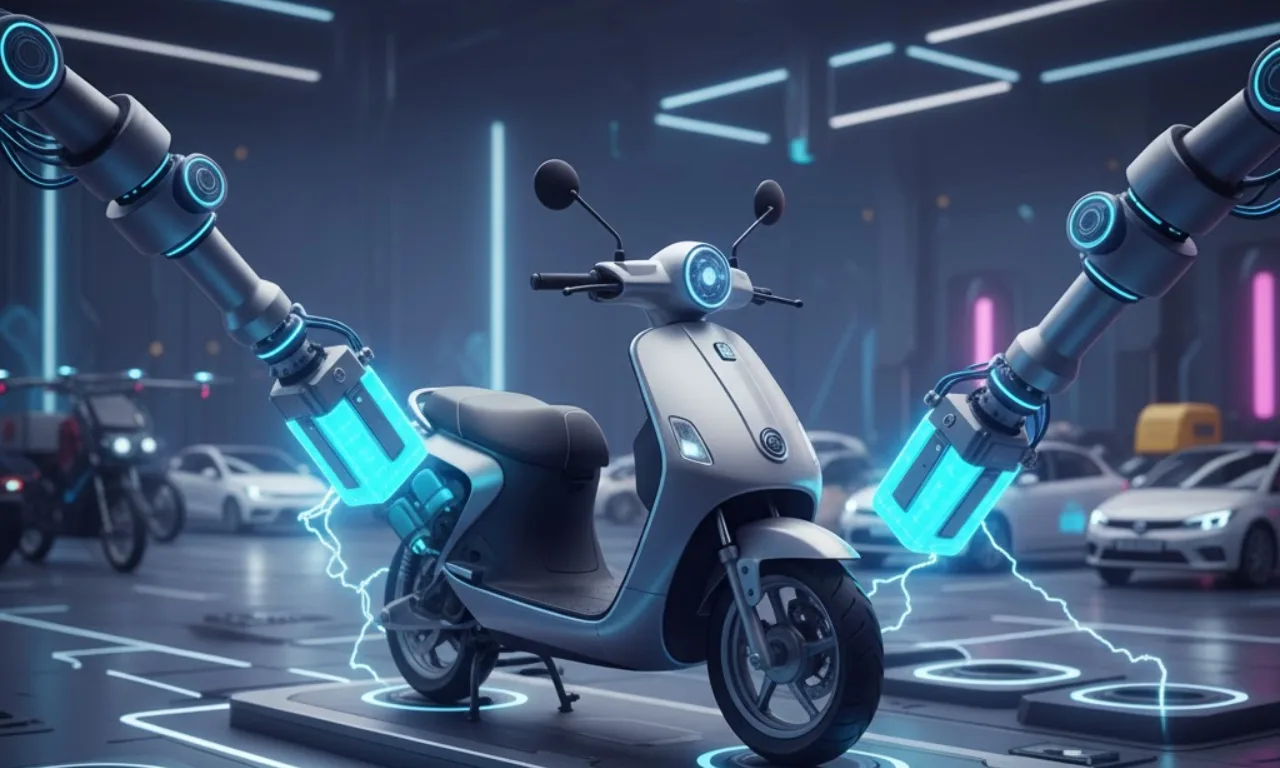
Battery swapping EV technology is reshaping India’s electric mobility future, promising new levels of convenience and efficiency for millions of commuters and businesses alike. This model is fueling unprecedented adoption rates even in dense urban centers, unlocking a future where EVs dominate the landscape while lowering total cost of ownership.
How Battery Swapping Works
Battery swapping enables electric vehicle (EV) users to exchange a depleted battery for a fully charged one at specially equipped stations, reducing downtime from hours to just minutes. These stations are spreading rapidly through major Indian cities, targeting public transport, delivery, and logistics operators.
-
The model provides modular, lightweight packs designed for quick handling by individuals or automated systems.
-
Swap networks offer seamless integration for two- and three-wheelers, especially for gig-economy and urban service providers.
Battery As A Service (BaaS): A Subscription Model
Battery as a Service (BaaS) separates battery ownership from the EV purchase, letting end-users access fully charged batteries for a recurring fee. This innovative approach significantly reduces initial EV costs, accelerates adoption, and supports consistent battery performance through cloud-enabled tracking and management.
-
Fleet operators and commercial drivers enjoy predictable monthly expenses with subscription or pay-per-swap plans.
-
BaaS cuts the financial risks associated with battery degradation and supports asset recycling.
Swappable Batteries: Standardization Across Vehicles
The swappable batteries vehicles trend focuses on creating interoperable packs and connectors so any compatible vehicle can instantly benefit from the swap infrastructure. Indian and global manufacturers are collaborating on safety, size, and electronics standards for mass uptake.
-
Bureau of Indian Standards (BIS) has published draft interoperability guidelines to support rapid ecosystem scale.
-
Pilot projects have proven viability in two- and three-wheelers and light commercial vehicle .
India’s Battery Swap Stations Revolution
Battery swap stations in India are set for massive growth across metros and tier-2 cities, fueled by public-private partnerships, government incentives, and demand from gig-economy fleets.
-
Projections suggest over 25,000 stations by 2030, strategically placed for urban accessibility.
-
New stations use robotics for battery handling and AI-driven analytics for grid integration and demand forecasting.
The EV Battery Exchange Ecosystem
The EV battery exchange approach ties together charging infrastructure, sustainable battery recycling, and circular economy efforts across India.
This interconnected ecosystem boosts efficiency and profitability for service providers and end-users.
-
Old and unused batteries are rerouted for second-life applications, limiting waste and adding value.
-
Business models now include partnership revenue from swaps, recycling programs, and charge-on-demand solutions.
Impact on India’s EV Adoption and Society
Battery swapping and BaaS models are democratizing clean mobility for all income groups, propelling India to global leadership in sustainable transport innovation.
-
Swapping solutions drive down urban pollution and help meet aggressive climate and mobility goals.
-
Increased uptime for delivery networks supports rapid scaling in logistics and e-commerce sectors.
-
Asset-light EV ownership is now within reach for micro-entrepreneurs, gig drivers, and daily commuters.
Policy Push and Government Frameworks
Government of India’s proactive approach involves new policy guidelines and fiscal incentives focused on battery swapping and interoperability.
-
FAME II provides grants and benefits for swapping infrastructure and compliant vehicles.
-
Standards development and regulatory clarity are fast-tracking rollout in public fleets and private sector logistics.
GrowthJockey’s Strategic Perspective
The battery swapping revolution is not just technological but fundamental to India’s goal of democratizing clean, affordable, and accessible mobility. GrowthJockey acts as a venture architect, bridging the gap between startups, enterprises, and government by leveraging tools like intellsys.ai and Ottopilot. The focus: building and scaling breakthrough ventures for enterprises ready to lead the future of industry transformation.
FAQs
Q1. What is battery swapping in EVs?
Battery swapping in electric vehicles allows users to quickly exchange a discharged battery for a fully charged one at a battery swap station, eliminating long charging wait times.
Q2. What is Battery as a Service (BaaS)?
Battery as a Service (BaaS) is a model where consumers or fleet operators pay a subscription or per-use fee to access fully charged batteries, removing the need for up-front battery ownership.
Q3. How many battery swap stations are there in India?
As of late 2025, there are several thousand battery swap stations operating in Indian metros, with rapid expansion plans aiming for over 25,000 by 2030.
Q4. Are all EVs compatible with battery swapping?
Not all EVs are currently compatible with battery swapping. Standardization is a work-in-progress, led by industry collaboration and national standards initiatives.









Industries
Growth
Operations
Technology