
Credit Card to Bank Transfer in India: Every Method, Every Fee, and When It Makes Sense
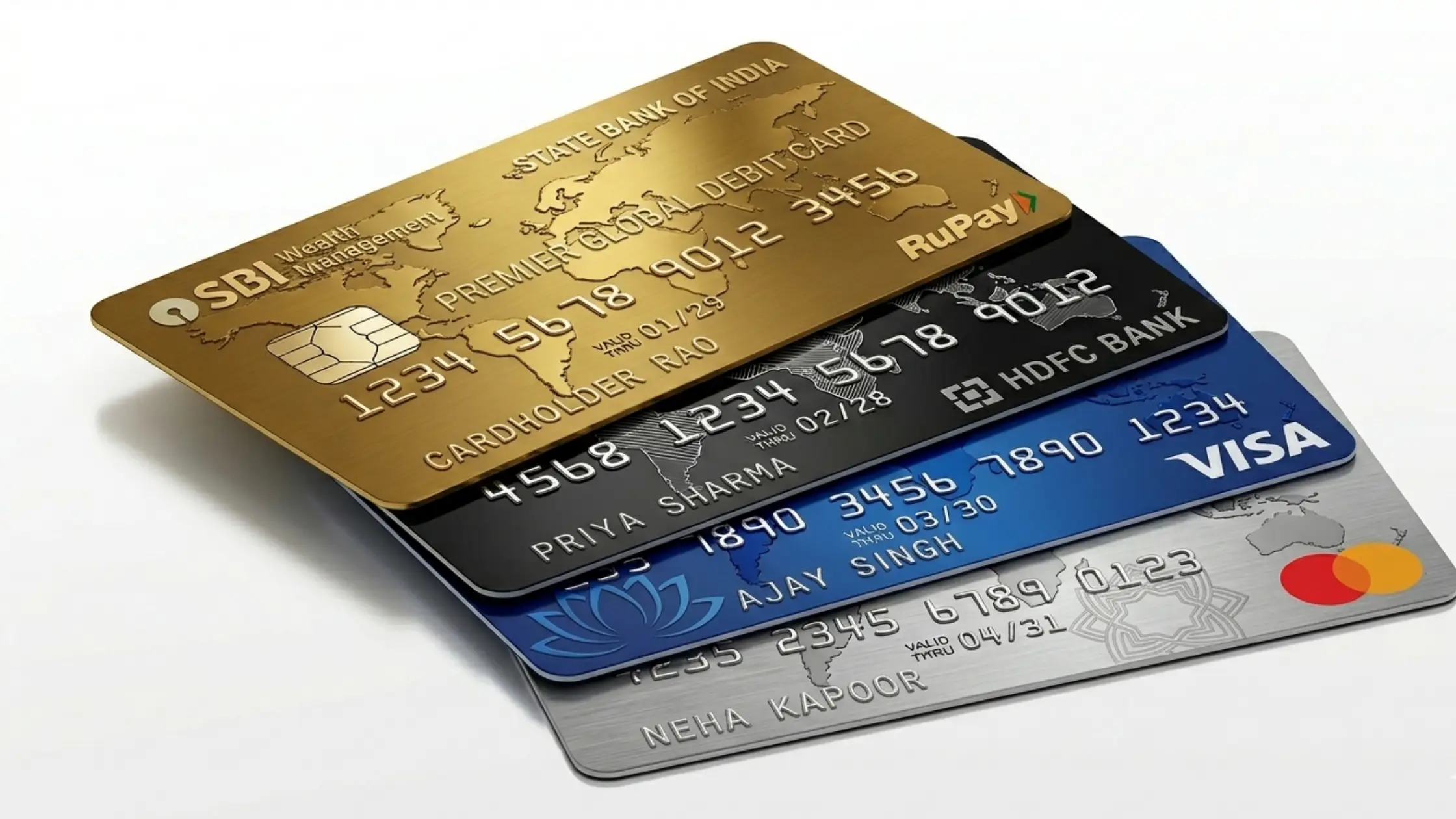
Every few months, millions of Indians find themselves in the same position: money is needed in a bank account immediately, but all available liquidity sits on a credit card limit. Whether it is a rent payment to a landlord who only accepts NEFT, a medical bill at a hospital that does not take cards, or a business expense that needs to hit a current account-the question is the same: can I transfer money from my credit card to my bank account, and what will it cost?
The short answer is yes. The detailed answer-which method, which charges, which risks, and which situations justify the cost-is what this guide covers.
What Is a Credit Card to Bank Transfer?
A credit card to bank transfer is the process of moving funds from your credit card's available limit into your savings or current bank account. The bank or card network effectively issues you a short-term loan from your credit line, which is then deposited as spendable cash.
This is different from a normal credit card purchase. When you buy something on your card, you pay back the merchant's amount interest-free for up to 45–50 days. When you transfer money to your bank account, that transaction is treated as a cash advance or loan against credit limit-and interest typically starts from day one with no grace period.
Key distinction: Credit card to bank transfers are treated as cash-like transactions by banks and card networks, not as regular purchases. This is why the fee structure is fundamentally different.
7 Methods to Transfer Money from Credit Card to Bank Account
1. Net Banking / Mobile Banking App (Direct Transfer)
Several major Indian banks-including HDFC Bank, ICICI Bank, Axis Bank, Kotak Mahindra, and SBI-offer a direct 'Transfer to Account' or 'Cash Advance' option within their mobile apps and net banking portals. You log in, navigate to your credit card section, select the transfer option, enter the amount, and confirm. Funds arrive in your linked account almost instantly or within 1–2 working days for different-bank transfers.
-
Best for: Existing customers of banks that support this feature.
-
Charges: 2–3% processing fee + 18% GST on that fee + interest from day one at 2.5–4% per month.
-
Speed: Instant to same-bank accounts; 1–2 working days for inter-bank.
-
Limit: Typically up to your available cash advance limit (usually 20–40% of your total credit limit).
2. Money Transfer Credit Cards (Direct Bank Credit)
A handful of Indian cards are specifically designed for bank transfers. Axis Bank offers this feature on selected cards including the Airtel Axis Bank Credit Card. IDFC First Bank also provides it on select variants. These cards allow you to send a portion of your credit limit directly to any bank account-yours or someone else's-as a structured facility rather than a cash advance.
-
Best for: Users who transfer money to bank regularly and want a purpose-built product.
-
Charges: Processing fee of 1–2% + applicable interest; often lower than standard cash advance.
-
Limit: Up to 75% of available credit limit (minimum ₹5,000) in some cases.
-
Note: Only available on specific card variants-check your card's terms.
3. Digital Wallets (Paytm, PhonePe, Mobikwik)
You load money from your credit card into a wallet, then transfer the wallet balance to your linked bank account. This two-step process was once the most common workaround, though RBI regulations have progressively tightened wallet-to-bank transfer rules.
-
Available apps: Paytm, Mobikwik (PhonePe and Google Pay have significantly restricted credit card top-ups).
-
Charges: Wallet load fee 1.5–3% + wallet-to-bank transfer fee 0–1%.
-
Important 2025–26 update: Following RBI circular updates on payment aggregators, many apps have restricted or disabled direct credit card to wallet loads. Always verify current app policies before relying on this method.
-
Google Pay note: GPay supports RuPay credit cards linked to UPI for payments, but does not support direct bank transfers from credit card limits.
4. ATM Cash Advance + Bank Deposit
The most universally available method. You visit any ATM that accepts your card (Visa, Mastercard, or RuPay), select 'Cash Advance', credit card ATM withdrawal charges[1] the required amount, and then deposit it into your bank account via ATM or branch counter.
-
Best for: Situations where digital methods are unavailable or failed; true emergency-only use.
-
Charges: The RBI revised the interchange fee banks charge each other to ₹17 per transaction from August 2025. The fee visible on your statement is typically ₹21 per transaction beyond your free ATM limit; cash advance fee 2–4% of amount (minimum ₹300–₹500); interest from day one at 3–4% per month.
-
Example cost: On a ₹10,000 withdrawal: ₹500 cash advance fee + ₹17 ATM fee + ₹350 first-month interest = approx. ₹867 total (8.7% effective cost for one month).
-
Recommendation: Use only when no other option exists. This is consistently the most expensive method.
5. Balance Transfer to Bank Account (EMI)
Some banks offer a facility where your credit card limit is converted to a bank account credit repaid in equated monthly instalments (EMIs). This is sometimes called a 'balance transfer' or 'loan on card'. The bank deposits a lump sum to your account, and you repay over 3, 6, 9, or 12 months of credit card bill to EMI[2] at a pre-set interest rate.
-
Banks offering this: HDFC Bank, SBI, ICICI, Axis, Kotak Mahindra.
-
Charges: Processing fee 1–2% + interest 13–24% per annum (significantly lower than cash advance rates).
-
Best for: Planned, larger transfers where repayment over time is acceptable. NOT for emergencies.
-
Credit score impact: Minimal if repaid on time; missed EMIs will hurt your CIBIL score.
6. Convenience Cheques (Issued by Bank)
Some banks issue physical or digital cheques against your credit card limit. You write the cheque to yourself or deposit it directly. Banks typically offer these during promotional campaigns with low or zero interest for a specific period.
-
Charges: Varies by bank; promotional cheques may carry 0% interest for a defined period (30–90 days), then standard rates.
-
Best for: Planned transfers when your bank runs a promotional convenience cheque offer.
-
Processing time: 3–5 working days.
7. Rent Payment via Third-Party Platforms
Platforms like NoBroker, Housing.com, and CRED previously allowed tenants to pay rent via credit card, with the payment settling into the landlord's bank account. This gave users an effective 45-day interest-free window for what was functionally a credit card to bank transfer.
Important 2025 RBI Update: RBI updates to payment aggregator regulations effective 2025 have affected rent payment via credit card on some platforms — verify current availability on each platform.
Check out blog on Forex Credit Cards
Charges Comparison Table: All Methods at a Glance
| Method | Processing Fee | Interest Rate | Speed | Best Use Case |
|---|---|---|---|---|
| Net Banking / App Transfer | 2–3% + GST | 2.5–4%/month from Day 1 | Instant–1 day | Most common; moderate urgency |
| Money Transfer Cards (Axis/IDFC) | 1–2% + GST | 1.5–3%/month | Instant–2 days | Regular transfers; purpose-built |
| Digital Wallet (Paytm/Mobikwik) | 1.5–3% load + 0–1% w/d | N/A if wallet settled | Same day | Small amounts; check app policy first |
| ATM Cash Advance | 2–4% + ₹17 ATM fee | 3–4%/month from Day 1 | Immediate | Last resort; no digital access |
| Balance Transfer / EMI | 1–2% | 13–24% p.a. | 1–3 working days | Planned; larger amounts |
| Convenience Cheques | Promotional / bank-set | 0% promo then standard | 3–5 working days | Planned; promo offers |
| Rent Payment Platforms* | 1–2% platform fee | Zero (interest-free period) | 1–3 working days | Rent only; platform rules apply |
* Subject to RBI regulations effective September 2025. Verify current platform availability.
Bank-Specific Transfer Options
Bank of Baroda Credit Card Transfer
Bank of Baroda provides cash advance through ATMs on most of its credit cards, with the cash advance limit set at up to 40% of the total credit limit. Domestic cash advance charges are 2.5% of the withdrawn amount or ₹300 (whichever is higher) for standard cardholders. Finance charges begin immediately at 3.25% per month (39% p.a.) for BOBCARD Eterna and Tiara; 3.75% per month (45% p.a.) for all other BOBCARD cards with no grace period.
For a more economical option, BoB offers an EMI conversion facility with interest rates starting at 13% per annum for tenures of 6 to 36 months, along with a processing fee of 2% of the transaction amount (minimum ₹100). Cash transactions are not eligible for EMI conversion.
EMI interest rates vary by card variant and customer profile. Check current rates in the BOBCARD app or at bobcard.co.in before applying.
SBI Credit Card Transfer
SBI offers cash advance through ATMs and net banking. The bank also provides an EMI-on-call facility where credit limit can be converted to a term loan deposited in your savings account. Interest rates for EMI plans start at 13% per annum for tenures of 6–24 months, making it more economical than raw cash advance.
HDFC Bank Credit Card Transfer
HDFC offers the 'SmartEMI' and 'Insta Loan on Credit Card' features on eligible cards, allowing a portion of your credit limit to be credited to your savings account as an EMI-based loan. For cardholders with pre-approved offers, processing is near-instant through the HDFC mobile app. Standard cash advance rates apply (2.5%/month + 2.5% fee, minimum ₹500).
Verify current rates at hdfcbank.com.
ICICI Bank Credit Card Transfer
ICICI Bank's 'Bank Account Transfer' feature, available for select cards through iMobile Pay, allows transfers directly to any bank account. EMI conversion options are also available at competitive rates. ICICI typically processes same-bank transfers instantly.
Real-Cost Example: What a ₹20,000 Transfer Actually Costs
Understanding headline fees is not enough. Here is what a ₹20,000 transfer actually costs across methods, assuming repayment in 30 days:
| Method | Fee + GST | 30-Day Interest | Total Cost |
|---|---|---|---|
| Net Banking Transfer (3%) | ₹600 + ₹108 = ₹708 | ₹600 (3%/month) | ~₹1,308 (6.5%) |
| Money Transfer Card (1.5%) | ₹300 + ₹54 = ₹354 | ₹400 (2%/month) | ~₹754 (3.8%) |
| ATM Cash Advance (3%) | ₹600 + ₹17 = ₹617 | ₹800 (4%/month) | ~₹1,417 (7.1%) |
| EMI Transfer (1.5% fee, 18% p.a.) | ₹300 + ₹54 = ₹354 | ₹300 (equiv.) | ~₹654 (3.3%) |
Note: Calculations are illustrative. Actual charges vary by card and bank. GST computed at 18% on processing fee.
Impact on Your Credit Score
A credit card to bank transfer affects your credit score in two main ways:
-
Credit utilisation: Transfers draw from your credit limit, raising your utilisation ratio. If your total limit is ₹1 lakh and you transfer ₹40,000, your utilisation hits 40%-above the 30% threshold that credit bureaus flag.
-
Payment behaviour: The transfer itself does not reduce your score. Missing or delaying repayment will. The lack of an interest-free period means debt accumulates faster, increasing the risk of underpaying the minimum.
-
Frequency signals: Frequent cash advances are a behavioural signal that lenders monitor. Banks may interpret repeated transfers as financial stress, which can affect future credit decisions even before a score change shows up.
Repaying the transferred amount in full within your billing cycle is the single most important action to protect your credit score after a transfer.
When You Should NOT Transfer from a Credit Card
-
When cheaper alternatives exist: personal loans (10–14% p.a.), salary advances, or family loans will almost always be cheaper.
-
For discretionary spending: holidays, gadget upgrades, weddings. The cost of borrowing through a credit card transfer does not justify non-urgent expenses.
-
If you cannot repay in 30 days: carrying a cash advance balance for multiple months is extremely expensive. ₹20,000 at 3.5%/month compounded becomes ₹22,471 after 3 months before fees.
-
For large regular payments: if you need to fund a business regularly, a working capital loan or overdraft facility will cost far less.
Smarter Alternatives to Credit Card Bank Transfers
Personal Loan (Pre-Approved)
Most banks offer pre-approved personal loans to existing customers at 10–14% per annum with instant disbursal. On ₹20,000 for 3 months, a 12% p.a. personal loan costs approximately ₹600 in interest-versus ₹1,300+ for a credit card cash advance.
Salary Advance / Employer Loan
Many HR platforms and employers offer interest-free or low-interest salary advances. If accessible, this is almost always the lowest-cost option.
Overdraft on Savings Account
Banks offer overdraft facilities on savings accounts, often linked to fixed deposits, at 0.5–1% above the FD rate. For existing FD holders, this is typically cheaper than any credit card transfer method.
Buy Now Pay Later (BNPL)
For specific merchant payments, BNPL platforms (LazyPay, ZestMoney, Simpl) offer interest-free windows. If the underlying expense is a merchant payment rather than a cash need, these can be effective.
Is a Credit Card to Bank Transfer Legal in India?
Yes. Credit card to bank transfers through authorised channels-bank apps, official ATM cash advances, RBI-approved payment platforms-are completely legal. The RBI regulates the fee structures and mandates disclosure. There are no tax implications for the transfer itself, as it is a loan, not income.
What is not permitted: using third-party apps that are not RBI-approved, or structuring transfers to evade reporting requirements. Always transact through official bank or card issuer channels.
Step-by-Step: How to Transfer Money from Credit Card to Bank Account via Net Banking
-
Log into your bank's mobile app or net banking portal.
-
Navigate to your credit card section.
-
Look for options labelled 'Cash Advance', 'Transfer to Account', 'Insta Loan', or 'Balance Transfer'.
-
Select the amount to transfer (within your available cash advance limit).
-
Enter or confirm your bank account details.
-
Review the fee breakdown and interest terms carefully before confirming.
-
Confirm the transaction with OTP or password.
-
Note the transaction reference ID.
If your app does not show a transfer option, call your bank's credit card helpline. Not all cards and all accounts are enabled for this feature by default.
Conclusion
A credit card to bank transfer is a legitimate and accessible tool for short-term liquidity needs in India. Used once, urgently, and repaid quickly, the cost is manageable. Used repeatedly or with delayed repayment, the compounding interest turns it into one of the most expensive borrowing instruments available.
The hierarchy is clear: money transfer credit cards and EMI plans are cheaper than standard net banking transfers, which are cheaper than ATM cash advances. Understand your card's specific terms, compare the real cost using the tables above, and always have a repayment plan before initiating a transfer.
Compare credit cards and apply for the right one at card24.ai.
Frequently Asked Questions
Can I transfer money from a credit card to a bank account for free?
No. Every legal method involves either a processing fee, interest charges, or both. There is no completely fee-free, interest-free method for transferring credit card funds to a bank account in India. The closest to low-cost options are EMI-based balance transfers or money transfer credit cards with promotional rates.
How much can I transfer from a credit card to a bank account?
The limit depends on your card's cash advance limit, which is typically 20–40% of your total credit limit, though some money transfer cards allow up to 75% of the available credit limit. For example, on a ₹1 lakh credit limit, you may be able to transfer ₹20,000–₹75,000 depending on your card type and bank policy.
Which is the cheapest method to transfer money from a credit card to a bank?
EMI-based balance transfer plans (13–18% p.a.) are typically the cheapest for planned, larger transfers. For small amounts, money transfer credit cards (if you have one) offer 1–2% processing fees with lower interest rates. ATM cash advance is consistently the most expensive option and should be a last resort.
Does transferring from a credit card affect my CIBIL score?
The transfer itself does not reduce your CIBIL score, but it raises your credit utilisation ratio. If you repay on time, there is no negative impact. Missed payments or high sustained balances will lower your score. Keeping transfers to genuinely urgent situations and repaying quickly minimises any credit profile risk.









Industries
Growth
Operations
Technology