
How Delivery Giants Like Zomato & Amazon Are Driving Two-Wheeler EV Adoption
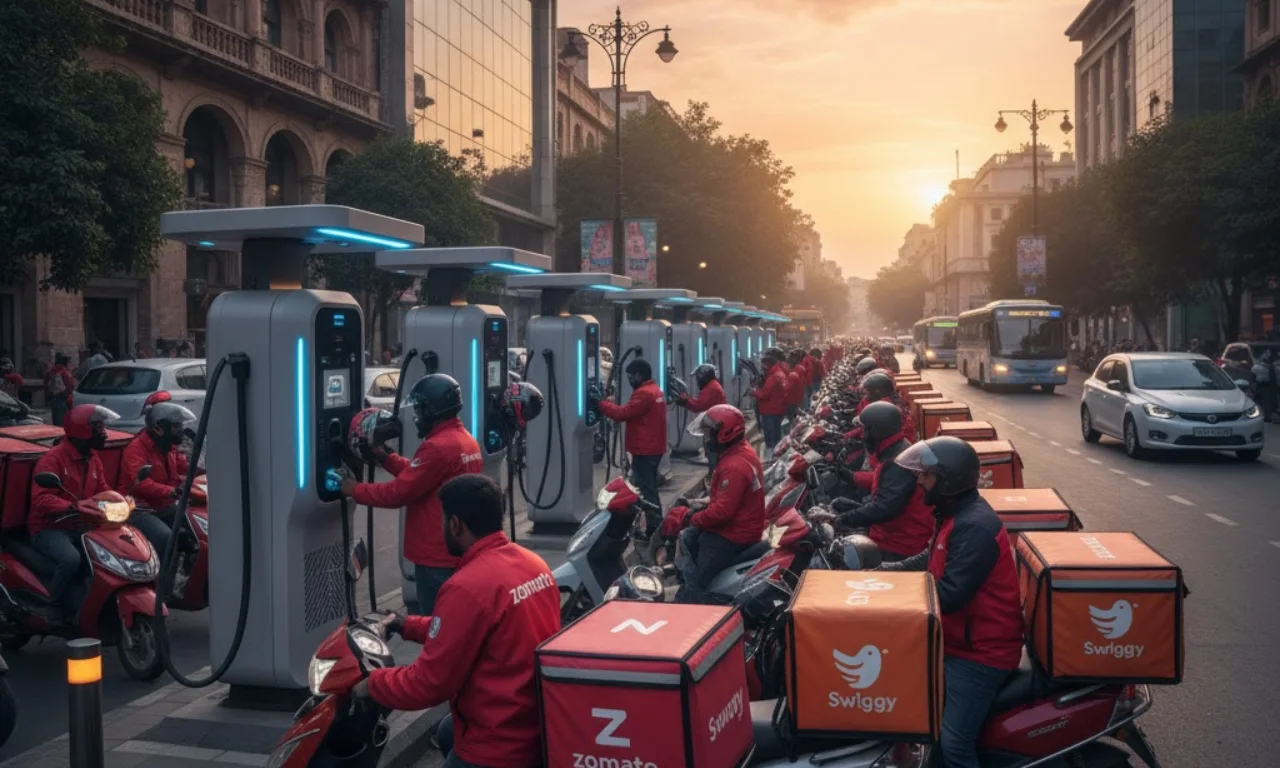
The rapid expansion of India’s delivery economy has transformed the way mobility operates within cities, making two-wheelers the backbone of last-mile logistics. As fuel prices rise and operational efficiency becomes a strategic imperative, major delivery platforms such as Zomato and Amazon are shifting their fleets toward electric models, accelerating two-wheeler EV adoption at a national scale. Their move signals a structural transition: delivery vehicles electric is no longer an experiment but a fundamental business model built for high-utilisation operations. The rise of commercial EV deployment within logistics also aligns tightly with India’s broader mobility vision and the evolving economics of last-mile delivery EV fleets.
Why Fleet EV Adoption Matters More Than Consumer EV Adoption
Fleet electrification has a disproportionate impact on the EV ecosystem because logistics fleets operate at far higher utilisation than private vehicles. A delivery rider covering 80–120 km per day achieves EV ROI far faster than a consumer riding a few kilometres occasionally. This operational profile explains why delivery fleet electrification is scaling first, and why platforms like Zomato and Amazon view EV integration as an economic and environmental advantage.
India’s overall EV landscape has already shifted strongly in favour of two-wheelers, with electric scooters and bikes dominating national EV sales. As explained in GrowthJockey’s article on India’s Electric Two-Wheeler Boom , the two-wheeler category accounts for a majority of EV uptake due to its cost efficiency and mass-market relevance. When scaled across commercial operations, this dynamic becomes even more compelling.
High utilisation unlocks cost savings in energy expenditure, reduces maintenance cycles, and supports predictable charging routines. In turn, this drives a stronger business case for fleet EV adoption than for personal buyers. Delivery giants therefore act as ecosystem accelerators, creating demand that pushes manufacturers, financers, and charging-network providers to innovate and expand.
Drivers Behind Two-Wheeler EV Adoption in Delivery Fleets
Before exploring the strategies employed by Zomato and Amazon, it’s essential to identify the broader industry forces shaping commercial EV deployment.
Economics and Running Cost Advantage
Electric two-wheelers have dramatically lower per-kilometre operating costs than petrol vehicles. Deliveries depend on high-frequency usage, making running cost savings a direct contributor to fleet profitability. Lower fuel cost, reduced maintenance, and fewer mechanical breakdowns make EVs a preferred asset class for logistics firms.
This shift is reinforced by insights on evolving financing models covered in GrowthJockey’s analysis of EV Financing & Subscription Models , which explains how subscription and low-entry financing options help both companies and riders adopt EVs with minimum upfront risk.
Digital Infrastructure and Telematics
Commercial fleets increasingly rely on telemetry, data analytics, and route optimisation. Electric vehicles are natively compatible with IoT integration, allowing companies to monitor battery health, optimise charging cycles, and ensure predictable uptime. Platforms like Intellsys.ai support this capability by enabling telematics-driven insights and risk scoring across fleet operations.
Government Incentives and Regulatory Push
State and national policies encourage EV adoption through subsidies, tax exemptions, and support for charging infrastructure. Delivery fleets benefit from these incentives more than most segments because of their volume and consistent utilisation.
Brand, ESG, and Customer Expectations
Consumers increasingly value sustainability. Delivery companies that transition to EV fleets send a strong signal of environmental responsibility. For brands like Amazon and Zomato, these transitions support both regulatory compliance and long-term ESG goals.
How Zomato and Amazon Are Electrifying Their Two-Wheeler Fleets
The strategies deployed by India’s leading delivery platforms reflect a systematic approach rather than isolated trials.
Bulk Procurement and Strategic OEM Partnerships
Zomato and Amazon collaborate with OEMs and EV startups to buy or lease electric two-wheelers at scale. Bulk procurement unlocks favourable pricing, dedicated servicing, and faster fleet integration. Their partnerships often include training modules for riders, battery warranty extensions, and structured maintenance agreements.
Charging and Battery-Swap Infrastructure Development
Both companies work closely with battery-swap operators, charging-station providers, and energy-as-a-service companies to build robust infrastructure near high-demand zones. Delivery hubs, warehouses, and micro-fulfilment centres are increasingly equipped with multi-point charging bays.
The industry’s evolution in infrastructure is deeply interconnected with the trends highlighted in Modular EV Financing & AI-Driven Loans , where interoperable batteries, modular financing, and standardised charging models are shaping the financial backbone of EV fleets.
Rider Incentive Models and Fleet Leasing
Delivery partners often operate on leased or rented vehicles. To encourage adoption, platforms provide:
-
Subsidised rental rates
-
Higher delivery earnings for EV riders
-
Discounted charging plans
-
Maintenance support packages
These incentives reduce friction for riders adopting EVs and accelerate fleet-wide electrification.
Data-Driven Fleet Optimisation
One key differentiator for large delivery platforms is the use of intelligent software to monitor performance. Systems powered by data engines like Intellsys.ai support battery-health analysis, utilisation tracking, and operational forecasting. This ensures EV fleets deliver consistent uptime without unexpected breakdowns.
Supporting Dealer and Service-Network Integration
Operational success depends on seamless coordination between OEMs, dealers, and service networks. Solutions like Ottopilot enable dealerships and EV brands to manage leads, customer communication, and service workflows across regional networks. These capabilities play a critical role when scaling EV fleets for large enterprises, as highlighted in GrowthJockey’s deeper exploration of Digital Transformation of EV Scooter Sales
Benefits for Delivery Companies Adopting Electric Two-Wheelers
While the long-term benefits of EV adoption are clear, the immediate advantages for delivery giants are equally significant.
Lower Total Cost of Ownership
Electric scooters typically have fewer moving parts compared to internal combustion engines. This translates into reduced repair needs, lower service frequency, and more predictable maintenance costs. Combined with lower fuel prices, EVs offer significant savings over the vehicle lifecycle.
Greater Operational Consistency
Consistency in delivery operations impacts customer satisfaction metrics. EVs provide higher reliability in dense urban environments due to their instant torque, low noise emissions, and fewer mechanical delays.
Brand Enhancement and Competitive Differentiation
Customers increasingly value green practices. By transitioning to electric fleets, brands position themselves as sustainability-first, which can improve public perception and customer loyalty.
Better Rider Experience and Earnings Potential
EVs offer smoother rides, reduced fatigue, and cost savings for riders who operate on lease models. These factors improve retention and reduce turnover, indirectly supporting delivery efficiency.
Contribution to National EV Ecosystem Maturity
Commercial fleet adoption strengthens the broader EV ecosystem by expanding charging networks, increasing demand for manufacturing scale, and encouraging innovation across energy and mobility tech.
Challenges in Scaling Two-Wheeler EV Fleets for Delivery Platforms
Despite growing momentum, several barriers complicate large-scale fleet EV adoption.
Battery Degradation and Residual Value Risk
Daily usage strains battery capacity. Delivery platforms fear higher depreciation and reduced lifecycle value. Solutions include battery-swap partnerships, AI-driven battery-health scoring, and modular leasing models.
Charging Logistics and Range Planning
Delivery riders follow unpredictable routes, and charging stations may not always be within reach. Companies must map charging hubs strategically, optimise ride patterns, and use predictive analytics to avoid downtime.
Upfront Costs and Financing Constraints
Despite long-term cost benefits, upfront costs remain high. This is where models outlined in EV Financing & Subscription Models become essential, allowing riders and fleets to avoid heavy initial payments.
Repair Ecosystem Limitations
EV repair networks are still maturing. Delivery companies must collaborate closely with OEMs to ensure availability of spare parts and trained technicians.
Rider Familiarity and Training
Many riders are new to EVs and require training on battery care, safe operation, and charging practices. Companies must invest in continuous learning modules.
How Electrification of Delivery Fleets Will Shape India's EV Future
The transition led by delivery giants is expected to have far-reaching consequences across the mobility landscape.
Acceleration of Last-Mile Delivery EV Ecosystem
As Zomato and Amazon scale their EV fleets, micro-logistics networks, hyperlocal commerce, and quick-commerce players are likely to adopt similar strategies.
Expansion of Charging Infrastructure
Commercial demand will lead to more chargers, swap stations, and energy hubs across cities, improving accessibility for private EV owners too.
Data-Driven Logistics Will Become Standard
Telematics-based fleet intelligence will reshape delivery operations, improving efficiency via predictive maintenance, battery-usage optimisation, and route management.
Growth of Integrated EV Software Platforms
Solutions such as Ottopilot and Intellsys.ai will become central to EV operations, covering dealership workflows, fleet optimisation, risk scoring, and insight-driven decision-making. Their role extends beyond simple management; they become the operating backbone for EV enterprises.
Marketing and Customer Engagement Transformation
EV fleets open new storytelling avenues for brands. Trends covered in Holistic Marketing for EV Sales highlight how EV-led differentiation enhances digital marketing, brand positioning, and customer trust.
Conclusion: A Future Built on Electrified Delivery Ecosystems
The rapid rise of two-wheeler EV adoption in India’s delivery sector marks a pivotal shift in urban mobility. Companies like Zomato and Amazon are setting industry benchmarks by deploying electric vehicles at scale, integrating data intelligence, improving operational efficiency, and supporting India’s sustainability goals. The electrification of delivery fleets is not just transforming logistics it is shaping the trajectory of India’s mobility systems for years to come.
GrowthJockey plays a crucial role in this transition through its venture-architecting approach. By integrating operational platforms like Ottopilot for dealership and workflow management and intelligence systems such as Intellsys.ai for insights and fleet analytics, GrowthJockey enables enterprises to build scalable, data-driven EV ecosystems. As businesses explore EV transformation, these tools provide the structural backbone for driving adoption, improving performance, and unlocking long-term competitive advantage
FAQs
Q1. Why are Zomato and Amazon shifting to electric two-wheelers?
Because electric two-wheelers offer lower running costs, higher reliability, and predictable charging cycles. They also support the companies’ ESG goals and reduce dependency on fluctuating fuel prices.
Q2. What challenges do delivery companies face while adopting EV fleets?
Key challenges include charging infrastructure limitations, battery degradation, higher upfront costs, limited service networks, and the need for rider training on charging and battery care.
Q3. How do EVs benefit delivery riders?
EVs offer lower running expenses, smoother rides, reduced maintenance requirements, and higher earnings potential for riders using lease or rental models.
Q4. What role does telematics play in delivery-fleet electrification?
Telematics enables battery-health tracking, predictive maintenance, route optimisation, and real-time monitoring, ensuring consistent fleet uptime.
Q5. Will electrification of delivery fleets influence consumer EV adoption?
Yes. When commercial fleets build large charging networks and normalise EV usage, consumer confidence increases, accelerating broader EV adoption.









Industries
Growth
Operations
Technology