
The Digital Deficit in India’s Paint Dealer Network
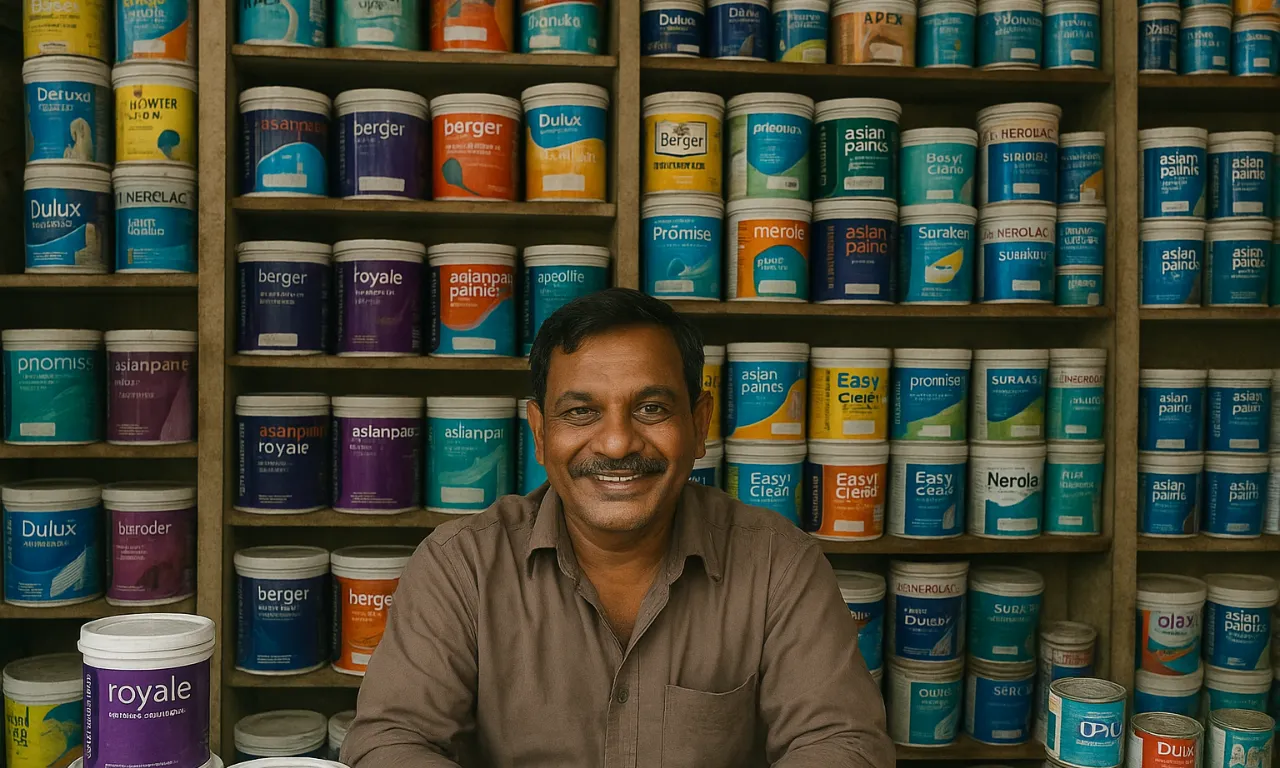
India’s paint industry is on a strong growth trajectory, valued at USD 10.46 billion in FY25 and projected to reach USD 16.38 billion by 2030 at a CAGR of 9.4%. Decorative paints dominate the sector, contributing nearly 78% of revenues. While this growth story is compelling, its distribution backbone - the dealer network - is facing a critical digital shortfall.
With 120,000+ paint dealers across India driving more than 85% of decorative paint sales, one might expect this channel to be digitally sophisticated. Yet fewer than 10% of dealers are digitally enabled with basic CRM tools, online ordering systems, or even a Google Business listing. This “digital deficit” is creating a bottleneck in an otherwise expanding industry.
This blog unpacks the dealer-level digital gap, its consequences on consumer journeys, operational efficiency, and brand competitiveness.
Why Dealers Matter in Paint Sales
Paint buying in India remains heavily dealer-centric, with dealers playing multiple critical roles beyond mere distribution.
-
Influence: More than 70% of consumer paint purchase decisions are shaped at the dealer counter. Trust, personalised advice, and the tactile experience of shade cards often outweigh online brand campaigns. Dealers act as advisors and influencers who convert customer intent into actual sales.
-
Credit Backbone: Contractors, who drive large portions of decorative paint demand, depend on dealer-provided credit cycles. Dealers essentially function as financiers, extending informal credit that sustains project pipelines.
-
Market Reach: In Tier 2 and Tier 3 towns, where organised retail penetration is below 10%, the neighbourhood dealer is often the only accessible sales channel. For millions of households, they are not only sellers but also the first point of service - offering shade matching, referrals for painters, and quick product replacements.
The Digital Deficit Defined
The digital gap across paint dealers manifests in three major ways:
-
Lack of Online Presence: Nearly 70% of dealers have no Google Business listing, website, or e-commerce visibility. This means that when customers search for “paint shops near me,” a large share of stores remain invisible, reducing consumer footfall and discovery opportunities.
-
Manual Operations: Order taking continues through phone calls or WhatsApp messages, with transactions recorded in ledgers. Without digital order management or real-time inventory systems, errors and delays are common, impacting both dealers and consumers.
-
No CRM or Data Capture: Transactions are treated as one-off sales, with little to no record of customer identity, preferences, or repaint cycles. This creates a “data blind spot,” preventing brands from building consumer loyalty or forecasting demand accurately.
Where the Consumer Journey Breaks
Today’s consumers are digital natives - 95% of home improvement buyers in India begin their journey online, browsing paint visualizer tools, reading reviews, or exploring brand websites. However, the offline transition remains broken:
-
A customer who selects a shade online often struggles to identify which local dealer has it in stock.
-
There is no seamless bridge between brand apps and dealer inventories.
-
Customers are forced to repeat their requirements in person, leading to friction and dissatisfaction.
This disconnect between digital discovery and analog execution results in high conversion leakage, undermining both marketing spends and customer trust.
Consequences of the Digital Deficit
The impact of this digital shortfall is far from minor. It creates a ripple effect that influences every part of the value chain -
-
Lost Sales Opportunities: Stockouts at the dealer level cost brands 4-7% of sales annually. In many cases, customers denied immediate availability simply switch to another brand, eroding loyalty.
-
Data Blind Spots: Without CRM integration, brands lack visibility into SKU-level trends and end-customer profiles. This prevents targeted marketing, accurate forecasting, and timely interventions.
-
Operational Inefficiencies: Manual billing and disconnected systems lengthen order cycles, increase errors, and lock working capital in unsold inventory. The result is higher costs and delayed revenue recognition.
-
Weakened Brand Loyalty: Without digital continuity, repaint reminders, warranty registrations, and loyalty programs fail to reach the customer, weakening long-term engagement.
Benchmarking Against Other Sectors
Compared to other industries, the paint dealer ecosystem looks starkly behind:
-
FMCG Kiranas: FMCG majors have equipped kirana stores with POS systems, digital ordering portals, and loyalty apps, creating real-time visibility and stronger consumer engagement.
-
Automobile Dealers: Car dealerships operate on advanced ERP and CRM systems, ensuring complete visibility of stock, leads, and customer histories.
In contrast, paint dealers remain “analog islands” - vital to the sales engine, but disconnected from the digital ecosystem.
Case Example: Asian Paints
Asian Paints has pioneered dealer digitization in the sector:
-
Its Salesforce CRM integration gives territory sales executives real-time visibility into dealer performance and customer orders.
-
Its MasterStrokes loyalty app incentivises painters and dealers through QR-code scans and points systems.
-
Its “Beautiful Homes” experience centres integrate digital visualisation tools with offline execution, creating a seamless phygital journey.
This stands in sharp contrast to regional or smaller paint brands whose dealer networks remain largely offline and opaque.
Risks of Inaction
Brands that fail to close the dealer digital gap risk:
-
Competitive Threats: New entrants like Birla Opus (Grasim) and JSW Paints are investing in digital-first dealer apps and loyalty programs, putting pressure on incumbents.
-
Regulatory Oversight: The Competition Commission of India has already probed restrictive dealer practices, making transparent, auditable systems a necessity.
-
Consumer Dissatisfaction: With 89% of consumers reporting frustration at repeating information across touchpoints, lack of integration could erode trust further.
Bridging the Deficit: First Steps
Digitisation does not need to be complex from day one. Even incremental steps can create significant impact:
-
Google Presence: Ensuring every dealer has a verified Google Maps profile improves discoverability and footfall.
-
WhatsApp Ordering: Rolling out WhatsApp Business APIs for orders makes adoption simple for low-tech users.
-
CRM Integration: Capturing customer details and purchase histories at the dealer level enables targeted engagement and repeat sales.
-
Inventory Sync: Linking dealer stock to brand platforms offers real-time availability updates, reducing stockout-driven defections.
Conclusion
India’s paint industry is on a high-growth path, but the dealer network - its most critical sales engine - remains digitally invisible and operationally inefficient. Closing this digital deficit is no longer optional; it is a strategic imperative for CXOs who want to future-proof their brands. By digitising dealer networks, companies can unlock lost sales, strengthen consumer trust, and accelerate growth in a market that is already transforming rapidly.
FAQs
Q1: Why is dealer digitization critical in the paint industry?
Ans. Because 85%+ of paint sales flow through dealers. Without digitization, brands lose visibility into consumer demand, face operational inefficiencies, and suffer from conversion losses.
Q2: What are the biggest pain points caused by the digital deficit?
Ans. Stockouts, lost sales leads, absence of consumer data, longer order cycles, and lack of customer loyalty programs.
Q3: How do paint dealers compare with FMCG kirana stores in digitization?
Ans. Kirana stores have been digitized via POS and loyalty apps. Paint dealers, however, remain largely offline with minimal CRM or ERP adoption.
Q4: Which companies are leading in dealer digitization?
Ans. Asian Paints is ahead with CRM integration, loyalty apps, and digital experience centers. Birla Opus and JSW Paints are emerging challengers investing in dealer apps.
Q5: What quick wins can CXOs pursue?
Ans. Google My Business listings for all dealers, WhatsApp ordering, CRM for customer data, and linking dealer stock to brand systems.









Industries
Growth
Operations
Technology