
Digital-First Captives: Lessons from Ola Financial Services and the Future of Fintech-OEM Convergence
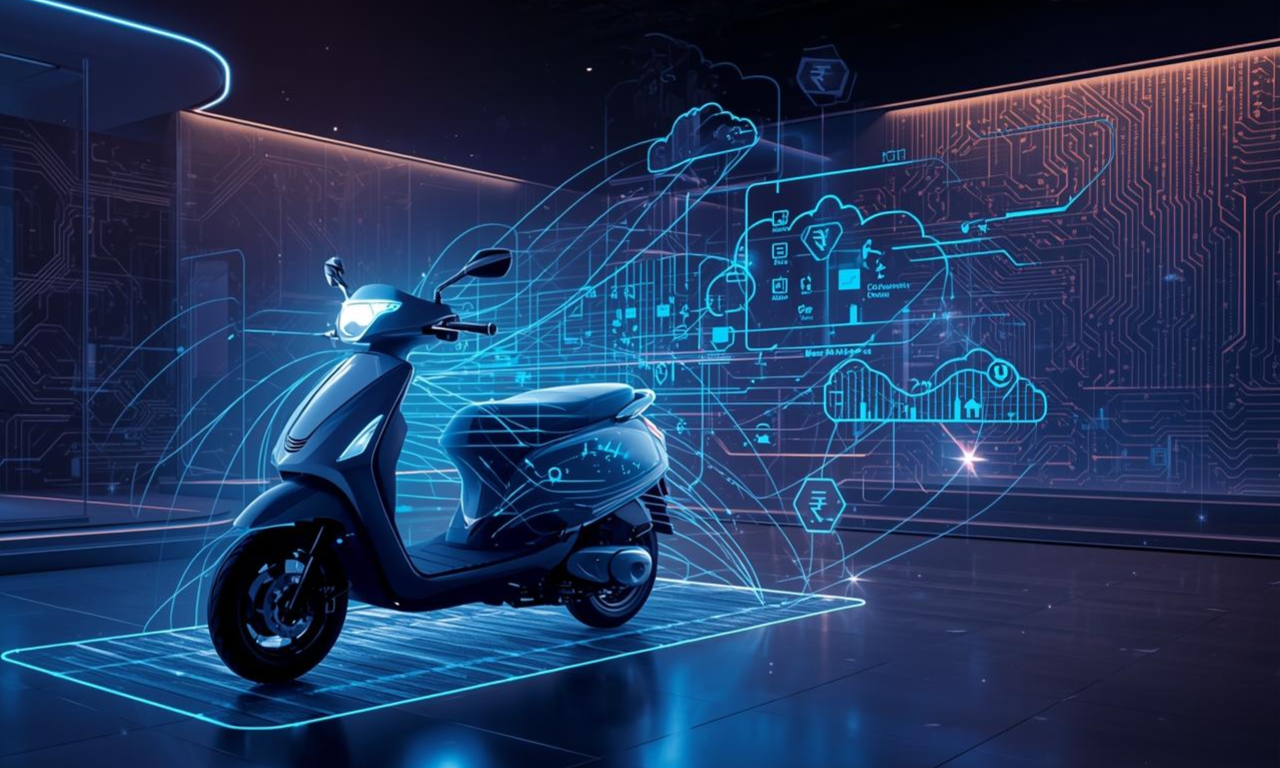
India’s EV revolution is being powered by more than batteries and gig factories - it’s being powered by data-driven finance. As credit journeys move from paper files to mobile dashboards, a new breed of “digital-first captives” is emerging. These hybrid entities combine fintech agility with OEM scale, turning finance from a backend function into a customer experience advantage.
From Credit Access to Credit Intelligence
Just a few years ago, buying an EV often meant waiting days for loan approval and juggling multiple lending partners. Today, leading OEMs are embedding financing directly into the purchase journey - scan a QR code, get a pre-approval, choose an EMI plan, and drive off.
One of the most visible examples of this shift is Ola Financial Services (OFS), the financial arm linked to Ola’s broader EV and mobility ecosystem. From insurance to subscriptions and renewals, every transaction can flow through one seamless digital layer - owned, branded, and powered by data.
Why “Digital-First” Captives Matter
Traditional captive finance arms often mimic banks: heavy documentation, manual approvals, and slow processing. Digital-first captives flip that model.
They’re designed around four fundamental shifts:
1. Embedded Underwriting - AI-driven credit scoring in real time.
2. API-Driven Lending - Plug-and-play integration with co-lenders and NBFCs.
3. Paperless Operations - e-KYC, digital contracts, instant e-signatures.
4. Data Feedback Loops - Continuous learning from repayments, usage, and customer behavior.
For OEMs, this means financing is no longer just a service - it becomes a strategic software layer that deepens ownership and loyalty.
Ola’s Financial Footprint
Ola’s ecosystem demonstrates how this playbook might look in practice:
-
Funding: Ola Electric, the group’s EV arm, has approved raising up to ₹1,700 crore in private debt to support growth and working capital.
-
Distribution: Ola Electric has expanded its retail network to around 4,000 stores nationwide, signaling the scale of its offline-online integration.
-
Integration: In its public prospectus, Ola Electric describes itself as a vertically integrated EV company spanning manufacturing, components, and software.
While OFS itself doesn’t publish granular AUM or loan data, its positioning within Ola’s broader ecosystem aligns with the emerging “digital-first captive” model seen globally.
The Fintech-OEM Convergence
Fintechs bring agility, data intelligence, and API infrastructure. OEMs bring scale, trust, and regulatory access. Together, they’re rewriting how credit flows across the mobility ecosystem.
Key enablers of this convergence include:
-
Embedded finance APIs connecting dealers, OEMs, and NBFCs.
-
Connected-vehicle data improving credit assessment and risk pricing.
-
Usage-based models like battery leasing or pay-per-mile finance.
-
Digital insurance & renewals baked into the ownership lifecycle.
Though full-scale deployments are still nascent, these trends point toward a future where financing becomes invisible - yet integral - to every EV journey.
What OEMs Can Learn from the Digital-First Playbook
1. Build a Lending OS, not just a loan product
Own the tech rails connecting customers, lenders, and dealers.
2. Partner smartly
Co-lend with NBFCs or banks while retaining control of customer data and experience.
3. Design for lifetime value
Finance shouldn’t stop at purchase - extend it to upgrades, insurance, and resale.
4. Leverage data responsibly
Use insights to personalize, not to intrude.
Scaling Without Owning the Balance Sheet
Not every OEM needs a full NBFC license to participate in finance.
Through co-lending and embedded partnerships, automakers can control the journey and data without carrying the full credit risk.
This modular model lowers entry barriers while letting OEMs build in-house fintech capability step by step.
Why This Matters for India’s EV Ambitions
To reach India’s EV adoption targets - roughly 30 % of sales by 2030 - access to finance will be as critical as access to charging.
Digital-first captives can:
-
Expand credit to first-time or informal-income buyers.
-
Enable faster approvals and lower dealer friction.
-
Build lifetime brand relationships through seamless digital touchpoints.
They don’t just finance EVs - they fuel the ecosystem that keeps India’s electric mobility flywheel spinning.
The Road Ahead: AI-Enabled, Embedded, Real-Time
The next phase of digital-first captives will move from automation to intelligence:
-
Dynamic EMI pricing based on usage or battery health.
-
Voice-based finance assistants integrated into vehicle dashboards.
-
Predictive upgrade offers triggered by mileage or performance data.
-
Micro-credit for services like battery swaps or repairs.
In short - finance won’t be a product anymore. It’ll be an adaptive service, evolving with every kilometer you drive.
India’s digital-first captives mark a fundamental redesign of how vehicles are financed, owned, and experienced.
They blend fintech speed, OEM strength, and data intelligence into one engine of growth - ensuring that the EV revolution runs not just on lithium, but on credit innovation.
At GrowthJockey, we believe the future of EV financing lies at the intersection of data, design, and digital intelligence. As full-stack venture architects, we build ecosystems that transform how enterprises finance, operate, and scale.
Our venture tools, including Intellsys.ai , OttoPilot and Ottoscholar, enable organizations to turn insights into action transforming finance, data, and experience into one connected growth engine.
FAQs
Q1. What is a digital-first captive finance model?
Ans. It’s a technology-led financing arm where underwriting, loan management, and customer interaction happen digitally often via mobile or API integrations.
Q2. How does Ola Financial Services differ from traditional captives?
Ans. OFS operates as a fully digital platform with instant approvals, co-lending partnerships, and usage-based repayment, offering faster, data-driven credit decisions.
Q3. Why are digital-first captives vital for India’s EV growth?
Ans. They make financing accessible, paperless, and personalized bridging affordability gaps and enabling rapid EV adoption.
Q4. What trends will define fintech-OEM convergence by 2030?
Ans. AI underwriting, embedded finance, connected-vehicle data, and blockchain contracts will merge mobility, credit, and customer experience into one seamless ecosystem.








Industries
Growth
Operations
Technology