
EV Retail Financing in Transition: Digital Journeys & Risks
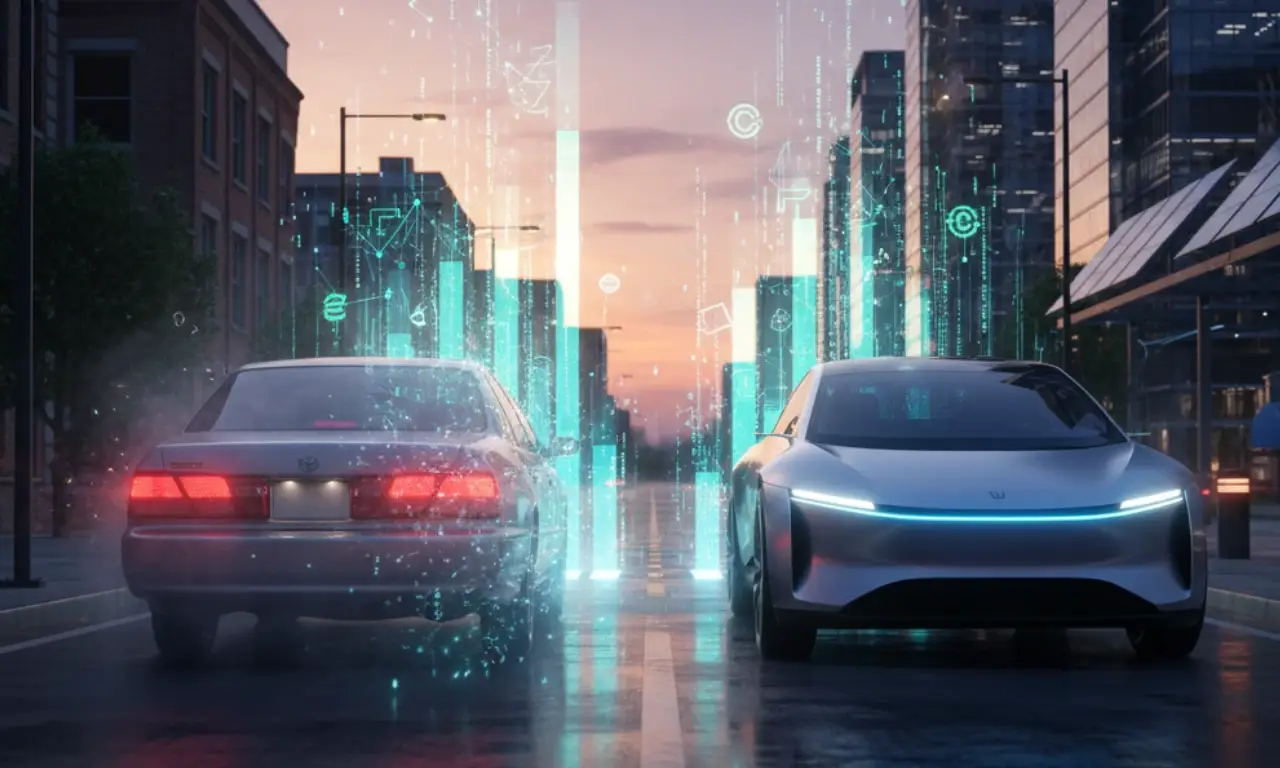
The electric vehicle (EV) revolution is well underway, yet a critical bottleneck threatens its growth: retail financing. Globally, EVs accounted for 9-11% of new vehicle sales in 2024, but the finance ecosystem struggles to keep pace. Experian reported that in Q4 2024, more EVs were leased (50.1%) than bought on loan (38.9%).
Paradoxically, a Federal Reserve study covering 85 million auto loans found that EV borrowers defaulted 29% less often than internal-combustion-engine (ICE) buyers and received 2.2 percentage points lower interest rates.
Despite this lower objective risk, digital loan applications reveal massive drop-offs: over 70% of prospective borrowers abandon applications when asked to upload bank statements, while 63% quit due to complex application flows. This gap between financing potential and execution defines the current landscape of EV retail financing.
Global EV Financing Trends
Worldwide, EV adoption is accelerating, driven by technology, government incentives, and evolving consumer preferences. In 2024, global battery-electric vehicle (BEV) sales rose to 11.12 million units, a 14% increase from the previous year. Yet growth is uneven. The United States saw only an 8.7% increase, with EVs representing roughly 9% of new-vehicle financing, whereas emerging markets like Brazil, Costa Rica, Uruguay, and Colombia experienced rapid expansion, with EV market shares between 6.5% and 15%.
Policy plays a pivotal role in shaping financing trends. The U.S. Inflation Reduction Act (IRA) provides a $7,500 clean vehicle tax credit, which can be leveraged through lease arrangements. This incentive, combined with state-level rebates, has made EV leasing particularly attractive, shifting residual-value risk from consumers to lessors. Similarly, European markets use purchase subsidies and import-duty exemptions to accelerate adoption, indirectly influencing EV loan uptake.
The economic case for leasing is strong. In Q4 2024, non-luxury EV lease payments averaged $504/month, compared with $709/month for equivalent loans a nearly 29% savings. Leasing also allows consumers to upgrade technology as it evolves and mitigates the uncertainty of future resale values. Globally, leasing accounted for roughly 45% of EV transactions in 2024, up from 25% in 2023, highlighting a fundamental shift in EV financing behavior.
India’s Emerging EV Financing Landscape
India’s EV market is expanding rapidly but exhibits unique characteristics. In 2024, the country sold 1.9 million EVs, a 19% increase over the previous year. The market is dominated by two-wheelers (59%) and three-wheelers (35%), with e-scooters alone accounting for over half of EV sales. Analysts project that electric two-wheeler sales could reach 7-9 million units by 2030, driven by urban commuters seeking cost-effective and eco-friendly mobility solutions.
Policy initiatives like EV subsidies have underpinned this growth. The FAME II program (2019-24) allocated ₹11,500 crore, largely to demand incentives and charging infrastructure. The PM E-DRIVE scheme launched in October 2024 earmarked ₹10,900 crore for charging stations, buses, and trucks.
However, EV financing itself receives limited policy support. The Finance Industry Development Council (FIDC) notes that high upfront costs and unclear insurance norms keep interest rates elevated. While some states have introduced stamp duty reductions and interest subsidies, these remain sporadic.
Infrastructure has grown alongside sales. By the end of 2024, India had over 25,000 public chargers, up from fewer than 1,000 in 2020. States such as Karnataka (5,765 stations), Maharashtra, and Uttar Pradesh lead the deployment. Notably, top EV sales states also host the majority of charging infrastructure, reducing range anxiety and supporting lenders in offering longer EV loan tenors.
#A critical innovation in India’s two-wheeler market is Battery-as-a-Service (BaaS). Consumers often purchase the vehicle while renting the battery at approximately ₹999/month, lowering upfront costs by 40%. Extensive battery-swapping networks allow riders to replace depleted batteries quickly, addressing range concerns without requiring expensive high-capacity in-vehicle batteries. Consequently, loans are smaller, tenors shorter (2-3 years), and fintech players increasingly factor battery usage and swap activity into credit assessments.
Digital Loan Journeys and Consumer Behavior
Despite favorable policies and infrastructure improvements, the digital financing journey for EVs is fraught with friction. Lengthy applications, extensive documentation, and cumbersome KYC procedures contribute to high abandonment rates. Industry benchmarks indicate that applications taking longer than five minutes see 60-63% drop-off, and bank-statement uploads alone account for a 70% loss of prospective borrowers. Many applicants simply lack ready digital copies, while manual verification slows approvals and kills momentum.
Emerging fintech innovations are tackling these bottlenecks. India’s Account Aggregator (AA) framework enables lenders to pull transaction data directly with borrower consent, reducing bank statement-related drop-offs to under 10%. Conversational lending via WhatsApp or chatbots has also demonstrated a 1.5× higher conversion rate, while Aadhaar e-KYC has the potential to dramatically accelerate verification if fully leveraged. Nonetheless, misalignment of loan terms with battery and technology cycles, slow follow-ups, and generic outreach still deter many potential buyers.
Risk Perceptions: Batteries, Resale, and Insurance
Both consumers and lenders harbor concerns affecting EV retail financing. On the consumer side, battery life, resale value, and charging infrastructure dominate considerations. Sparse charging networks in rural or less-developed areas exacerbate range anxiety, and unclear battery performance metrics contribute to reluctance.
Empirical studies suggest fears may be overstated. A large study covering 7,000+ EVs found most retain over 80% battery capacity even after 200,000 km, roughly the end of an 8-year warranty period. Despite this, EV resale values have dropped sharply in some markets, with average 2-4-year-old EVs declining from 87% to 39% of original price between 2022 and 2024. Uncertainty around battery chemistry, warranty enforcement, and technology obsolescence drives lenders to demand higher down payments or shorten loan tenors.
Insurance complexities also contribute. EV premiums can be higher due to separate battery coverage, unclear norms, and limited actuarial data. These combined risks often result in higher effective borrowing costs, suppressing demand for both loans and outright purchases.
EV vs ICE Financing and Fintech Innovations
EV loan tenors are typically shorter (3-4 years) than ICE loans (up to 5 years), mitigating battery and residual-value risks but increasing monthly payments. Federal data suggest EV loans could safely be priced 2.2 percentage points lower, yet legacy lenders often maintain higher rates due to perceived risk. Captive lenders aligned with OEMs consistently offer the most favorable terms, leveraging battery warranties, buy-back programs, and certified used EV markets.
Digital-first approaches distinguish EV financing from traditional ICE loans. Fintech platforms leverage AA APIs, Aadhaar e-KYC, AI-driven scoring, and telematics data to streamline onboarding and personalize credit terms. Payment models are evolving to meet consumer preferences, including flexible EMI options, pay-per-mile financing, usage-based insurance, and subscription-style models for battery leasing. These innovations position EV financing as a testing ground for next-generation lending technology.
Implications for Stakeholders
OEMs and Captive Finance Units must develop structured leases and subscription programs, provide transparent battery health certifications, and educate consumers on total cost of ownership. Co-branded EV-friendly loans and leases can build trust, while tracking battery health in service improves residual-value forecasting.
Fintech lenders and banks should streamline onboarding, adopt AI scoring models that incorporate battery and swap station data, offer flexible tenors, and align interest rates with observed lower default rates. Partnerships with OEMs and insurers for bundled offerings reduce collateral risk and enhance customer confidence.
FAQs
Q1. Lease or loan - which is better for EVs?
Ans. Leasing lowers monthly payments and transfers residual-value risk from the buyer to the lessor. Loans give full ownership but usually come with higher monthly costs.
Q2. Are EV loans riskier than ICE loans?
Ans. Data shows EV borrowers default 29% less than ICE borrowers. Despite perceived risk, EV loans can often be priced lower than conventional loans.
Q3. Why do digital EV loan applications drop off?
Ans. Long forms, document uploads, and slow KYC processes frustrate applicants. Over 70% abandon applications at the bank-statement upload stage alone.
Q4. How can lenders reduce perceived EV financing risk?
Ans. Providing battery warranties, clear residual-value forecasts, and flexible tenors improves consumer confidence. Bundled financing and co-branded loans further lower perceived risk.









Industries
Growth
Operations
Technology