
Why Indian Home Decor Manufacturers Are Sitting on an Untapped Brand Opportunity
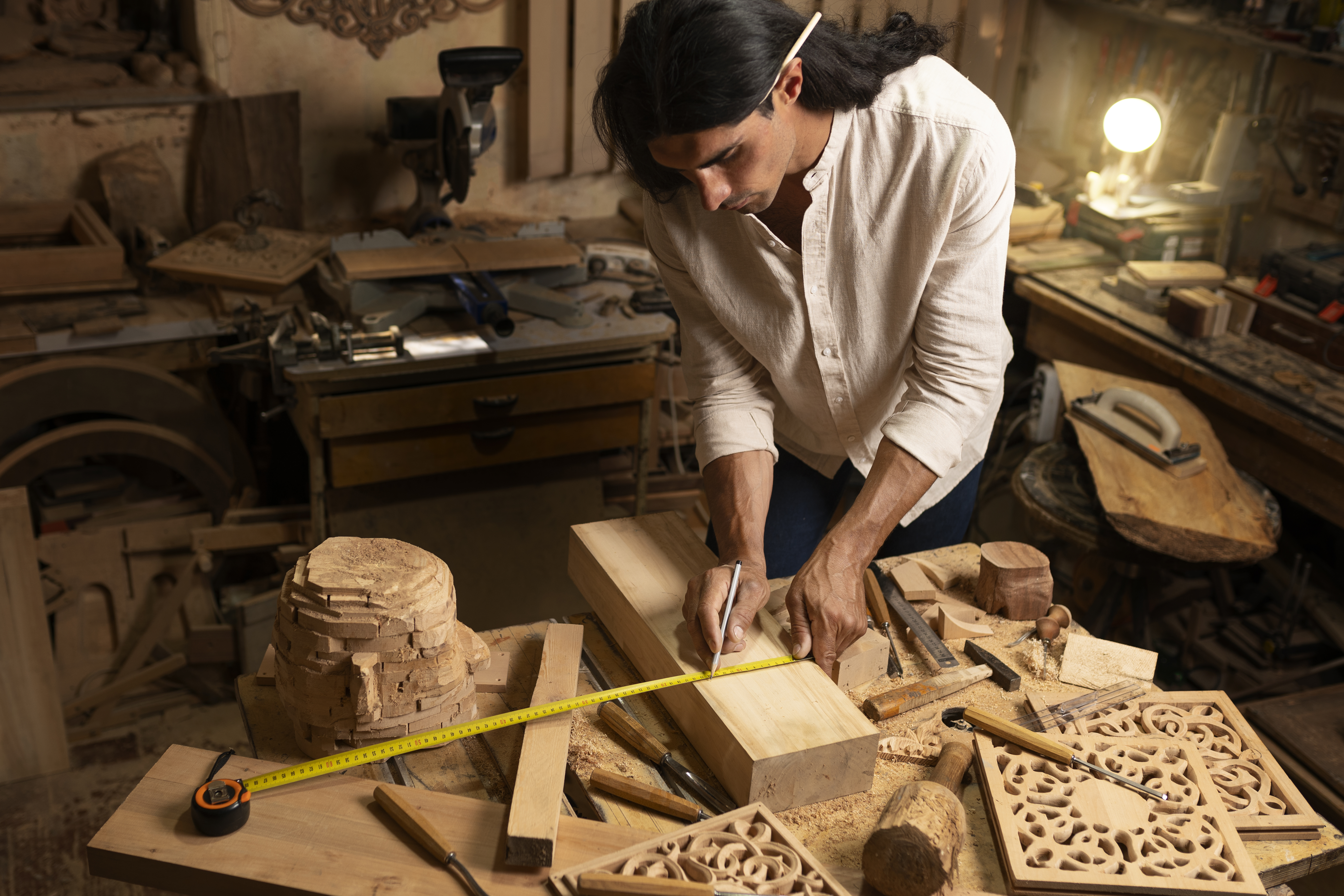
India's home and decor market reached USD 26.88 billion in 2025 and is projected to grow to USD 42.36 billion by 2034, according to IMARC Group. Behind this growth sits a largely invisible engine: thousands of manufacturers across Rajasthan, Gujarat, Uttar Pradesh, and Tamil Nadu who are crafting the very home and decor items that branded players sell at a significant premium. The margin, the loyalty, and the brand equity - none of it flows back to the factory floor. That is the fundamental business problem this article addresses.
The Manufacturer's Paradox in India's Home and Decor Sector
For decades, Indian home and decor manufacturers have operated in a comfortable but strategically limiting position. Orders come in from domestic retailers, export houses, and white-label buyers. Production scales. Revenue flows. The model works, until it doesn't.
The problem is structural. A manufacturer supplying cushion covers or decorative furniture pieces to a premium D2C brand earns a fixed margin on volume. The brand, however, earns three to five times that margin by adding a story, a digital presence, and a consumer relationship. The product is the same. The value capture is entirely different.
This is not a new observation globally, but it is an urgent one for Indian manufacturers specifically, because the market conditions to close this gap have never been more aligned. India's online home decor segment is forecast to grow at a CAGR of 10.9% between 2024 and 2029, according to Technavio. Over 20 million users purchased home decor products online in 2024 alone. The distribution infrastructure that once required large capital investments now exists as a plug-and-play layer through platforms like Amazon, Pepperfry, and Flipkart.
The question is no longer whether Indian manufacturers can build brands. The question is why so few have made it a strategic priority.
Why the Timing Is Structurally Favourable Right Now
Three converging forces make 2025 a defining window for manufacturer-led brand building in home and decor.
The first is the premiumisation wave. Luxury housing transactions climbed from 16% to 34% of national sales between 2018 and 2024, according to Mordor Intelligence. Consumers in metropolitan clusters are actively seeking differentiated, design-forward home and decor items. They are not price-sensitive on decor. They are quality and story-sensitive. A manufacturer with genuine craft expertise is better positioned to serve this consumer than a brand that sources from the same factory and adds a margin layer on top.
The second is the Tier-2 and Tier-3 expansion. As of 2024, over 100 million households exist in Tier-2 and Tier-3 cities where homeownership is rising rapidly, according to Ken Research. E-commerce platforms are actively investing in regional logistics to serve this demand. Manufacturers located in these geographies, many of whom are already producing furniture and decor for export markets, have a natural cost and proximity advantage that urban-first brands cannot easily replicate.
The third is the Make in India tailwind. Government initiatives including the Production Linked Incentive scheme and the Amended Technology Upgradation Fund Scheme are actively encouraging domestic manufacturing investment. For a manufacturer considering brand-building, these schemes represent capital that can fund both production upgrades and brand infrastructure simultaneously.
What Building a Brand Actually Means for a Manufacturer
The most common misconception among manufacturers exploring brand-building is that it begins with marketing. It does not. It begins with a venture architecture decision - a deliberate choice about what kind of business the organisation is becoming, not just what products it will sell under a new name.
Brand building for a manufacturer involves three distinct transitions. The first is from a B2B revenue model to a B2C or D2C model, which requires entirely different capabilities in consumer insight, digital commerce, and customer retention. The second is from volume-based pricing to value-based pricing, which demands a repositioning of the product itself, through design investment, packaging, and storytelling. The third is from operational efficiency as the core competency to brand experience as the core competency, which is a cultural and organisational shift, not just a commercial one.
None of these transitions are simple. But each of them is learnable, and each of them has been executed successfully by Indian manufacturers who made the leap. Urban Space, an Ahmedabad-based home and decor manufacturer, built a parallel D2C brand while continuing to produce for white-label buyers. The brand now sells across Myntra, Amazon, Pepperfry, Ajio, and Flipkart, with consumer-facing margins that far exceed its B2B supply margins.
The model works. The infrastructure exists. What is missing for most manufacturers is the structured venture framework to execute it without destabilising their core business.
The Business Opportunities Manufacturers Are Missing
India's home decor business opportunities extend well beyond decorative accessories. The furniture segment alone is projected to reach USD 37.72 billion by 2030, growing at a CAGR of 11.9%, according to Ken Research. The modular kitchen segment is on an equally steep trajectory, driven by urbanisation, nuclear family structures, and rising consumer spending on functional home upgrades. Both categories share a common structural reality: a fragmented manufacturing base supplying to consolidated branded players, with most of the margin sitting on the brand side of the equation.
For manufacturers operating in furniture, modular kitchen components, soft furnishings, or decorative home and decor items, the opportunity architecture is strikingly similar. The raw material is already in the factory. The consumer demand is already in the market. What does not yet exist, for most manufacturers, is the brand layer that converts production capability into consumer preference, and consumer preference into pricing power.
This is the home decor business opportunity in India that most manufacturers are leaving on the table. Not a new product. Not a new market. A new business model built on top of an existing operational foundation.
Why This Is a Venture Decision, Not a Marketing One
A manufacturer considering brand-building should not frame it as a marketing investment. That framing leads to underfunding, misaligned expectations, and eventual abandonment. The correct frame is a new revenue stream venture, the one that runs parallel to the existing supply business and eventually either surpasses it in margin contribution or creates an exit-grade asset.
Consider the economics. A manufacturer producing ceramic home and decor items at a factory gate price of INR 200 per unit supplies to a retailer at INR 280. The retailer sells at INR 700. A branded D2C play from the same manufacturer, with product design investment, a Shopify store, and a social media presence, sells the same item at INR 550, at a gross margin that is two to three times the supply margin, with full ownership of the customer relationship and repeat purchase data.
Scaled across even 10,000 units per month, the financial case for brand-building becomes a board-level conversation, not a marketing budget line item.
This is precisely where the venture architecture approach distinguishes itself from conventional brand consulting. The goal is not to create a brand campaign. The goal is to design, fund, and scale a new business unit that happens to be consumer-facing , with its own P&L, its own growth metrics, and its own strategic roadmap.
What a Structured Venture Build Looks Like
For a home and decor manufacturer, a structured brand venture typically progresses through three phases.
The first phase is market positioning and product design. This involves identifying the specific consumer segment the brand will serve, developing a design language that differentiates from both mass-market and premium imports, and creating a range of home and decor items that is manufacturable at scale with existing infrastructure. Data platforms like Intellsys.ai can play a critical role here by converting raw consumer signals and market data into actionable product and positioning decisions, reducing the guesswork that typically characterises early-stage brand development.
The second phase is distribution architecture. This covers the choice between marketplace-first, D2C-first, or hybrid channel strategies; the logistics and fulfilment infrastructure needed to serve consumer orders; and the digital commerce stack required to manage the brand's online presence. For manufacturers of furniture or modular kitchen components in Tier-2 locations, the marketplace-first approach often provides the fastest route to revenue while the brand builds its own consumer base.
The third phase is brand scaling and consumer retention. This is where performance marketing, content strategy, and community-building become the primary levers. A manufacturer-turned-brand that reaches this phase has crossed the most difficult threshold: it has acquired real customers, understood their preferences through data, and begun to build the loyalty moat that separates a brand from a supplier.
The Risks of Not Acting
The window is open now, but it will not remain open indefinitely. The Indian home and decor market is attracting significant international attention. Nitori, Japan's largest furniture retailer, entered India in late 2024. Swedish wallpaper brand Boråstapeter partnered with a Mumbai distributor in 2025. Global players entering with established brand frameworks and supply chain sophistication will find it easier to compete against unbranded Indian manufacturers than against manufacturers who have already built consumer-facing businesses.
HomeLane's acquisition of Design Café in September 2024, valued at USD 361 million, signals the direction the market is heading: vertical integration, brand consolidation, and consumer experience as competitive moat. Manufacturers who remain purely on the supply side of this consolidation wave will find their margins under sustained pressure as branded players gain more negotiating leverage.
The strategic imperative is clear. The execution complexity is real. The gap between the two is precisely where structured venture architecture delivers its highest value.
Conclusion
India's home and decor manufacturers are not sitting on a supply-side business. They are sitting on the raw material of some of the most valuable consumer brands this market will produce over the next decade. The production capability exists. The market demand is documented. The distribution infrastructure is accessible. What has been missing is the strategic framework to convert manufacturing expertise into brand equity, and a partner who can architect that transition without disrupting the core business.
The next frontier for India's home decor business opportunities will not be defined by who manufactures best. It will be defined by who builds the most trusted consumer relationship. GrowthJockey works with manufacturers and enterprises across furniture, modular kitchen, and home and decor items categories to design and scale ventures that bridge exactly this gap, combining data-driven positioning through Intellsys.ai, operational venture infrastructure, and a multi-domain playbook built across sectors from MedTech to FinTech to Consumer.
For manufacturers ready to move from supply to brand, the venture architecture conversation starts here. Explore how GrowthJockey's venture building approach helps enterprises turn operational strength into market-leading brands.
FAQs
Q1. What are the home decor business opportunities in India for manufacturers?
Ans. India's home and decor market is projected to reach USD 42.36 billion by 2034. Manufacturers in furniture, modular kitchen components, and decorative home and decor items can build branded D2C ventures on top of existing production capabilities, capturing significantly higher margins than supply-side models allow.
Q2. Can a home and decor manufacturer run a brand business without disrupting existing supply operations?
Ans. Yes. A parallel D2C or branded venture can be structured as a separate business unit with its own P&L, distribution channels, and product lines. Several Indian manufacturers, including Urban Space, have successfully operated both models simultaneously.
Q3. What is the difference between manufacturer and a brand in the home and decor sector?
Ans. A manufacturer produces home and decor items for retailers or white-label buyers, earning margin on volume. A brand owns the consumer relationship, commands premium pricing, and builds loyalty, capturing significantly higher margins on the same product.
Q4. How does a venture architect help manufacturers in the home and decor industry build a brand?
Ans. A venture architect designs, funds, and scales a new business entity, not just a campaign. The focus is on building a sustainable, scalable revenue stream with its own operational structure, rather than repositioning an existing product through marketing alone.









Industries
Growth
Operations
Technology