
How Quick Commerce Is Accelerating FMCG Sales Velocity
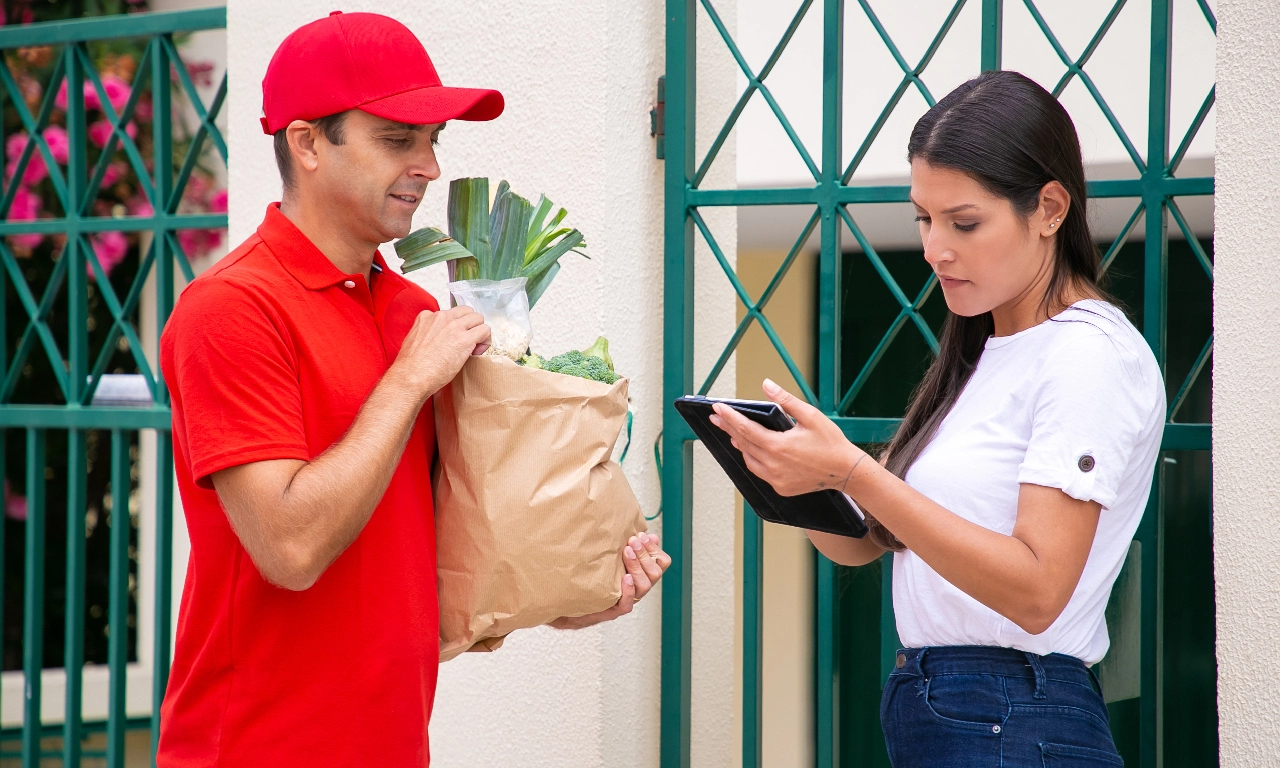
India’s fast-moving consumer goods (FMCG) sector, valued at over ₹20 lakh crore in FY2024, is undergoing a rapid digital transformation. While e-commerce unlocked convenience, quick commerce - defined by 10-minute delivery FMCG models - is now redefining what “fast” really means.
Platforms like Blinkit, Zepto, and Swiggy Instamart have changed how consumers shop for food, beverages, and essentials. In 2025, these platforms already account for nearly 35% of FMCG e-commerce sales and are expanding at 40%+ CAGR, making them the fastest-growing sales channel in urban India.
For brands, this isn’t just another distribution model - it’s a sales-velocity engine powered by data, proximity, and real-time demand signals.
Quick Commerce as the New FMCG Growth Lever
The quick commerce FMCG strategy revolves around one idea: speed equals sales. Every 10-minute delivery doesn’t just fulfil a need; it triggers higher purchase frequency and brand visibility.
Between FY2022 and FY2025, India’s quick commerce market grew 280%, crossing ₹64,000 crore in value and projected to hit ₹2 trillion by FY2028. While e-commerce took a decade to reach scale, quick commerce has done so in under three years - primarily driven by FMCG categories.
For example:
-
Food & Beverage brands like Nestlé, Britannia, and ITC reported 25–50% YoY growth from Blinkit and Zepto partnerships.
-
Personal Care brands use these apps to test premium SKUs in metros before rolling out nationwide.
-
Household Essentials players like Reckitt and Godrej use instant delivery to push new formats (e.g., compact floor cleaners).
This velocity comes from how quick commerce integrates supply-chain agility, digital advertising, and last-mile fulfillment - a triple engine few FMCG channels can match.
The Blinkit–Zepto Playbook: Inside India’s 10-Minute Delivery Model
The Blinkit Zepto seller strategy represents a new kind of collaboration between platforms and brands. Both companies have evolved from aggregators into data-driven merchandising partners.
How it works:
-
In-App Visibility: FMCG brands buy banner placement and category “hero slots” for time-bound events (e.g., Coke + chips during IPL).
-
Hyper-local Assortment: Dark stores curate products based on neighbourhood data - energy drinks near offices, baby care near housing clusters.
-
AI-based Inventory: Predictive algorithms ensure every SKU in a dark store sells within 48 hours.
Examples across sub-industries:
-
Food & Beverage: Dairy and ready-to-eat snacks dominate instant orders; Zepto’s beverage sales triple during summer peaks.
-
Personal Care: Last-minute grooming needs - razors, deodorants, hair gels - see strong repeat behaviour.
-
House Essentials: Surface cleaners and dishwash gels are now among the top five high-velocity items on Blinkit.
This model ensures that FMCG companies are not just selling fast - they’re selling smart, powered by data and micro-targeted campaigns.
Product Optimization for Instant Delivery
Quick commerce is forcing brands to rethink product design - a shift called quick commerce product optimization. The old “one-SKU-fits-all” model doesn’t work for 10-minute deliveries.
Companies now engineer products to fit small-basket, high-frequency urban consumption patterns:
-
ITC launched 100-gram ready-to-cook meal packs for dark stores, designed to fit into a rider’s delivery bag.
-
Britannia and Haldiram’s created mini-snack variants to boost trial orders.
-
Johnson’s Baby introduced compact baby lotion SKUs for instant-need replenishment.
-
Nestlé redesigned packaging for Nescafé sachets to improve handling and shelf life in micro-warehouses.
Optimised SKUs allow faster inventory rotation, better margins, and improved fill rates for dark stores. In other words, product design has become a growth lever, not just a marketing decision.
Sub-Industry Impacts and Success Stories
1. Food & Beverage - The Epicentre of Growth
Quick commerce now drives 70–75% of e-grocery orders. Brands like Dabur and Nestlé have seen their online sales double since joining Blinkit and Instamart. For impulse foods like chips and soft drinks, this channel adds incremental demand rather than cannibalising modern trade.
2. Personal Care - Micro-Moments, Macro Impact
Zepto’s “Need It Now” tab reports 20–30% higher conversion for beauty and grooming products. Brands such as P&G and L’Oréal use this data to push trial packs and seasonal variants.
3. Household Essentials - From Stock-Up to Top-Up
Consumers no longer wait for monthly refills. Dettol, Domex, and Surf Excel now experience reorder cycles as short as 5–7 days, compared to 12–15 earlier.
4. Baby Care - Instant Trust, Instant Delivery
Pampers and FirstCry have leveraged night-time “SOS deliveries” to build loyalty. Parents are more willing to pay a premium for availability - driving instant delivery sales growth.
5. Packaged Foods - New Launch Playground
Quick commerce is a go-to channel for trial generation. Tata Consumer and Yoga Bar run exclusive digital-first launches on Blinkit before scaling offline.
Each segment reveals a common truth - speed isn’t only about delivery, it’s about decision-making velocity inside FMCG organizations.
How Quick Commerce Drives Instant Delivery Sales Growth
Quick commerce transforms the traditional linear FMCG sales model into a real-time feedback loop.
-
Demand Trigger: A customer searches “juice” → Blinkit pushes Coca-Cola or Real with limited-time offers.
-
AI Forecast: Real-time data predicts spike → FMCG partner adjusts replenishment within hours.
-
Instant Refill: Warehouse restocks dark stores automatically through distributor integration.
-
Sales Velocity: Higher sell-through improves visibility and margins.
This loop compresses the go-to-market cycle from weeks to hours. FMCG firms using quick commerce data for forecasting report:
-
15–25% faster inventory turnover
-
10–12% higher repeat purchase rates
-
20–30% uplift in campaign ROI during promotional seasons
By combining AI forecasting with delivery analytics, companies are building agile “sense-and-respond” supply chains - the new competitive edge in FMCG.
Integrating Quick Commerce with Broader FMCG Strategy
Quick commerce doesn’t replace traditional distribution - it amplifies it. Forward-thinking companies are embedding this model into their wider go-to-market systems.
-
AI-Driven Forecasting: Nestlé uses Blinkit’s real-time data to adjust production forecasts daily, improving on-shelf availability.
-
Digitised General Trade: Hindustan Unilever’s Shikhar app connects kiranas to quick commerce networks for faster refills.
-
Micro-Retail Integration: Zepto and Swiggy are onboarding small stores as fulfillment partners, turning kiranas into micro-warehouses.
-
Collaborative Marketing: FMCG majors now run dual promotions - one for online shoppers (Zepto coupons) and another for local shops (bundle discounts).
The result is a hybrid ecosystem where speed, visibility, and replenishment work in unison. Quick commerce becomes the frontline trigger for sales, while AI forecasting and general trade maintain scale.
Growth-driven firms like ITC and HUL have begun treating quick commerce as a digital sales node, embedding it into their route-to-market blueprints.
The Road Ahead — From 10-Minute Delivery to 1-Hour Ecosystems
The next phase of evolution goes beyond grocery. Quick commerce is expanding into pharma, pet care, and lifestyle essentials forming integrated “1-hour ecosystems.”
Opportunities ahead:
-
Personalised Promotions: Real-time targeting (e.g., weather-based beverage ads).
-
Dynamic Pricing: AI adjusting discounts by hour or locality.
-
Product Localization: Regional assortments (e.g., cold-pressed oils in South India, millet snacks in West India).
Challenges remain - profitability, inventory duplication, and dark-store efficiency - but the long-term trajectory is clear. Quick commerce will become a core revenue channel within FMCG portfolios, not a supplementary one.
By 2030, over 40% of India’s FMCG sales could flow through digital and quick commerce platforms, reshaping the country’s retail DNA.
Conclusion - The New Sales Velocity Equation
The fusion of FMCG and quick commerce marks a defining shift in India’s urban consumption story. What began as a convenience trend is now a structural growth engine delivering measurable sales acceleration.
For FMCG leaders, the mandate is clear:
-
Treat quick commerce as an always-on sales ecosystem, not an experimental channel.
-
Optimise product design, pricing, and packaging for instant-delivery readiness.
-
Use real-time data from Blinkit and Zepto to power predictive planning and AI-driven replenishment.
Those who adapt early will gain a decisive edge in speed, visibility, and loyalty - the three cornerstones of future FMCG success.
Quick commerce is no longer about delivering faster.
It’s about selling smarter - in real time.
**GrowthJockey’s Perspective **
At GrowthJockey, we view quick commerce not as a disruption but as a natural evolution of India’s FMCG value chain.
The rise of 10-minute delivery models signals a deeper transformation where data, proximity, and predictive intelligence replace traditional notions of reach and shelf visibility.
This shift represents the emergence of a real-time commerce ecosystem, where every demand signal - a search, a location, or even a time of day - can shape production, packaging, and marketing decisions. For FMCG leaders, the opportunity lies in re-architecting sales systems around agility: integrating quick commerce insights with forecasting, local manufacturing, and dynamic pricing to stay contextually relevant.
Speed, in this context, is no longer an operational metric - it’s a strategic differentiator defining how brands will compete, scale, and stay visible in the decade ahead.
FAQs
1. What is driving the explosive growth of quick commerce in India?
Rising urban density, improved last-mile infrastructure, and changing consumer expectations for immediacy have made 10-minute delivery models mainstream.
2. How is quick commerce changing FMCG distribution strategies?
It’s pushing brands to shorten their supply chains, use micro-warehouses, and adopt data-led replenishment models instead of monthly distributor cycles.
3. Which FMCG segments are leading in quick commerce adoption?
Food & Beverages, Personal Care, and Household Essentials dominate because of high consumption frequency and impulse-buying behaviour.
4. How are brands adapting product design for instant delivery?
They are creating smaller, lighter, and faster-moving SKUs, optimised for small-basket urban orders and short delivery turnaround times.
5. What challenges still limit the scalability of quick commerce?
Profitability, dark-store efficiency, and inventory duplication remain key barriers, though improved AI forecasting and regional clustering are easing these constraints.







Industries
Growth
Operations
Technology