
India's Scrap Recycling Industry: The Trillion-Rupee Opportunity
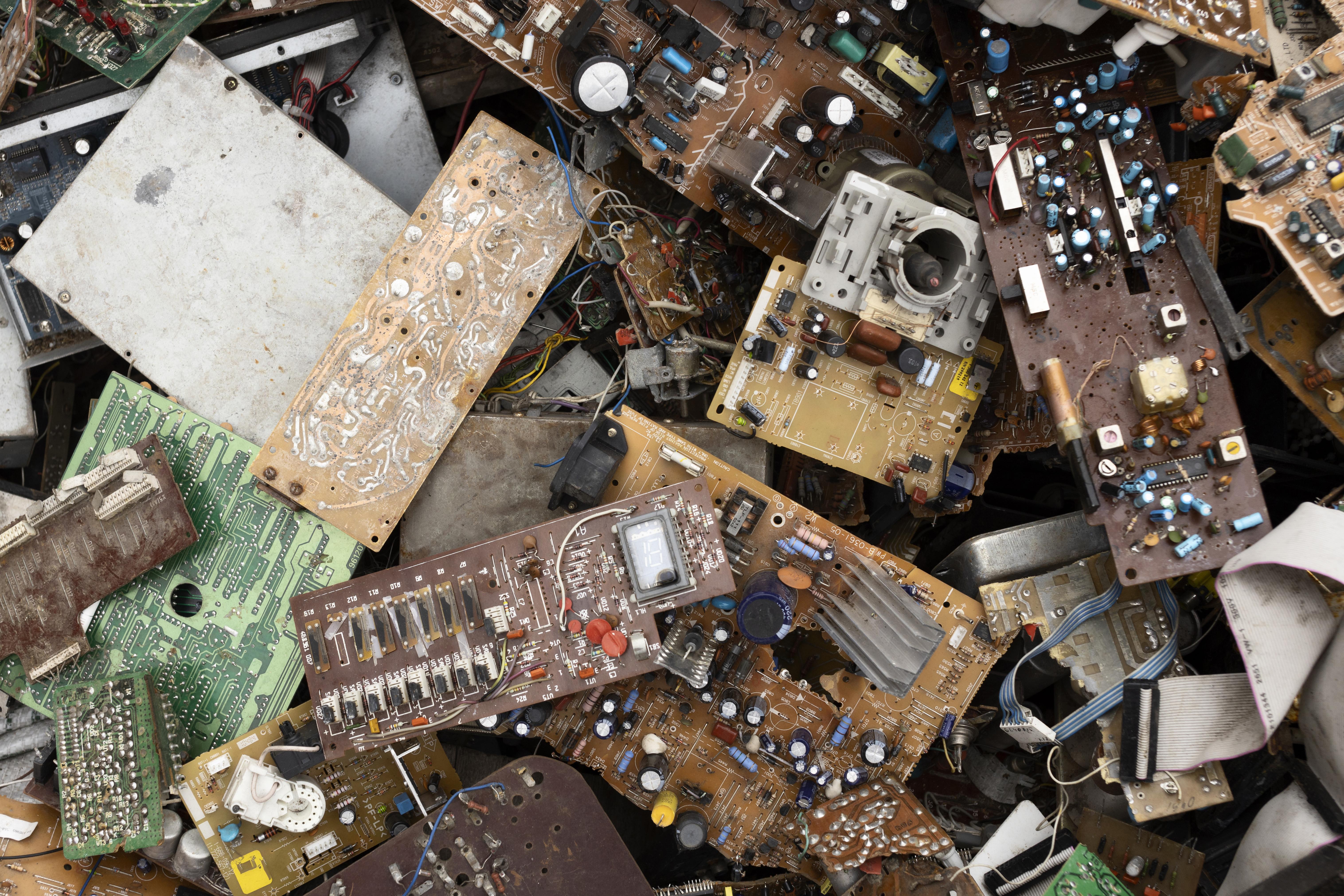
India generates over 62 million tonnes of municipal solid waste annually, a significant portion of which is potentially recyclable in some form. Yet most enterprises treat this material flow as a logistics problem rather than a commercial opportunity. That misread is becoming expensive as commodity cycles tighten, ESG mandates harden, and regulatory frameworks mature.
According to industry estimates, India's metal recycling market reached USD 11.40 billion in 2024 and is projected to reach USD 18.87 billion by 2033. Plastic recycling is expanding at 9.37 percent annually. E-waste is the fastest-growing vertical, with formal processing capacity and EPR-registered recycler counts expanding significantly over the past five years, though a large share of material still flows through informal channels. These numbers do not describe a fringe sector. They describe one of the most structurally sound growth industries in the Indian economy.
Why Most Enterprises Still Miss the Signal
The scrap industry suffers from a perception problem. The visible layer of informal collectors, roadside aggregators, and unregistered processing units obscures the sophisticated economic architecture operating behind it. Because the entry point looks low-margin and informal, most enterprises assume the entire industry shares those characteristics.
That assumption is wrong, and the cost of holding it is rising.
Enterprises that wait for the sector to 'look formal' before entering will find the most defensible positions already occupied. What appears informal at the surface is increasingly governed by precise regulatory mandates, tradable compliance certificates, verified carbon credit mechanisms, and industrial-scale processing technology.
According to industry research firms, India's waste management market is estimated at USD 13.60 billion in 2025, growing to USD 19.26 billion by 2030. That trajectory is not speculative, rather it is structurally locked in by the same forces driving the clean energy transition, the EV rollout, and corporate sustainability commitments.
The Material Economics Behind the Opportunity
Understanding why this sector commands serious capital attention requires understanding the economics at the material level, not just the headline market size.
Recycled copper uses up to 85 percent less energy than mined virgin copper. For aluminum, the energy savings relative to primary production reach 95 percent. These are not environmental statistics. They are cost advantages that manufacturing enterprises are actively seeking as energy prices remain volatile and sustainability procurement gains commercial weight.
Secondary metal production reflects this shift. The share of secondary copper in India's total copper mix increased from 24 percent in FY19 to 38 percent in FY23 and is projected to reach 55 percent by 2030. India's recycled aluminum market reached USD 4,758 million in 2024, growing at 14 percent annually, with projections to USD 10,023 million by 2030, per IMARC Group estimates. The structural preference for secondary materials is not a future trend. It is happening in live procurement decisions today.
Steel tells the same story. India's ferrous scrap usage increased more than 43 percent between 2021 and 2024. This shift in heavy industry's input preference signals a permanent realignment rather than a cyclical adjustment.
For manufacturers evaluating raw material strategies, the implication is direct: secondary material sourcing is moving from cost arbitrage to supply security. Organized recyclers providing traceable, certified materials increasingly command premium pricing over informal channels.
How the Sector Is Actually Structured
The scrap economy operates across three distinct layers, each with different capital requirements, margin profiles, and competitive dynamics. The strategic question for any market entrant is not whether opportunity exists but which layer suits their capabilities, and how to position across layers over time.
-
Collection and aggregation represents the widest and most fragmented layer. Kabadiwalas, informal collectors, and small aggregators handle enormous material volumes on thin margins. Startups like ScarpUncle and The Kabadiwala are formalizing this layer as differentiate through transparent pricing, digital payments, and scheduled pickups.
The structural challenge at this layer is supply irregularity and working capital pressure. Aggregators demand immediate payment while offering deferred terms to recyclers, creating cash conversion gaps that technology alone cannot bridge. Successful ventures here build predictable sourcing through institutional contracts with housing societies, corporate campuses and retail chains before pursuing geographic expansion.
-
Processing and value extraction is where capital intensity increases sharply and economics improve correspondingly. Recycling facilities with advanced technology access stable B2B contracts, EPR certificate revenues, and export opportunities. Attero claims its plant in Roorkee can recover up to 98 percent of useful materials from certain e-waste streams under controlled processes, compared to a broad industry range of 50-80 percent for less advanced facilities. That extraction efficiency differential, where it holds, directly determines margin structure. The value in processing is not in volume — it is in recovery rate.
Processing ventures entering battery recycling face particularly strong tailwinds. Battery scrap volume is projected to reach approximately 600,000 tonnes by 2030 as EV penetration accelerates, though estimates vary by source. Hindalco Industries committed Rs. 2,000 crore to a copper recycling unit targeting e-waste processing, with commissioning planned for FY27. When capital at that scale moves into a sector, it is a signal worth taking seriously.
-
Digital platform infrastructure represents the third layer, and arguably the highest-leverage entry point for ventures not seeking to operate physical assets. Attero's MetalMandi, a B2B platform providing AI-driven pricing intelligence, has reported significant adoption across multiple Indian states. By eliminating information asymmetry that historically allowed exploitative intermediaries to extract excess margins, platforms restructure competitive dynamics across the entire supply chain.
The EPR Framework
Extended Producer Responsibility (EPR) has fundamentally altered the economics of scrap recycling by creating demand that is decoupled from commodity price cycles. EPR mandates require producers to ensure specific recycling percentages or purchase certificates from authorized recyclers, thus creating a tradable compliance market with price discovery independent of raw material markets.
The EPR framework creates guaranteed offtake for authorized recyclers. As per current CPCB guidelines, e-waste recycling targets start at 15 percent of sales from 2023-24, rising to 20 percent thereafter. Automakers are required to ensure recycling of 8 percent of steel used in vehicles sold 20 years prior, creating predictable demand as historical sales data directly determines future recycling requirements. These targets are policy-dependent and subject to revision.
For authorized recyclers, EPR revenue offers something rare in commodities: demand inelasticity. Compliance deadlines force producers to purchase certificates regardless of price fluctuations, providing revenue stability through commodity volatility that no other mechanism can replicate.
Carbon Credits
Beyond EPR certificates, carbon credits represent an emerging revenue stream that significantly changes the economics of organized recycling. Attero is among the early players in India to pursue carbon credits for recycling e-waste and lithium-ion batteries, with its Roorkee plant generating verified CO2 reductions under international carbon mechanisms.
India has introduced a Carbon Credit Trading Scheme framework targeting Iron and Steel, Aluminum, and Cement industries, with scrap recycling recognized as an emission reduction measure. The market is still evolving operationally, but the regulatory intent is clear: recyclers generating verifiable carbon credits are positioned to access dual revenue streams from material sales and credit trading as the framework matures.
The Real Entry Barriers Are Operational, Not Financial
The common assumption that capital represents the primary barrier to scrap sector entry misunderstands the industry. Capital availability for ventures addressing material problems is substantial globally. The actual barriers are operational and regulatory.
At the collection end, achieving unit economics requires density that takes years to build through relationship development and route optimization. At the processing end, securing consistent feedstock supply determines capacity utilization far more than capital expenditure. Most recycling ventures fail not from lack of funding but from inability to secure material inflows at predictable costs.
Regulatory compliance simultaneously creates the most significant moat for organized players. Obtaining State Pollution Control Board consent, EPR registration, and operational licenses requires expertise and patience that deters informal entrants. For e-waste and battery recycling, CPCB registration and quarterly reporting obligations favor established players with dedicated compliance infrastructure.
Regulatory signals in early 2025 pointed toward stricter enforcement of E-Waste Management Rules, with penalties for non-compliance creating a more challenging environment for unregistered processors. This enforcement posture accelerates the competitive disadvantage of informal operators, driving a gradual transfer of market share toward organized, compliant players.
Four Strategic Approaches to Market Entry
Four archetypes have emerged from the market, each suited to different capability profiles and capital structures.
-
Collection-focused aggregation builds technology-enabled networks targeting specific geographies or customer segments. The key variable is density, i.e. achieving sufficient volume within a service area before expanding. Working capital management is the operational constraint, as material must be purchased before resale.
-
Processing-specialized operations establish recycling capacity for specific material streams. E-waste and battery recycling offer higher value extraction but require specialized permits. Location relative to feedstock sources and end-user proximity both influence economics significantly.
-
Platform-based marketplaces create digital infrastructure connecting fragmented supply with consolidated demand. Marketplace models avoid physical asset ownership but require achieving liquidity on both sides before revenue materializes. Transaction fees and value-added services such as logistics, financing, compliance documentation represent the revenue model.
-
Vertical integration controls the complete value chain from collection through processing to end-user sales. This approach demands significant capital but captures margin at each stage while ensuring feedstock security for processing. Execution capability across multiple simultaneous functions is the binding constraint.
Most successful ventures begin with one archetype and expand over time. A collection network might develop small-scale sorting to improve material quality. A processing facility might build captive collection infrastructure to secure feedstock at favorable economics. The initial choice is strategic but need not be permanent.
Building Ventures That Operate as Systems
Identifying the opportunity is the simpler part of the challenge. Execution determines outcomes, and execution in the scrap sector requires coordinating strategy, technology, operations, and regulatory compliance simultaneously.
Traditional consulting approaches, providing recommendations for internal teams to execute, consistently underperform in industries with this level of operational complexity. The gap between strategic clarity and operational delivery in scrap ventures is where most market entry attempts fail.
A venture architecture approach addresses the scrap sector as an end-to-end system rather than a collection of discrete decisions. For collection-focused ventures, this means designing service area density models, developing dynamic pricing algorithms connected to downstream markets, implementing route optimization integrated with driver dispatch, and establishing automated reconciliation between material purchase and resale. For processing facilities, it encompasses feedstock procurement strategy, processing workflow optimization for maximum recovery rates, quality certification systems, and sales channel development including EPR certificate and carbon credit monetization.
GrowthJockey operates as a venture architect building these integrated systems for enterprises entering the scrap sector. From initial market assessment through facility design to operational launch and scaling, the approach addresses every component required for success rather than advising on isolated elements. For organizations evaluating scrap sector entry, the relevant question is not whether the opportunity is real. It is how to execute against it faster and with less risk than building component-by-component.
The Decade Ahead
India's scrap industry is entering an inflection phase where structural drivers reinforce each other. EPR mandates are expanding. Carbon credit frameworks are maturing. EV adoption is accelerating battery scrap volumes. Corporate sustainability commitments are creating demand pull for verified recycled content. Technology costs for automated sorting and processing are declining, making previously uneconomic material streams viable.
The convergence of regulatory push, market pull, technology enablement, and ESG capital creates conditions where formalization in India's scrap sector is not a matter of possibility but of timing. The enterprises that build collection networks, processing capacity, and technological infrastructure before markets reach saturation will hold defensible positions that latecomers cannot replicate.
Conclusion
India's scrap recycling sector is one of the rare industries where environmental imperatives, regulatory mandates, and commercial viability align simultaneously. Material economics favor secondary inputs. Compliance frameworks create demand independent of commodity cycles. Carbon credit mechanisms add revenue layers and the competitive landscape is still early enough that organized entrants can establish durable advantages over informal incumbents.
The next frontier moves beyond material recovery toward integrated circular systems where products are designed for disassembly, tracking mechanisms enable material provenance across full lifecycles, and secondary materials become preferred inputs over virgin extraction by default. Reaching that frontier requires ventures built as complete operating systems, not assembled from disconnected components.
GrowthJockey builds these systems end-to-end for enterprises entering the scrap space, from designing collection networks with optimal density economics to establishing processing facilities with maximum recovery efficiency to deploying platforms like Intellsys.ai for real-time market intelligence. For organizations seeking to formalize scrap procurement, launch recycling operations, or capture value from expanding EPR mandates, the venture architecture approach accelerates time-to-market while reducing execution risk through methodologies tested across multiple operational scrap ventures.
FAQs
Q1. What is the current size of India's scrap recycling industry?
Ans. India's metal recycling market reached USD 11.40 billion in 2024 and is projected to reach USD 18.87 billion by 2033. The e-waste recycling segment, valued at USD 2.8 billion in 2025, is projected to reach USD 5.5 billion by 2032.
Q2. How do EPR mandates change the economics of scrap recycling?
Ans. EPR mandates require producers to meet specific recycling targets or purchase compliance certificates from authorized recyclers, creating demand that is decoupled from commodity cycles. This gives organized recyclers revenue stability that informal channels cannot access.
Q3. What are the real barriers to entering India's scrap sector?
Ans. The primary barriers are operational, building collection density, securing consistent feedstock supply, and obtaining regulatory clearances from State Pollution Control Boards. Capital availability is not the binding constraint; execution capability and compliance infrastructure are.
Q4. What role do carbon credits play in scrap recycling economics?
Ans. India has introduced a Carbon Credit Trading Scheme framework that recognizes scrap recycling as an emission reduction measure. As the market operationalizes, authorized recyclers with verifiable material documentation are positioned to access dual revenue streams from material sales and credit trading, improving the economics of organized recycling over informal alternatives.









Industries
Growth
Operations
Technology