
Why Micro-Retail Networks Drive FMCG Distribution Growth
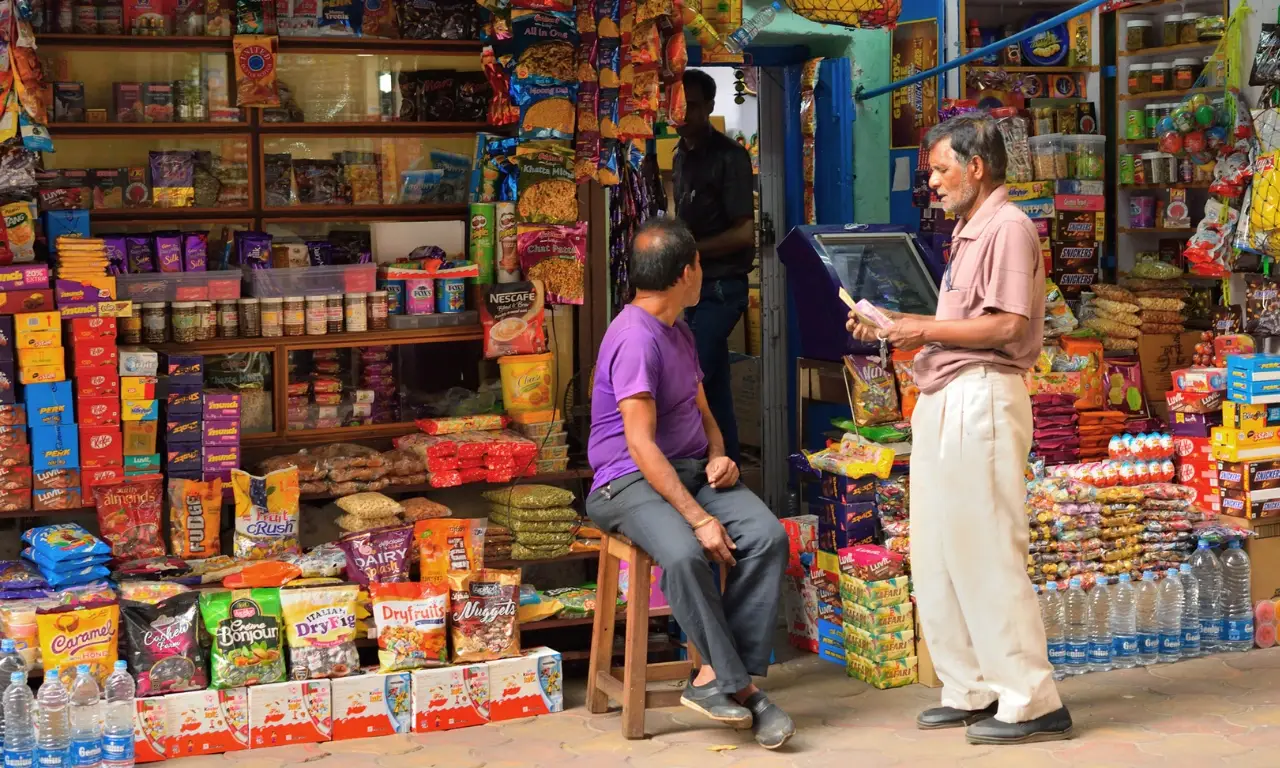
India’s ₹20-lakh-crore FMCG industry is racing toward a digital and demographic inflection point. While e-commerce and quick commerce dominate headlines, 13 million+ micro-retail outlets - the humble kiranas and neighbourhood stores - still move nearly 90 percent of FMCG goods.
Each store sits within walking distance of consumers, knows local tastes intimately, and offers instant credit and trust. The next wave of FMCG growth won’t come from building new malls - it will come from modernising micro-retail FMCG distribution through digital tools, analytics, and ecosystem collaboration.
The Untapped Power of Micro-Retail FMCG Distribution
Micro-retail forms the invisible backbone of India’s consumption economy. These stores handle almost 60 percent of urban grocery volumes and 70 percent of rural trade. Their strength lies in proximity, familiarity, and agility: even during the pandemic, kiranas recorded 10–12 percent volume growth while modern trade stalled.
Yet most remain analog - ledgers instead of dashboards, verbal orders instead of digital replenishment. Digitising this last mile could unlock a 20–25 percent sales lift for brands by improving visibility, assortment, and fulfilment speed.
Small Retail Network Management - From Manual Chains to Smart Ecosystems
Historically, distribution followed a linear chain: company → distributor → retailer → consumer. Today, small retail network management platforms are collapsing that distance.
-
Hindustan Unilever’s Shikhar app connects over 1.4 million retailers for one-click ordering and AI-based “Smart Basket” suggestions.
-
ITC and Marico run predictive supply chains that alert distributors when stocks dip below threshold.
-
Reliance JioMart Partner digitises three million kiranas through integrated catalogues, payments, and delivery tracking.
Across personal care, foods, and household essentials, this shift means fewer stock-outs, higher on-shelf availability, and data-driven promotions. FMCG majors are realising that managing thousands of small outlets efficiently can yield the same revenue impact as expanding to new cities.
Neighborhood Store FMCG Sales - The Pulse of Everyday Demand
Even in metros, neighborhood store FMCG sales dominate daily consumption because trust, immediacy, and personal credit matter more than discounts.
-
Dabur and Colgate use micro-distributors to reach Tier-2 belts and monitor SKU performance weekly.
-
Godrej Consumer deploys tablet-based POS tools that analyse repeat buying patterns for hair-care lines.
-
Nestlé India’s Smart Kirana program installs digital shelves and scanners to capture real-time sales of Maggi, Nescafé, and KitKat.
Each store becomes a micro sensor of demand. When aggregated, these signals create a nationwide heatmap that helps brands anticipate spikes in local categories — for example, glucose drinks in summer or cold balms in monsoon. Data-driven local visibility is now as valuable as shelf space.
Kirana Store Optimization - Digitising the Last Mile
Kirana Store optimization is the new frontier of FMCG execution. Instead of focusing only on distributor automation, companies are empowering store owners themselves.
Key levers include:
-
Digital ordering and UPI payments – cutting manual errors and credit delays.
-
Smart inventory tracking – POS-based alerts for fast-moving SKUs.
-
Localized marketing – WhatsApp groups or QR-based deals to engage nearby consumers.
-
AI replenishment tools – recommending reorder quantities per SKU.
Examples:
-
P&G’s Smart Basket AI tool advises kiranas on optimal Pampers and Gillette variants per locality.
-
Marico’s D2R (Distributor-to-Retailer) model enables same-day delivery for Saffola Oats and Parachute, tripling order frequency.
The outcome is clear: improved shelf utilization, higher turnover, and empowered entrepreneurs who run their stores like data-driven mini-businesses.
Retail Point Management - From Ledgers to Learning Systems
The real leap lies in retail point management - capturing, analysing, and acting on granular outlet data.
Digital tools such as Bizom, RedCloud, and Retail360 turn each kirana into a measurable node:
-
Coca-Cola’s Retail360 uses POS feeds to tailor promotions by outlet performance.
-
HUL’s AI Smart Basket within Shikhar analyses sales history and recommends products likely to move fastest in that micro-market.
-
ITC Foods uses predictive routing so distributors replenish high-velocity SKUs twice a week instead of once.
Quantifiable impact:
-
Stock-outs reduced by 30 percent
-
Per-store revenue up 12–15 percent
-
Restock time cut 20–25 percent
Sub-industry applications:
-
Household Essentials: Predictive models adjust Dettol and Harpic inventory based on seasonal hygiene trends.
-
Packaged Foods: Data reveals that northern states buy larger snack packs while southern cities prefer single-serve SKUs - guiding assortment decisions.
Retail points, once invisible, are now becoming the building blocks of India’s connected commerce grid.
The Micro-Retail Flywheel - How Local Stores Accelerate Sales
A new growth logic is emerging - the Micro-Retail Flywheel:
-
Data Capture at Store Level → every sale recorded digitally.
-
Predictive Demand Forecasting → AI identifies fast-moving products.
-
Dynamic Distributor Routing → logistics adjusted in real time.
-
Instant Replenishment → dark-store or warehouse refills within 24 hours.
-
Faster Sell-Through & Repeat Sales → improved cash flow and loyalty.
Case in point:
-
Dabur’s “Hub and Spoke” model connects 30 000 kiranas through micro-warehouses, delivering an 18 percent sales uplift in semi-urban clusters.
-
Britannia combined digital vans with GPS tracking, reducing restock time by half and boosting biscuit sales in small towns.
Each digitised retailer amplifies network speed - and collectively, the network behaves like a nationwide sales accelerator.
Challenges and Enablers
Key Challenges
-
Fragmented distributor infrastructure with inconsistent data capture.
-
Low digital literacy among small retailers.
-
Manual claim reconciliation slowing incentives.
Enablers on the Rise
-
ONDC Integration: connecting kiranas to open digital marketplaces.
-
Low-cost SaaS solutions: subscription-based apps for order tracking and payments.
-
BNPL (Buy Now Pay Later) for working-capital flexibility.
-
Government digital-inclusion drives: UPI 2.0 and BharatNet enabling rural connectivity.
Together, these enablers lower the entry barrier for small retailers to adopt technology, making digital participation a default rather than a luxury.
The Road Ahead - From Kiranas to Connected Retail Networks
The evolution from scattered kiranas to connected micro-retail ecosystems is accelerating. FMCG companies are setting up micro-warehouses inside cities to replenish stores within hours, turning urban neighbourhoods into hyper-responsive supply webs.
Emerging directions:
-
Phygital distribution: offline relationships enhanced by online visibility.
-
Omnichannel loyalty: single-customer view across kiranas, e-commerce, and quick commerce.
-
AI forecasting at pin-code level: merging sales data from retailers, ONDC nodes, and delivery apps.
By 2030, digitally enabled micro-retail could account for half of India’s incremental FMCG growth, creating a trillion-rupee opportunity built not on disruption but on inclusion.
Conclusion - The Power of Proximity
Micro-retail is not small business; it is India’s largest growth engine hidden in plain sight.
Each neighbourhood shop is a distribution node, a data point, and a relationship hub rolled into one.
For FMCG CXOs, the mandate is straightforward:
-
Invest in small retail network management platforms that unify ordering, payments, and analytics.
-
Deploy AI-based retail point management dashboards to predict demand by street, not just by state.
-
Enable mom-and-pop store optimization through digital training, working-capital support, and performance incentives.
Sales growth in the coming decade will hinge not on how fast brands advertise, but on how intelligently they empower every store within 500 meters of the consumer.
The future of FMCG distribution isn’t distant - it’s right around the corner.
GrowthJockey’s Perspective
GrowthJockey views micro-retail modernisation as the next competitive frontier for India’s FMCG sector. The power of kiranas lies not only in their reach but in their relevance. Digitisation, therefore, isn’t about scaling distribution; it’s about translating this hyperlocal intelligence into measurable sales advantage.
As India moves toward connected commerce, GrowthJockey believes the brands that win will be those that integrate kirana networks into their digital core - turning millions of local stores into real-time sensors of demand, inventory, and consumer sentiment. In the age of algorithms, proximity remains the most powerful data point.
FAQs
1. Are kirana stores still crucial for FMCG distribution?
Ans Yes, they handle nearly 90 percent of all FMCG sales in India.
2. Can micro-retail digitisation really increase brand sales?
Ans Yes, it can lift sales by 20–25 percent through better visibility and fulfilment.
3. Is digital transformation affordable for small retailers?
Ans Yes, low-cost SaaS tools and ONDC integration make it highly accessible.
4. Will quick commerce replace neighbourhood kiranas?
Ans No, quick commerce complements kiranas but cannot replicate local trust.
5. Can AI forecasting help kiranas manage inventory smarter?
Ans Yes, predictive tools optimise stock levels and reduce product wastage.








Industries
Growth
Operations
Technology