
Reinventing EV Financing: AI, New Models & Collaboration
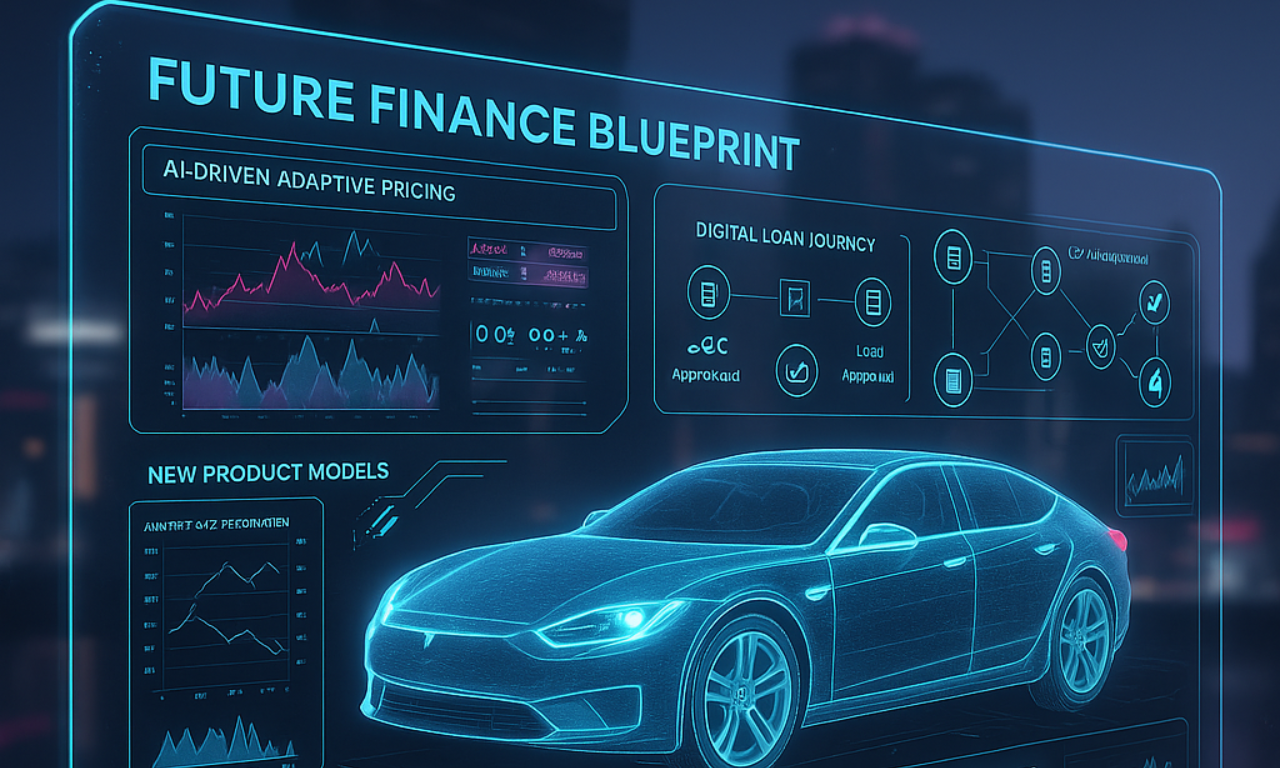
The shift to electric mobility is a financial revolution, not just a tech change. India’s 2030 EV targets—30% of private cars, 70% of commercial vehicles, 80% of two- and three-wheelers—require more than batteries and chargers. Success depends on reinventing EV financing to be accessible, adaptive, and risk-aware. High prices, battery and resale uncertainties, and conservative lending create a leaky loan funnel. AI-driven pricing, innovative products, and ecosystem collaboration are key to making EV adoption affordable and scalable for households and fleets.
AI-Driven Pricing and Risk Models
Traditional auto loan pricing relies on predictable depreciation, fuel costs, and residual values. EVs disrupt these assumptions. Batteries represent 30-40% of vehicle cost, technological cycles accelerate depreciation, and charging infrastructure varies widely across geographies.
AI-powered risk models provide a solution, transforming loans into personalized, risk-sensitive products.
Telematics-Powered Risk Assessment
EVs are data-rich machines. Telematics track mileage, charging cycles, and even driver behavior. Lenders can use this data to implement usage-based credit scoring, rewarding responsible drivers with lower EMIs. For fleet operators, telematics aligns repayment schedules with cash flows. A delivery fleet with 95% uptime presents far less risk than a lightly used private EV in an area with poor charging infrastructure.
Battery Health Integration
Battery degradation is a central concern in EV financing. AI integration of real-time battery health certificates-through OEM APIs or battery-swap networks-allows dynamic risk assessment. Lenders can offer differentiated pricing: vehicles with 90% battery health after two years command better refinancing terms than those at 70%. Battery scores could become as influential as credit scores in retail lending.
Dynamic Pricing Engines
AI-driven pricing engines combine borrower profiles, telematics data, battery health, and macro factors such as electricity tariffs and policy incentives. This enables lenders to offer transparent, adaptive interest rates, reducing abandonment and improving affordability. Just as AI transformed insurance pricing, it can reshape EV financing into personalized, fair, and data-backed loans.
New Product Models for EV Financing
Traditional auto loans are insufficient for the evolving EV market. Consumers and fleets require modular, flexible financing solutions.
Battery-as-a-Service (BaaS) Loans
Batteries constitute the single largest cost component of EVs. BaaS models separate vehicle and battery ownership: the buyer purchases the EV at a lower upfront cost while subscribing to battery services monthly.
-
For lenders: Smaller ticket sizes and shorter tenors reduce exposure.
-
For consumers: Eliminates battery-risk anxiety and aligns upfront costs with ICE vehicles.
Indian two-wheeler companies have piloted BaaS with battery swap stations, enabling lenders to structure recurring micro-loans bundled with EMIs.
Subscription and Leasing Models
Globally, leasing has overtaken traditional loans. Experian reported that in Q4 2024, 50.1% of EVs in the U.S. were leased compared to 38.9% on loans. Leasing mitigates residual-value risk and lowers monthly payments.
In India, subscription models-particularly for two-wheelers and fleets-bundle insurance, maintenance, and charging into one monthly payment, enhancing predictability and consumer comfort.
Bundled Insurance-Finance Products
EV insurance costs are high due to battery replacement and repair uncertainties. Bundling insurance with financing smooths out cost shocks. AI-driven telematics enables usage-based insurance rewarding careful driving and well-maintained batteries with lower premiums.
Micro-Finance and BNPL for EVs
Two-wheelers, which make up nearly 60% of India’s EV sales, require innovative credit solutions. BNPL-style products for down payments, short-term battery loans, or pay-per-use financing linked to kilometers driven can unlock adoption among young, urban, and unbanked consumers.
Bottom line: Modular, personalized financing solutions expand EV accessibility across diverse consumer segments-from urban commuters to corporate fleets.
Green Capital Mobilization
EV adoption at scale demands cheaper capital. Despite lower default rates (29% below ICE vehicles), EV loans often carry higher interest rates-a mispricing driven by perception rather than data.
Green Credit Lines
ESG-focused investors, multilateral banks, and sovereign wealth funds are increasingly channeling capital into sustainable finance. Dedicated green credit lines can reduce the cost of capital for banks and NBFCs, allowing interest rates to fall by 100-150 basis points and improving affordability.
Green Bonds and Securitization
EV loan portfolios can be securitized as green asset-backed securities, attracting global ESG investors at lower yields. Indian lenders can leverage taxonomies classifying EV loans as “green assets” to raise low-cost capital.
Policy Incentives
Government schemes-interest subvention, risk-sharing guarantees, and tax incentives for green portfolios-can accelerate EV lending. Just as priority-sector lending expanded rural credit, green-priority lending can mainstream EV finance.
Bottom line: Mobilizing green capital transforms EV loans from niche offerings into a mainstream, low-cost credit category, crucial for mass adoption.
Ecosystem Collaboration: Financing Beyond Silos
EV financing innovation cannot succeed in isolation. OEMs, banks, fintechs, dealers, insurers, utilities, and policymakers must align incentives and capabilities.
OEMs and Captive Finance Arms
OEMs reduce consumer anxiety through residual-value guarantees, battery warranties, and integrated lease options. Sharing battery health data with lenders improves risk assessment and unlocks better rates.
Banks/NBFCs and Fintechs
Banks provide balance sheet strength; fintechs provide agility. API-driven journeys, Account Aggregator (AA) integration, e-KYC, and conversational onboarding reduce friction. Consumers benefit from instant pre-qualification and faster approvals.
Dealers as Orchestrators
Dealers remain trusted intermediaries in India. Dealer-assisted digital journeys, powered by tablets and integrated AA/AI scoring, enable instant eligibility checks. Dealers can also bundle financing with subscriptions, insurance, or charging infrastructure.
Insurers and Utilities
Insurers can offer usage-based insurance tied to telematics. Utilities can co-finance home charging infrastructure as part of EV loan packages.
Policymakers and Regulators
Open-data standards (AA, battery health certificates) and green credit incentives create confidence for lenders and buyers. Policies supporting battery buy-backs and warranties mitigate risk.
Bottom line: Only a collaborative financing ecosystem can deliver scalable, affordable EV adoption.
The India Context: Tailoring Financing to Market Realities
India’s EV market is distinct. Nearly 59% of sales are two-wheelers, and 35% are three-wheelers. Localized financing solutions are therefore essential.
-
Two-Wheeler Financing: Micro-loans, BNPL down-payment schemes, and battery-swap subscriptions suit urban commuters and gig workers.
-
Fleet Electrification: Delivery and logistics fleets benefit from telematics-enabled loans with dynamic risk pricing.
-
Urban vs Rural Divide: Urban adoption is boosted by charging infrastructure; rural adoption needs financing inclusivity and policy support.
To meet 2030 goals, financing must be modular, inclusive, and adapted to scooters, rickshaws, and small fleets, not just cars.
Conclusion: Financing as the Catalyst for Mass EV Adoption
India’s EV transition will be shaped as much by loan contracts, leases, and subscription bundles as by factories or policy. AI-driven pricing, BaaS loans, subscription models, and green credit lines represent the future of financing.
Yet technology alone is insufficient. Ecosystem collaboration-OEMs sharing battery data, banks embracing AA, fintechs enabling API layers, dealers guiding buyers, and policymakers incentivizing green capital-will determine success.
Financing is not a side note; it is the backbone of India’s EV growth story. Without innovative, accessible, and digital financing, adoption will stall at the premium tier. With it, India can leapfrog into a mass-market EV economy, achieve 2030 targets, and lead globally in sustainable mobility.
FAQs
Q1.How does AI-driven pricing help?
Ans. AI combines telematics, battery health, and borrower data to calculate personalized interest rates. This reduces default risk and improves affordability..
Q2.What is Battery-as-a-Service (BaaS)?
Ans. Buyers pay a monthly fee for battery use, lowering upfront EV costs. BaaS separates vehicle and battery ownership to reduce financial barriers..
Q3.How do green credit lines support EV adoption?
Ans. ESG-focused investors fund EV loans at lower costs, reducing interest rates by 100-150 bps. This makes financing more affordable for both consumers and fleets..
Q4 .Why is ecosystem collaboration crucial?
Ans. OEMs, banks, fintechs, dealers, and regulators must align to reduce loan friction and risk. Collaborative digital journeys ensure scalable and affordable EV adoption.









Industries
Growth
Operations
Technology