
Return Rate Analysis: Understanding What Drives Repeat Purchases
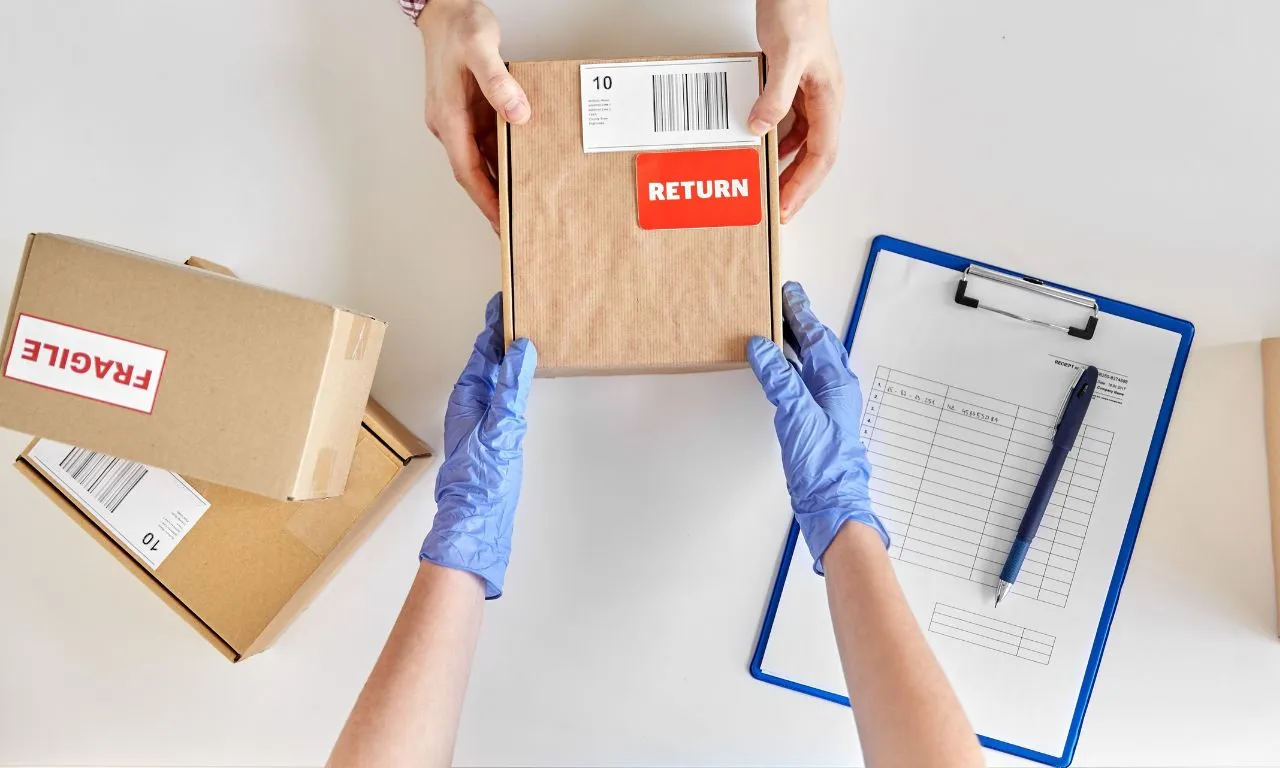
Let's be honest: for an Operations Manager or Supply Chain Head, product returns are a nightmare. They're a logistical headache, a margin-killing "cost of doing business," and the part of the P&L no one wants to talk about. We're all focused on reverse logistics optimization — how to process this box for ₹10 cheaper than last quarter.
But what if that's the wrong way to look at it?
That "costly" return from a customer is actually the most valuable, brutally honest dataset your brand owns. You paid for that feedback, in ad spend, in shipping, and in customer trust. The problem is that most brands just process the box and ignore the data goldmine inside.
It's not just a "returns" problem; it's a "listening" problem. Your return data is a roadmap to higher profit, better products, and smarter marketing. This isn't a theoretical guide. This is a tactical playbook. Here are 7 actionable ways to use return rate analysis ecommerce to find the profit hidden in your returns pile.
The Core Problem: Why Most Brands Are Flying Blind
Before we get to the playbook, let's set the stage. Most brands fail at return management because they are stuck in "Returns 1.0" i.e. the reactive, logistical, cost-focused model.
The real damage from returns isn't just the shipping cost. It's a multi-layered crisis:
-
The "Cost Per Return" Fallacy: You're not calculating the cost correctly. You think it's ₹100 for the return label and warehouse processing. You're wrong. The true cost is the ₹70 you paid for the original shipping + the ₹80 for the return label + the ₹20 for reprocessing + the ₹150 in wasted ad spend to get that one failed sale + the ₹50 for the support agent who handled the ticket. That "₹100" return actually just cost you ₹470 in hard costs, and that's before we even talk about the LTV.
-
Lost LTV (Lifetime Value): The customer who had a bad product experience and a clunky return experience is gone. Forever. That's the ₹10,000 in future sales you'll never see.
-
The Silo Trap: This is the big one. Your marketing team is looking at a dashboard that says, "SKU #12345 has a 20% conversion rate! Scale the ads!" Meanwhile, your ops team is drowning in returns for that exact same SKU. The brand is actively paying to accelerate the sale of its worst product. This is a total, unmitigated failure of data.
-
The Marketplace Penalty: Marketplaces like Amazon and Flipkart hate high return rates. They see it as the #1 signal of a low-quality seller. They will punish you by stripping your "Flipkart Assured" or "Amazon's Choice" badges, suppressing your listing, and forcing you to pay more in ads just to get the same visibility.
The returns aren't just a "cost center," they are a leading indicator of a systemic business failure. The good news? That means they're also your single greatest opportunity.
The 7-Point Playbook: Turning Return Data into Profit
1. Stop Wasting Ad Spend on "Toxic" Products (Today)
This is the fastest and most impactful action on this list.
-
The Problem: Your ad budget is a leaky bucket. You are spending good money to attract new customers, only to send them to a product that you know has a 25% return rate.
-
The Fix: You must create a Toxic SKU report. This isn't just "high-return" products. It's the toxic intersection of high traffic, high ad-spend, and high return rates.
-
The Action:
-
Pull your ad spend report for the last 30 days. Find your top 20 most-advertised products.
-
Pull your return report for the last 60 days.
-
Find the products that appear on both lists. These are your "Toxic SKUs."
-
Pause all ad spend on these items immediately.
-
This is the core of an intelligent Ecommerce Ads Management service. It's not just about optimizing for a low-cost click; it's about de-risking the entire funnel. An ads service that isn't looking at your return data is flying blind.
2. Fix Your Inaccurate Product Listings (Not Your Product)
-
The Problem: The #1 cause of returns isn't always a bad product; it's a bad listing. The product isn't bad, it's just not what was promised. The photo was too bright. The description was missing a key detail. The "100% Cotton" was actually a "Cotton-Poly Blend."
-
The Fix: Your customers are telling you what's wrong in their return comments. You only have to listen.
-
The Action: Stop looking at reason codes (e.g., "Not as Described"). That's lazy data. Use a return analytics platform to scan the text comments for keywords. Search for: "color" "photo" "different from picture" "smaller than expected" "material."
You will quickly find the 10-15 listings that are responsible for 50% of these "deception returns." You don't need to re-manufacture anything. You just need to spend one afternoon re-shooting the photos and rewriting the copy.
3. Use Sizing Comments to Build a Smarter Size Chart
-
The Problem: Size Issue is the #1 return reason in fashion and footwear. Your size chart is standard, but your customers are not.
-
The Fix: Size Issue is a useless data point. The why is in the comments: "I'm a standard 'Medium' but this kurta was 2 inches too tight in the chest." "Your 'Large' is like an 'XL' in other brands." This feedback is a goldmine.
-
The Action: Manually reading 10,000 comments is impossible. This is where a return analytics platform is essential. An engine like Intellsys.ai, for example, is designed to analyze all these text comments in seconds. It can prescribe an action, telling you, "Your 'Medium' kurtas are consistently 'too tight in the chest.'" This way you've prevented thousands of future returns with one line of text.
4. Pinpoint Bad Suppliers and Bad Batches
-
The Problem: Your Hero SKU (#555) has had a 4% return rate for two years. Suddenly, last month, it jumped to 20%. The design hasn't changed. What happened?
-
The Fix: The problem is almost certainly a bad batch or a new supplier cutting corners. Your Ops team is sitting on the data that can prove it.
-
The Action: This is a data-overlay task.
-
Pull all returns for SKU #555 for the last 6 months.
-
Cross-reference these orders with your PO (Purchase Order) numbers, batch codes, or supplier names.
3. You will quickly see the pattern: "All 200 'zipper broke' returns are from Batch B." or "All 'color fade' issues are from Supplier X."
Now you have a data-driven case to get a credit from the supplier, pull all "Batch B" inventory from your 3PLs, and de-risk your future sales.
5. Map "Damaged in Transit" Returns to Fix Your Logistics
-
The Problem: A product leaves your warehouse in perfect condition but arrives at the customer's door in a crushed, open box. This is a 100% 3PL (logistics partner) failure, but the customer blames your brand.
-
The Fix: Reverse logistics optimization starts by analyzing your forward logistics data.
-
The Action: Map your "Damaged in Transit" (DIT) returns by Pincode and by logistics partner. You'll quickly find black spots on the map. You'll see, "Our DIT rate in West Bengal is 15%, but only when we use Partner X." or "Delhivery's [Y] hub in Gurugram seems to be a black hole for our fragile items."
You now have the data to renegotiate rates with that partner or, even better, switch carriers for that specific, high-risk zone.
6. Find Your Next Hero Product Feature (For Free)
-
The Problem: Your R&D and Product teams are sitting in a room, guessing what features customers will pay more for in "Product 2.0."
-
The Fix: Your 3-star reviews and non-defective returns are your R&D roadmap. These are customers who wanted to love the product but couldn't.
-
The Action: Analyze the comments that start with "I love it, but..." such as:
-
"I love it, but the battery only lasts 4 hours." (Your #1 feature for V2 is a bigger battery).
-
"I love it, but the strap isn't adjustable." (Your #1 feature for V2 is an adjustable strap).
-
"I love it, but it doesn't come in black." (You just found your next color variant).
Your customers are literally giving you the blueprint for a 5-star product. All you have to do is pay attention.
7. Turn the Return Experience into a Loyalty-Builder
-
The Problem: A customer has a bad product experience. Then, you force them into a bad return experience (e.g., "you must print this label," "wait 10 days for refund," "call this number"). You have now lost this customer for life.
-
The Fix: The return is your last chance to prove you're a good brand. Make it painless, fast, and transparent.
-
The Action: Invest in a modern return management system (RMS). Don't build it; integrate one. Offer QR-code, printer-less returns. Offer "instant refunds" (even as store credit) the moment the package is scanned at the pickup point. When a customer has a painless, fast, and transparent return, their trust in your brand goes up, even though the product failed. You've earned the right to ask them for that second purchase.
The Action Plan: A "Start, Stop, Continue" Framework
This isn't a 12-month project. You can start this change in your next team meeting. Use this "Start, Stop, Continue" framework as your agenda.
STOP
-
Stop treating returns as just a cost center. It's an intelligence unit.
-
Stop flying blind. Do not let your marketing team operate in a silo. The Toxic SKU problem (Point #1) is the single biggest, fastest profit-drain you can fix.
-
Stop accepting "Size Issue" or "Not as Described" as a valid reason code. These are lazy data points that hide the real problem. You must capture the why in the text comments.
START
-
Start a conversation. Your first action is to schedule a 30-minute meeting between the Head of Operations and the Head of Marketing. Bring your "Top 10" most-returned SKUs and their ad-spend data. This one meeting will be a revelation.
-
Start one quick-win project. Pick one product from Point #2 and fix its photos and description. Prove the model to the rest of the company.
-
Start a Listening program. Task one person on your team to spend one hour every Friday reading the text comments from returns. You'll be amazed at what you find.
-
The "START" step is often the hardest because you don't know where to start. An Ecommerce Diagnosis is designed to do exactly this. Such an audit analyzes your historical return data to give you the data-driven hit list you need to begin.
CONTINUE
-
Continue to optimize your reverse logistics optimization for speed and cost. This is still a critical Ops function. But add a mandatory data capture step to that process.
-
Continue to build a great customer experience, but expand that definition. You must continue to make the return experience (Point #7) as seamless and branded as your purchase experience.
Conclusion
Your returns are not a logistical problem. They are a data goldmine. They are your most honest, critical, and valuable focus group. Stop treating them like a cost. Stop just "processing" them faster.
The true goal of return rate analysis ecommerce is to listen. It's to find the "why" and fix it, so the customer doesn't just keep the product, they come back and buy again.
Explore Growth Jockey's Ecommerce Diagnosis to find the profit-draining problems hidden in your return data.
FAQs
Q1. What is return rate analysis in ecommerce?
Ans. Return rate analysis in ecommerce tracks which products are returned most and why, helping brands reduce returns and improve post-purchase experiences.
Q2. How do high return rates affect marketplace performance?
Ans. High return rates lower seller quality scores on marketplaces like Amazon and Flipkart, leading to badge removal, suppressed listings, and higher ad costs.
Q3. How can I reduce product returns in my D2C business?
Ans. Use return comment analysis to fix misleading photos, unclear size charts, or poor packaging. Most returns are preventable with clear listings and better logistics.
Q4. What are toxic SKUs in ecommerce return analysis?
Ans. Toxic SKUs are products with high ad spend and high return rates. Identifying and pausing them prevents budget waste and customer dissatisfaction.
Q5. Can return data improve product development?
Ans. Yes. Analyzing feedback like “I loved it, but…” reveals what features to fix or add in future versions, helping build better, low-return products.









Industries
Growth
Operations
Technology