
The Rise of ₹1-Lakh E-Scooters: How Affordable Performance Is Winning Indian Roads
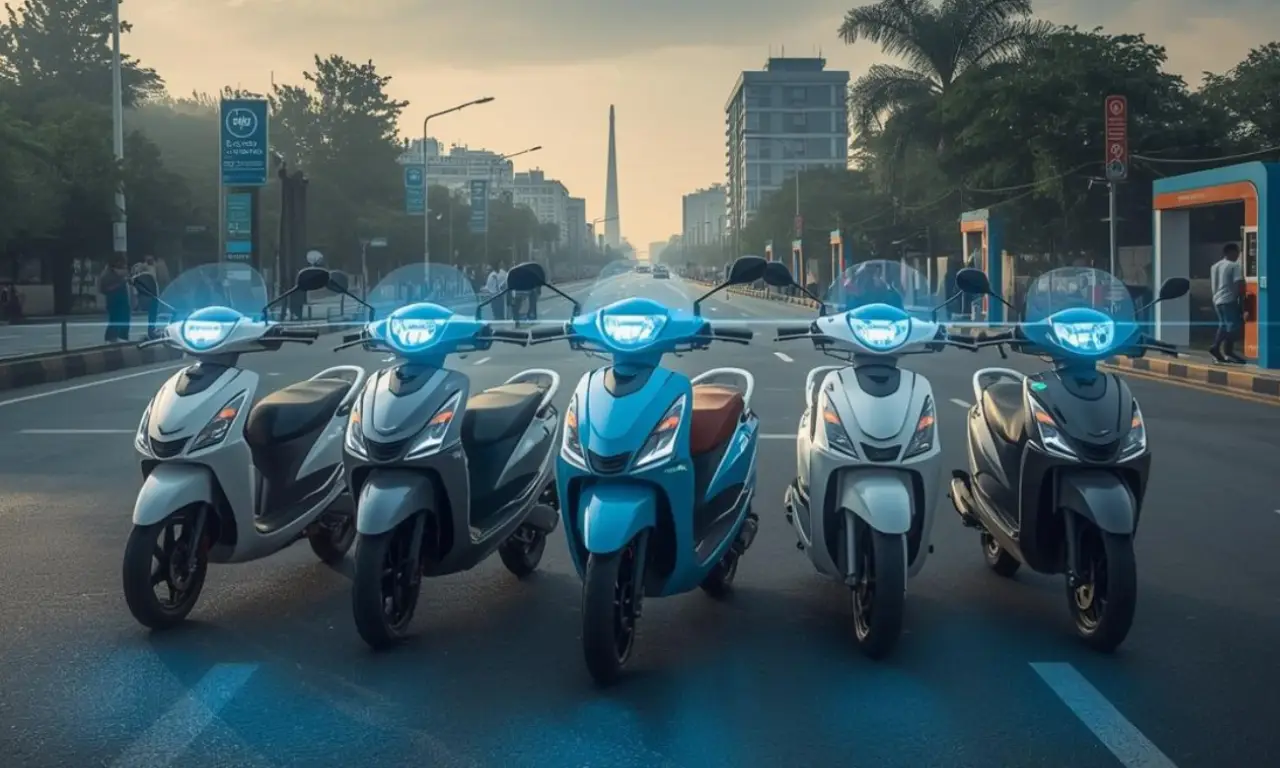
India’s mobility landscape is undergoing a structural transformation driven by the rapid rise of electric scooters priced around ₹1 lakh. Once considered a “budget” category with compromises in range, quality, and technology, this segment has evolved into the mainstream standard for daily commuting. This research article examines the economic, technological, behavioural, and ecosystem-wide shifts that have positioned the ₹1-lakh EV segment as the most influential force in India’s two-wheeler market.
Introduction: The Rise of the New Mainstream EV
India’s mobility story has always been defined by affordability-driven innovation. In the 2000s, the ₹1-lakh petrol scooter democratized mobility. Two decades later, history is repeating itself - this time with electric power.
Until recently, EVs under ₹1 lakh were associated with compromises: limited range, slow charging, unreliable components, weak software, and inconsistent aftersales. The 2023–2025 wave has overturned this perception. Today, this price band offers strong performance, reliable batteries, smart connectivity, practical range, and affordable financing.
The ₹1-lakh electric scooter is no longer the “budget EV.”
It is India’s mainstream mobility class.
Why ₹1 Lakh Has Become India’s Perfect Price Point
Psychological Fit for Indian Commuters
For decades, Indian households have considered ₹75,000–1,00,000 the “safe zone” for personal mobility purchases.
It’s familiar, culturally acceptable, and avoids the perception of luxury or compromise. The price bracket already dominates internal combustion scooter sales - giving EV OEMs immediate demand access.
Value Economics: Low Cost of Ownership
The operating cost advantage of EVs is unignorable:
-
Daily petrol consumption: ₹100–₹150
-
Daily EV charging: ₹10–₹20
-
Annual savings: ₹30,000–₹45,000
Within 2–3 years, the price premium is fully recovered - fueling mass adoption across Tier-1 to Tier-3 cities.
Technological Maturity
Localization, LFP battery chemistry, Indianized components, and government incentives now enable reliable EVs in the ₹90,000–1,00,000 range. A level of durability once impossible for this price point is now standard.
Inside India’s Fastest-Growing EV Segment
Real-World Range for Daily Use
Modern commuters travel 20–40 km a day. EVs now offer 80–120 km practical range with weather stability, fast-charging support, and multi-mode riding - addressing real-world patterns, not lab cycles.
Mass-Scale Smart Software Adoption
Features once exclusive to premium scooters (e.g., Ather 450X) are now common:
-
Connected mobile app
-
GPS tracking and anti-theft alerts
-
Ride analytics
-
Remote lock/unlock
-
OTA software updates
The market has shifted from “petrol scooters” to “smart scooters.”
Dramatic Battery Reliability Gains
Standardization around LFP/NMC chemistries has delivered:
-
Higher thermal stability
-
Lower degradation
-
Longer cycle life
-
Better safety in Indian weather
This has strengthened consumer confidence and resale value.
Financing Innovation
Low-EMI loans, zero-down-payment offers, battery financing, subscription models, and fleet-targeted plans have unlocked new buyer pools. Business operating systems like ottopilot now streamline dealer coordination, sales workflows, and financing approvals across enterprise layers.
Market Leaders of the ₹1-Lakh EV Segment
Market momentum in this category is led by:
-
Ather 450S
-
Ola S1 Air
-
TVS iQube (base variant)
-
Bajaj Chetak Urbane
-
Ampere Nexus
-
Hero VIDA V1 Plus (in subsidy-active states)
These models balance performance, reliability, and connectivity within the ₹1-lakh threshold.
Engineering Excellence at an Affordable Price
Aerodynamic & Lightweight Design
OEMs optimize for Indian urban patterns with compact, efficient frames that reduce drag.
Battery Architecture Optimized for India
Modern battery packs feature:
-
Longer cycle life
-
Robust battery management systems
-
Stable real-world range
-
Minimal degradation over time
Transparency in range reporting is now a sign of OEM maturity.
Intelligent Drivetrains
Improved controllers enhance torque delivery, making under-₹1 lakh EVs outperform petrol scooters in city traffic.
Durable Suspension & Chassis
Scooters are designed to withstand temperature extremes, potholes, monsoons, and high-usage conditions typical of Indian roads.
Connectivity as the True Differentiator
By 2025, connected intelligence - not range - is the primary battleground.
₹1-lakh scooters increasingly include:
-
IoT-enabled telematics
-
Live vehicle tracking
-
Riding behaviour analytics
-
Predictive service alerts
-
Remote diagnostics
This digital evolution is why telematics-focused EV content is gaining unprecedented consumer engagement.
Market Impact and Macro Trends
Tier-2 & Tier-3 Demand Surge
Cities like Indore, Coimbatore, Lucknow, Jaipur, Vadodara, Patna, and Nagpur are driving adoption due to affordability + digital familiarity.
Fleet Electrification
Logistics, hyperlocal delivery, rentals, and ride-share fleets prefer sub-₹1-lakh EVs due to their strong ROI, lower maintenance, and telematics-enabled uptime.
Return of Showroom Footfall
Physical test rides and dealership interactions are growing again - reflecting renewed trust in the category.
Emergence of the EV Resale Market
With reliability rising, resale value is now a tangible part of the EV ownership equation.
Strategic Blueprint: How OEMs Can Win the ₹1-Lakh Segment
Layer 1: Product Excellence
-
Keep range realistic
-
Prioritize battery safety
-
Maintain quality
-
Include essential smart features
Layer 2: Dealer + Operational Performance
Affordable segments rely heavily on dealer relationships.
ottopilot strengthens:
-
Lead-to-delivery flow
-
Dealer-to-corporate visibility
-
Aftersales resolution
-
Performance dashboards
-
Service coordination
Layer 3: Digital Sales Funnel
India buys on mobile. OEMs must deploy:
-
WhatsApp-first journeys
-
Instant finance approvals
-
Frictionless test-ride booking
-
City-local content
Intellsys.ai converts marketing spend into measurable funnel velocity.
Layer 4: Predictive Service & Retention
Using telematics, OEMs can automate:
-
Preventive maintenance
-
Battery health alerts
-
Riding behaviour insights
-
Targeted upgrade offers
Retention becomes the profit engine.
Why This Segment Will Shape India’s EV Future
The ₹1-lakh category aligns with India’s fundamental consumer profile:
-
Price-sensitive
-
Value-driven
-
Tech-curious
-
Digitally active
-
Mass-market focused
Premium EVs built the excitement.
The ₹1-lakh segment will build the scale.
This is no longer a trend - it is India’s new mobility baseline.
GrowthJockey’s Role in the EV Transformation
GrowthJockey acts as a venture architect enabling OEMs to scale through systems, data, and strategy.
-
Intellsys.ai delivers funnel visibility, customer behaviour analytics, and market intelligence.
-
Ottopilot unifies dealer networks, service workflows, sales teams, and OEM operations.
Together, they power profitable, efficient, digitally intelligent EV ecosystems - especially in India’s fastest-growing price band.
FAQs
Q1. Why are ₹1-lakh electric scooters so popular in India?
Ans. They offer the perfect balance of price, performance, range, and smart features - something Indian buyers value deeply.
Q2. Are these budget EV scooters reliable?
Ans. Yes. Improved battery chemistry, telematics, and localized supply chains have increased durability.
Q3. Who buys these scooters the most?
Ans. Middle-class commuters, gig workers, delivery fleets, students, and first-time EV users.
Q4. Are these scooters good for long-term use?
Ans. Absolutely. They require less maintenance, have lower running costs, and offer real-world range suited for daily use.
Q5. Will this segment dominate India's EV future?
Ans. Yes. This is the segment that will deliver mass adoption and national-scale EV penetration.









Industries
Growth
Operations
Technology