
Rural Marketing FMCG Campaigns: The Next Growth Frontier
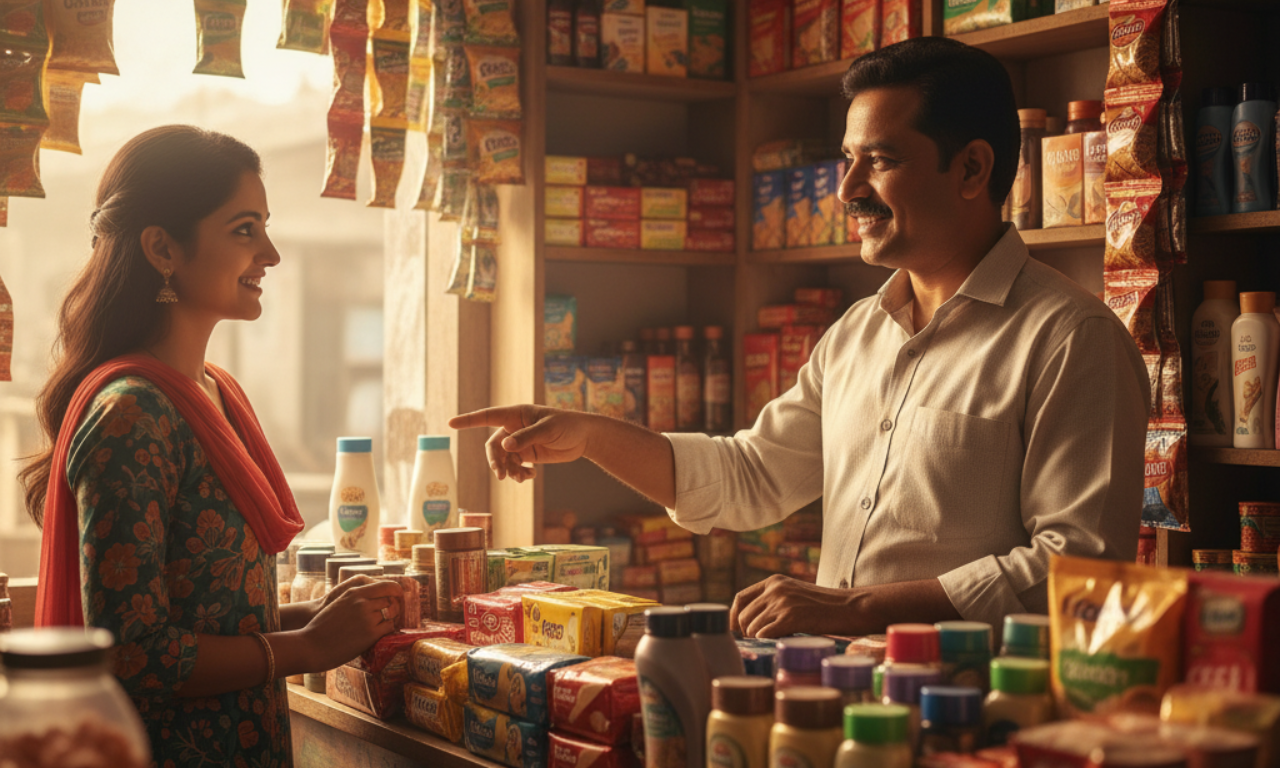
India’s rural landscape, home to nearly 65% of the population is no longer an underserved market. With rising incomes, digital access, and lifestyle aspirations, these regions have become the next big frontier for FMCG expansion.
For decades, brand-building efforts centred on metros and Tier-1 cities. Yet, the numbers tell a new story: rural FMCG consumption has outpaced urban growth for the past three years, fuelled by improved infrastructure, financial inclusion, and e-commerce reach.
This shift demands a new marketing playbook. Rural marketing FMCG campaigns today are not just about product availability, they’re about cultural relevance, community inclusion, and consistent storytelling that fits the rhythms of rural life.
From Broadcast to Belonging: The Evolution of Rural Marketing
Traditional FMCG marketing relied on one-way communication, television ads, celebrity endorsements, and top-down narratives. But in rural India, trust is hyper-local and word-of-mouth driven.
Consumers depend on village consumer engagement, not distant brand messaging. Purchase decisions are shaped by neighbours, community leaders, and local shopkeepers rather than national advertising.
This makes hyperlocal rural marketing a participative exercise, brands must shift from broadcasting messages to building belonging. The goal is no longer just awareness but cultural acceptance.
Understanding the New Rural Consumer
The rural consumer of today is digital, discerning, and community-driven. Affordable smartphones and vernacular apps have opened new channels of discovery and comparison. However, trust remains a physical construct, built through demonstrations, peer influence, and sustained local visibility.
Three forces are driving this transformation:
-
Digital Reach: Low-cost data plans have connected over 400 million rural users to digital platforms.
-
Social Aspiration: Rural consumers aspire for the same quality and experience as urban buyers but prefer relatable communication.
-
Community Endorsement: Purchasing behaviour often follows group dynamics, especially in smaller villages and self-help group networks.
For FMCG brands, decoding these social networks is key to effective village consumer engagement.
Building Awareness Through Grassroot Brand Building
Awareness in rural markets grows at the intersection of visibility, experience, and trust. Grassroot brand building allows brands to build emotional resonance long before digital ads convert into sales.
Successful initiatives share three core pillars:
-
Local Immersion: Deploying brand representatives from within the community, people who speak the dialect and understand local customs.
-
Tactile Experience: Product sampling, demonstration vans, and haat-day activations that allow hands-on interaction.
-
Cultural Integration: Aligning campaigns with harvest festivals, fairs, and rural sports to blend branding with everyday celebration.
For instance, Colgate’s “Bright Smiles, Bright Futures” program trained rural schoolteachers as oral health ambassadors, doubling both awareness and trial in targeted districts. Similarly, Hindustan Unilever’s Shakti network empowered over one lakh women entrepreneurs to promote household brands through direct community engagement.
These cases prove that grassroot brand building drives both inclusion and sustained awareness, something mass media rarely achieves.
Why Hyperlocal Rural Marketing Works
Rural India is not a single market, it’s a collection of thousands of cultural ecosystems. Each cluster differs in language, festivals, and aspirations. Hyperlocal rural marketing thrives because it recognises these differences rather than flattening them.
Key advantages include:
-
Cultural Resonance: Local symbols, idioms, and influencers create deeper emotional alignment.
-
Operational Efficiency: Region-specific distribution networks minimise leakage and stockouts.
-
Adaptive Learning: Small-scale pilots allow brands to refine approaches before large-scale rollout.
This is why global FMCG players increasingly treat rural clusters as micro-markets rather than monolithic regions. Hyperlocal marketing makes brand stories feel personal, and that intimacy translates to repeat purchase and advocacy.
The Role of Rural Influencer Programs
Rural creators, village heads, and community figures are emerging as the new storytellers of Bharat. Through rural influencer programs, brands can localise digital reach and word-of-mouth at once.
Influencer partnerships in villages look different from their urban counterparts. They are built on relationships, not follower counts. Farmers, teachers, and small-store owners act as informal brand advocates who spread trust through conversation, not campaigns.
Examples include:
-
Godrej Consumer Products partnering with local beauticians to demonstrate product use in self-help groups.
-
Coca-Cola’s “Rural Champions” program that identified local youths to drive awareness during village fairs.
These initiatives reinforce the principle that rural influencer programs succeed when credibility precedes communication.
Community FMCG Marketing: Turning Villages Into Brand Ecosystems
At the heart of every rural success story lies community. Community FMCG marketing harnesses shared spaces—schools, temples, panchayats as both message carriers and conversation points.
Such programs redefine how awareness spreads: from centralised campaigns to decentralised ownership. Communities become brand stakeholders.
Effective community programs include:
-
Health or Hygiene Drives sponsored by FMCG brands where education merges with brand demonstration.
-
Local Skill Training where companies teach entrepreneurship tied to product distribution.
-
Rural Sports Sponsorships that integrate brand identity into collective pride.
When executed with sensitivity, community marketing converts passive consumers into active collaborators enhancing brand trust at scale.
Designing an Effective Go-to-Market Local Strategy
To make rural programs work, brands need a structured go-to-market local strategy that aligns communication, logistics, and partnerships.
A winning framework includes:
-
Micro-Segmentation: Categorise regions by culture, climate, and consumption habits.
-
Hybrid Channels: Combine physical retailers with digital ordering (e.g., WhatsApp Commerce).
-
Feedback Integration: Use rural CRM data and on-ground insights for continuous optimisation.
-
Talent Localisation: Hire and train field teams from within the community for authenticity.
The objective is not just distribution but dialogue, a system where brands listen and adapt continuously.
Measuring Rural Brand Awareness and Impact
Traditional brand-tracking methods fail in low-literacy or low-connectivity environments. Rural FMCG measurement must go beyond clicks and impressions.
Metrics for success include:
-
Unaided Recall: Number of consumers naming the brand without prompts.
-
Trial-to-Repeat Ratio: Demonstration success translating into purchases.
-
Community Participation Rate: Attendance in events or programs.
-
Retail Velocity: Increase in reorder frequency from local shops.
These metrics turn qualitative cultural acceptance into quantifiable brand health allowing FMCG leaders to justify long-term rural investment.
The Digital Bridge: From Village Screens to Smart Distribution
Digital adoption in rural India offers a new layer of efficiency for traditional outreach. Video platforms like YouTube, ShareChat, and Moj have created accessible storytelling channels in regional languages.
For FMCG brands, these are not just ad platforms, they are digital village noticeboards. Local influencers demonstrate product use, while QR-linked promotions guide consumers to nearby retailers.
On the backend, AI-powered logistics and demand forecasting systems ensure inventory alignment with real-time rural demand. The synergy of tech and tradition makes rural marketing measurable, agile, and scalable.
Challenges in Rural Brand Expansion
Despite its potential, hyperlocal rural marketing faces structural challenges:
-
Distribution Complexity: Reaching remote villages demands hybrid supply chains.
-
Cultural Sensitivity: Misreading local customs can cause brand rejection.
-
Talent Gaps: Recruiting and training rural teams takes time and empathy.
However, brands that persist and learn from the field consistently outperform short-term entrants. Rural trust is built over years, but once earned, it lasts longer than any campaign cycle.
What the Future Holds
The coming decade will witness rural India transitioning from a consumer segment to a co-creator ecosystem. FMCG companies that invest early in grassroot brand building and community FMCG marketing will own both visibility and loyalty.
In many ways, rural India represents not the last mile of brand growth, but the first mile of cultural connection. The brands that recognise this shift will not only sell more, they’ll belong more deeply to the lives they touch.
GrowthJockey Perspective
GrowthJockey views hyperlocal rural marketing as a defining evolution in the FMCG industry’s growth architecture. The firm notes that the success of rural marketing FMCG campaigns now depends less on mass visibility and more on village consumer engagement that builds cultural trust at scale. Effective strategies, according to GrowthJockey, blend technology-enabled data with human-centric design, creating a continuous feedback loop between communities and corporations. In its observation, grassroot brand building, rural influencer programs, and community FMCG marketing are no longer peripheral tactics but central pillars of brand intelligence. GrowthJockey believes that India’s rural markets will shape the next generation of brand leadership, where sustainable growth emerges from local authenticity, adaptive storytelling, and the ability to translate empathy into enterprise.
FAQs
1. What defines a successful rural marketing FMCG campaign?
Ans. A successful rural campaign goes beyond awareness to embed brands within the community’s daily life through local partnerships, cultural participation, and sustained presence.
2. How does village consumer engagement build long-term trust?
Ans. Direct interaction through community programs and relatable local ambassadors fosters emotional connection, transforming brands from outsiders to trusted contributors.
3. Why is grassroot brand building vital for rural brand growth?
Ans. Because it builds familiarity through lived experiences demos, sampling, and cultural alignment turning awareness into habitual preference.
4. How do rural influencer programs differ from urban influencer campaigns?
Ans. Rural influencer programs rely on credibility and personal relationships over digital reach, making influence more authentic and word-of-mouth driven.
5. What role does community FMCG marketing play in awareness creation?
Ans. It transforms rural spaces like schools, fairs, temples into brand touchpoints, turning awareness into shared community narratives that drive adoption organically.








Industries
Growth
Operations
Technology