
Smarter Power Backup Choices With AI Load Intelligence
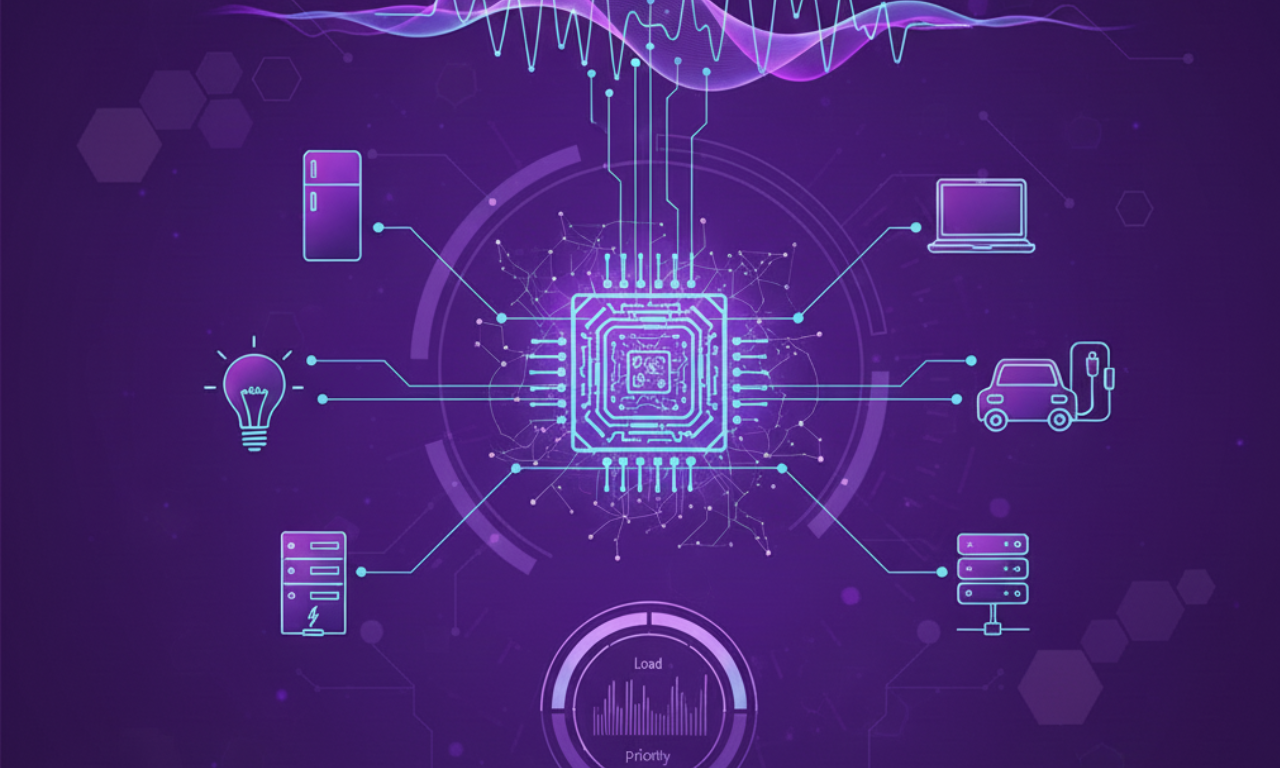
Indian households are rapidly shifting from basic inverters to smarter, more efficient power backup systems. Rising appliance load diversity, unpredictable outages, and evolving energy expectations have made traditional sizing methods incomplete and unreliable. Consumers want systems that are optimized for their routines, appliances, and performance needs.
AI load intelligence is reshaping this decision-making framework by accurately analyzing usage patterns, surge requirements, and long-term performance variables. Instead of generic assumptions, consumers now receive tailored inverter-battery recommendations based on real load behaviour, creating more dependable and cost-efficient outcomes.
1. Why Manual Load Estimation No Longer Works for Modern Households
The average home today runs far more dynamic loads than it did even a few years ago. Appliances like refrigerators, air coolers, entertainment systems, and mixers operate with irregular cycles and sharp power variations. Manual estimation often ignores these fluctuations and results in poorly matched backup solutions.
AI load intelligence addresses this gap by studying how appliances behave in real conditions. It evaluates surge profiles, overlapping cycles, and peak-demand windows to deliver more accurate load calculations. This shift ensures that inverter sizing and battery capacity are aligned with actual usage rather than outdated thumb rules.
Key issues with traditional estimation that AI now resolves:
-
Manual calculations rarely account for appliance startup surges, leading to frequent inverter overloads.
-
Homes with mixed loads face unpredictable usage spikes that traditional formulas simply cannot model.
-
Backup duration estimates vary drastically from real outcomes when battery ageing is not considered.
-
Generic inverter-battery sets fail to reflect regional outage patterns and household consumption habits.
With AI-driven tools, consumers receive guidance based on real data instead of approximations, reducing mismatch and performance failures.
2. AI Load Intelligence Transforms Backup Planning Into a Data-Led Process
AI-powered systems like an AI load calculator battery inverter framework bring precision to an area traditionally dominated by subjective judgment. These models analyze appliance specifications, usage schedules, consumer behavior, and dwell characteristics to build a realistic profile of household load.
In many cases, AI load intelligence evaluates more than 40 variables before producing a recommendation. This includes usage concurrency, voltage variations, typical outage windows, battery discharge curves, and seasonal consumption changes. The result is a robust assessment that aligns inverter capacities and battery types with actual household needs.
AI introduces three major upgrades in backup decision-making:
-
It helps households understand true peak load, not just the sum of appliance wattage.
-
It identifies hidden consumption patterns that strongly impact runtime.
-
It reduces overspending by eliminating unnecessary upsizing of equipment.
AI-based assessment has proven especially effective in cities with unreliable voltage conditions, where traditional estimates often fail to deliver stable performance.
3. How AI Interprets Real Household Behaviour to Deliver Superior Recommendations
One of the biggest strengths of AI load intelligence is its ability to identify patterns that human estimation cannot detect. Appliances behave differently under different voltage situations, seasonal conditions, and usage rhythms. An inverter sizing AI assessment takes these patterns into account to design more accurate configurations.
AI evaluates real-world behaviour across multiple dimensions:
-
It assesses how refrigerators, coolers, and fans generate irregular surge demands at different times of the day.
-
It identifies evening clusters where lighting, cooking, and entertainment loads overlap and create sharper power peaks.
-
It accounts for voltage instability to ensure the inverter can handle low-voltage input without efficiency drop.
-
It analyzes how usage expands during summers or monsoons to prevent undersizing during critical seasons.
This depth of analysis becomes the foundation for personalized power backup matching, where the recommendation is shaped around the user’s actual lifestyle rather than a generic load list.
4. Intelligent Backup Duration Estimation Becomes Significantly More Accurate
Traditional runtime estimates rely on ideal lab conditions and do not reflect battery efficiency losses, temperature impact, or discharge patterns. This often leads to consumer dissatisfaction when the promised backup duration does not match actual performance.
AI-based intelligent backup duration estimation uses historical battery behavior, load curves, and efficiency variables to deliver realistic runtime predictions. It models how the system will behave under high loads, partial loads, and fluctuating grid conditions.
AI improves runtime accuracy through:
-
Analysis of battery discharge non-linearity at different load levels.
-
Consideration of ageing effects on battery capacity retention.
-
Temperature-dependent performance modelling for both inverter and battery.
-
Load spike simulations that reflect real usage rhythms during outages.
These enhanced calculations give households a more dependable view of expected performance, reducing complaints and replacement cycles.
5. AI Personalizes Inverter-Battery Matching for Maximum Value
Every household requires a different combination of inverter capacity, battery type, and energy chemistry. Instead of offering a one-size-fits-all solution, AI generates personalized power backup matching based on the load profile and desired runtime.
For example, some homes require longer duration at low loads, making tubular batteries ideal. Others may face heavy appliance surges requiring high-efficiency inverters with superior thermal management. AI determines these combinations with precision.
AI-based personalization improves system performance through:
-
Matching inverter waveform type with sensitive loads like TVs and routers.
-
Recommending battery capacity based on actual multi-hour outage patterns.
-
Suggesting charging profiles suitable for regional voltage conditions.
-
Providing guidance on whether one battery or multi-battery setups are optimal.
This ensures that consumers get the best balance of performance, cost-efficiency, and long-term durability.
6. AI Enhances System Safety, Component Protection, and Thermal Stability
Poorly matched backup systems tend to overheat, draw excessive current, or undergo repeated strain during surges. AI intelligence protects against these risks by predicting thermal loads and stress points.
AI improves safety and system protection by:
-
Identifying surge sequences that may stress MOSFETs and IGBTs during appliance startup.
-
Preventing undersized inverters that heat up under prolonged high-demand cycles.
-
Modelling airflow restrictions in compact indoor spaces to refine thermal limits.
-
Evaluating heat generation during high-current battery discharge.
These insights allow consumers and suppliers to avoid configurations that may lead to premature failure.
7. AI Improves Long-Term Ownership Experience
Beyond initial purchase decisions, AI load intelligence enhances ongoing performance management. It evaluates operational data to help users understand how their systems behave over time.
Long-term improvements enabled by AI include:
-
Clear visibility into how different loads affect runtime in real conditions.
-
Alerts on potential system inefficiencies caused by ageing or usage stress.
-
Recommendations for battery maintenance, especially in high-cycle regions.
-
Insights into inverter efficiency patterns across different load intervals.
This long-term intelligence supports stronger device longevity and consistent performance.
Conclusion
AI load intelligence marks a major transformation in how power backup systems are chosen, designed, and evaluated. By analyzing real household behaviour, appliance cycles, and battery performance variables, AI eliminates uncertainty from sizing decisions and runtime expectations. It ensures that households receive configurations optimized for their specific use conditions rather than generic assumptions. As AI-driven tools become standard, smarter, personalized, and more reliable backup systems will increasingly define the future of residential power management. GrowthJockey delivers precise AI-driven load analysis, intelligent runtime forecasting, and personalized backup recommendations for manufacturers and retailers. This enables accurate sizing, improved product reliability, and superior customer experience across power backup solutions.
FAQs
1. How does AI improve inverter and battery sizing?
Ans. AI analyzes real load patterns, surge behavior, and outage frequency to recommend accurate inverter-battery combinations.
2. Does AI help predict actual backup duration?
Ans. Yes, AI models battery discharge, ageing, and load spikes to provide realistic runtime estimates.
3. Can AI adapt recommendations for different household usage patterns?
Ans. AI studies appliance cycles and consumption habits to create personalized power backup matching.
4. Does AI reduce the risk of inverter overload?
Ans. AI evaluates appliance surge currents and peak-load clusters to prevent undersizing and overload issues.
5. How does AI benefit long-term system performance?
Ans. AI offers insights into efficiency trends, ageing effects, and maintenance needs to ensure stable long-term operation.









Industries
Growth
Operations
Technology