
Top 30 Venture Capital Firms in India 2026 | Rankings & Funding
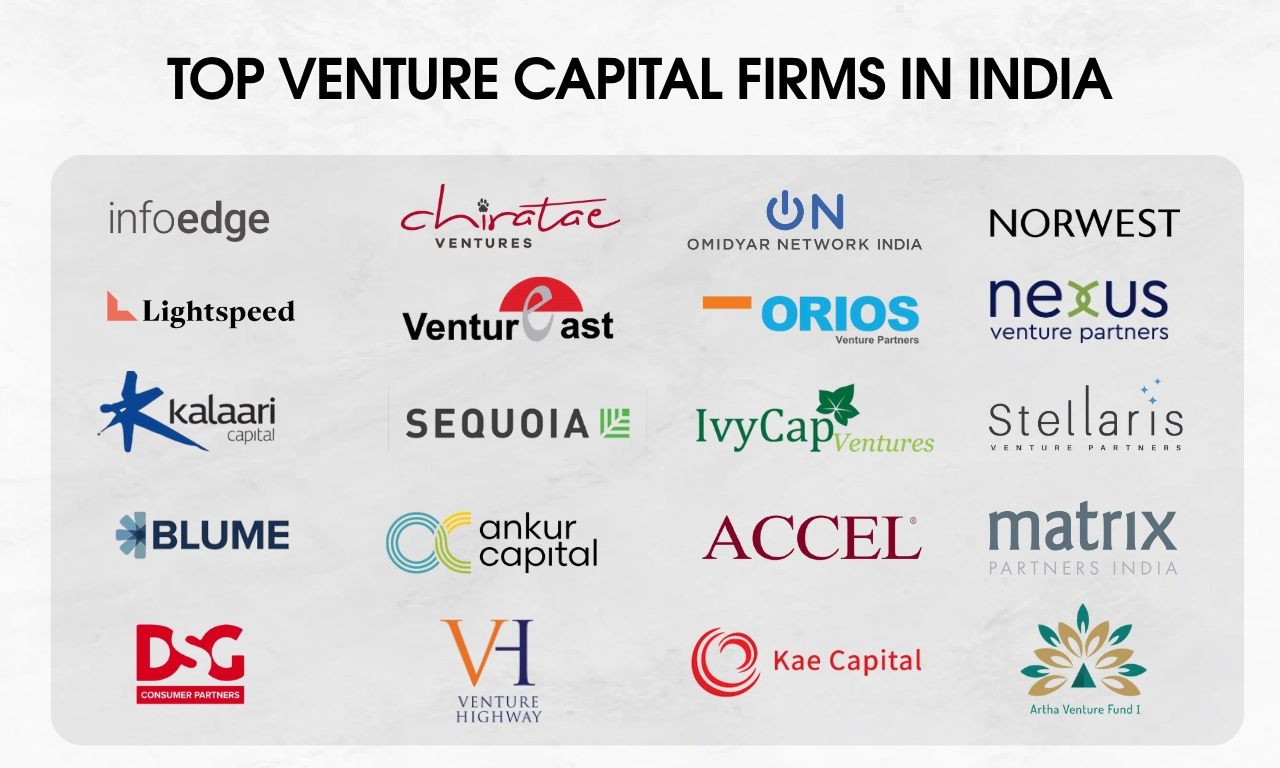
India has emerged as one of the hottest startup hubs in the world, currently the third-largest startup ecosystem globally. With over 1,40,803 DPIIT-recognized startups as of June 2024[1], the Indian entrepreneurial landscape is thriving thanks to the backing of top venture capital firms in India.
The narrative of Indian venture capital is one of resilience and evolution. From the early days of "copy-paste" models adapting Western concepts to the Indian market, to the current era of deep-tech, indigenous AI, and Digital Public Infrastructure (DPI)-led innovations, VCs have been the silent architects. The ecosystem has weathered significant volatility from the exuberant funding cycles of 2021 to the disciplined "funding winter" of 2023 emerging in 2026 with a focus on unit economics, profitability, and sustainable scaling.
In this guide, GrowthJockey explores the most impactful VC firms in India that continue to fuel innovation and growth for emerging startups.
What is a Venture Capital Fund?
A Venture Capital (VC) Fund is a kind of investment fund where funds pooled from investors; known as limited partners or LPs are invested into early-stage, high-growth businesses with possible large returns. To understand the impact of the firms profiled in this report, one must first grasp the intricate machinery of a Venture Capital Fund.
At its core, a VC fund is a financial intermediary that aggregates risk capital from long-term investors to deploy into high-potential, early-stage private companies. Unlike bank debt, which requires collateral and immediate repayment, venture capital is equity-based financing. It trades immediate capital for a stake in future ownership, betting on the "power law" distribution where a single outsized success (a "fund returner") compensates for multiple failures.
Simply said, venture capitalists who manage a money pool invest in firms they think will become the next great thing like Flipkart, Zomato, or Paytm in their early days.
List of Top Venture Capital Firms In India With Sector, Investments, Contact & Stage Focus
| Firm Name | Stage Focus | Key Sectors | Notable Investments | Website/Contact |
|---|---|---|---|---|
| 100X.VC | Seed (First Cheque) | Agnostic | Early cohorts | 100x.vc |
| 3one4 Capital | Seed to Growth | Fintech, SaaS | Licious, Darwinbox | 3one4capital.com |
| Accel India | Seed to Growth | SaaS, Consumer | Swiggy, Flipkart | accel.com |
| Ankur Capital | Seed | Agritech, Deep Tech | CropIn, Captain Fresh | ankurcapital.com |
| Artha India | Seed/Micro | Fintech, Renewable | Early stage | artha.ventures |
| Bessemer (BVP) | Growth | SaaS, Health | Swiggy, Perfios | bvp.com |
| Blume Ventures | Seed | B2B, Deeptech | Unacademy, Spinny | blume.vc |
| Chiratae Ventures | Early to Growth | Consumer, Health | Lenskart, Cure.fit | chiratae.com |
| DSG Consumer | Seed/Series A | Consumer Brands | Veeba, Sleepy Owl | dsgcp.com |
| Elevation Capital | Early to Growth | Fintech, Consumer | Paytm, Meesho | elevationcapital.com |
| Endiya Partners | Seed/Pre-Series A | Deeptech, SaaS | Darwinbox | endiya.com |
| Fireside Ventures | Early (Consumer) | D2C Brands | boAt, Mamaearth | firesideventures.com |
| Gemba Capital | Pre-Seed | Fintech, Consumer | Early stage | gembacapital.in |
| General Catalyst | Multi-Stage | Consumer, Tech | Meesho, Cred | generalcatalyst.com |
| India Quotient | Seed | Bharat, Fintech | ShareChat, Sugar | indiaquotient.in |
| Inflection Point | Early/Angel | Agnostic | Blusmart, Otipy | ipventures.in |
| Info Edge | Early (CVC) | Consumer Internet | Zomato, PolicyBazaar | infoedgeventures.in |
| IvyCap Ventures | Series A/Growth | Deeptech, Consumer | Purplle, Clovia | ivycapventures.com |
| Kae Capital | Seed | B2B, Consumer | Porter, Tata 1MG | kae-capital.com |
| Kalaari Capital | Series A | E-commerce | Dream11, Urban Ladder | kalaari.com |
| Lightspeed India | Multi-Stage | B2B, Edtech | Udaan, OYO | lsvp.com |
| Nexus VP | Series A | Enterprise SaaS | Postman, Druva | nexusvp.com |
| Norwest (NVP) | Growth | Fin. Services | Five Star, Swiggy | norwest.com |
| Peak XV Partners | Multi-Stage | Agnostic | Zomato, Razorpay | peakxv.com |
| Saama Capital | Series A | Consumer, Fintech | Paytm, Chai Point | saama.vc |
| Speciale Invest | Seed (Deep Tech) | Space, Robotics | Agnikul, CynLr | specialeinvest.com |
| Stellaris VP | Series A | SaaS, Consumer | Mamaearth, Whatfix | stellarisvp.com |
| Titan Capital | Seed | Agnostic | Ola, Urban Company | titancapital.vc |
| WaterBridge | Seed/Series A | B2C, Logistics | Atlan, Chalo | waterbridge.vc |
| Z47 (Matrix) | Multi-Stage | Fintech, GenAI | Razorpay, OfBusiness | z47.com |
Seed & Pre-Seed Stage Funds
The seed stage in India has matured from scattered angel investing to a highly institutionalized engine. Today’s seed funds are "co-builders," helping you find Product-Market Fit (PMF) before you ever face a Series A committee. Ticket sizes now range from $500k to $3M, often blurring the lines with early Series A.
Seed & Pre-Seed Stage Funds
| Firm Name | Key Partners | Sector Focus | Ticket Size | Notable Investments | Contact / Pitch |
|---|---|---|---|---|---|
| Blume Ventures | Karthik Reddy, Sanjay Nath | B2B Tech, SaaS, Deeptech | $1M - $3M | Unacademy, Spinny | contact@blume.vc |
| Kae Capital | Sasha Mirchandani | Consumer, Fintech, SaaS | $500K - $2M | Tata 1MG, Porter | Team Email / Website |
| Speciale Invest | Vishesh Rajaram | Deep Science, Space, EV | $100K - $1M | Agnikul, ePlane | specialeinvest.com |
| India Quotient | Anand Lunia | Fintech, D2C, SaaS | $250K - $1M | ShareChat, Sugar | hello@indiaquotient.in |
| Ankur Capital | Ritu Verma | Agritech, Deep Science | $500K - $2M | CropIn, Niramai | info@ankurcapital.com |
| Titan Capital | Kunal Bahl, Rohit Bansal | Agnostic (Consumer, SaaS) | $500K - $2M | Ola, Urban Company | startups@titancapital.vc |
| 100X.VC | Sanjay Mehta | Sector Agnostic | ~$150K | Renee, Samosa Singh | 100x.vc/apply |
| Gemba Capital | Adith Podhar | Fintech, Consumer, B2B | $200K - $500K | Plum, SleepyCat | deal@gembacapital.in |
| IPV | Vinay Bansal | Agnostic (Angel Network) | $200K - $1M | BluSmart, Otipy | funding@ipventures.in |
| Artha India | Anirudh A. Damani | Fintech, Consumer, Energy | $250K - $1M | LenDenClub, Agnikul | info@artha.group |
| WaterBridge | Manish Kheterpal | B2C, Deep Tech, Logistics | $1M - $5M | Unacademy, Magicpin | contact@waterbridge.vc |
1. Blume Ventures
Blume is the pioneer of the "Micro-VC" model in India, now acting more like a co-founder. They love "unreasonable" founders and specialize in B2B tech and deeptech, actively helping startups get their first customers through their "Market Networks" program.
| Criteria | Details |
|---|---|
| India Office | Mumbai, Bengaluru |
| Founders/Key Partners | Karthik Reddy, Sanjay Nath, Ashish Fafadia, Arpit Agarwal |
| Sector Focus | B2B Tech, SaaS, Deeptech, Consumer Internet, Fintech |
| Ticket Size | $1 Million – $3 Million |
| Fund Size | Fund V: ~$275 Million (Target) |
| Stage | Pre-Series A, Seed |
| Notable Investments | Unacademy, GreyOrange, Spinny, Purplle, Dunzo |
| Contact / Pitch | Email: contact@blume.vc <br> |
<br> Phone: 022-43471659 <br>
<br> Note: Do not cold email; use warm intros or check website FAQs. |
2. Kae Capital
Kae Capital is an "all-weather partner" that often writes the very first check. They are sector-agnostic but have a sharp eye for category-defining companies in consumer and B2B sectors, sticking with founders through market ups and downs.
| Criteria | Details |
|---|---|
| India Office | Mumbai, Bengaluru |
| Founders/Key Partners | Sasha Mirchandani, Gaurav Chaturvedi |
| Sector Focus | Consumer Tech, D2C, B2B, Fintech, SaaS |
| Ticket Size | $500K – $2 Million |
| Fund Size | Fund IV: ~$100 Million |
| Stage | Pre-Seed, Seed, Pre-Series A |
| Notable Investments | Tata 1MG, Porter, Zetwerk, HealthKart, Nazara |
| Contact / Pitch | Funding: Reach out to Investment Team directly <br> |
<br> Talent: talent@kae-capital.com <br>
<br> Website: kae-capital.com |
3. Speciale Invest
If you are building something that looks like science fiction (SpaceTech, Robotics, Green Hydrogen), Speciale is your go-to. They are India’s premier "Deep Science" fund, comfortable with high technical risk. They have funded aerospace startups like Agnikul Cosmos.
| Criteria | Details |
|---|---|
| India Office | Chennai, Bengaluru |
| Founders/Key Partners | Vishesh Rajaram, Arjun Rao |
| Sector Focus | Deep Science, SpaceTech, Robotics, EV, Climate Tech |
| Ticket Size | $100K – $1 Million |
| Fund Size | Growth Fund II: ~$160 Million (INR 1400 Cr) |
| Stage | Seed, Early Stage |
| Notable Investments | Agnikul Cosmos, The ePlane Company, Ultraviolette, CynLr |
| Contact / Pitch | Method: Prefer Intros, responsive on LinkedIn <br> |
<br> Website: specialeinvest.com |
4. India Quotient
India Quotient (IQ) loves the "unsexy" and "contrarian" bets. They focus heavily on "Bharat" solutions for the Indian mass market and value hustle and frugality over pedigree.
| Criteria | Details |
|---|---|
| India Office | Mumbai, Bengaluru |
| Founders/Key Partners | Anand Lunia, Madhukar Sinha, Gagan Goyal |
| Sector Focus | Fintech, Social Media, D2C, SaaS, B2B Marketplaces |
| Ticket Size | $250K – $1 Million |
| Fund Size | Fund V: ~$129 Million |
| Stage | Seed, Pre-Series A |
| Notable Investments | ShareChat, Sugar Cosmetics, Lendingkart, Vyapar |
| Contact / Pitch | Email: hello@indiaquotient.in <br> |
<br> Website: indiaquotient.in |
5. Ankur Capital
Ankur Capital finds value in "underserved markets" like Agritech Startups and Deep Science. They were early believers in digitizing India's informal economy and have since expanded into climate tech.
| Criteria | Details |
|---|---|
| India Office | Mumbai |
| Founders/Key Partners | Ritu Verma, Rema Subramanian |
| Sector Focus | Agritech, Healthtech, Deep Science, Food Systems |
| Ticket Size | $500K – $2 Million |
| Fund Size | Fund II: ~$50 Million |
| Stage | Seed, Early Stage |
| Notable Investments | CropIn, Niramai, Captain Fresh, String Bio |
| Contact / Pitch | General: info@ankurcapital.com <br> |
<br> Compliance: burzin@ankurcapital.com |
6. Titan Capital
Titan is the family office of Snapdeal founders Kunal Bahl and Rohit Bansal. They operate with the speed of angels but the wallet of a VC. They are prolific, founder-focused, and often the first "yes" a startup receives.
| Criteria | Details |
|---|---|
| India Office | Gurugram |
| Founders/Key Partners | Kunal Bahl, Rohit Bansal, Bipin Shah |
| Sector Focus | Sector Agnostic (Consumer, SaaS, Web3) |
| Ticket Size | $500K – $2 Million |
| Fund Size | Family Office (AUM ~$100M+) |
| Stage | Pre-Seed, Seed |
| Notable Investments | Ola, Urban Company, Razorpay, Mamaearth |
| Contact / Pitch | Pitch Email: startups@titancapital.vc <br> |
<br> General: info@titancapital.vc |
7. 100X.VC
100X.VC acts as a "discovery fund," using a cohort model to invest in a large volume of startups using simplified "iSAFE" notes. They are often the first institutional check.
| Criteria | Details |
|---|---|
| India Office | Mumbai |
| Founders/Key Partners | Sanjay Mehta, Ninad Karpe, Shashank Randev |
| Sector Focus | Sector Agnostic |
| Ticket Size | ~$150K (Fixed INR 1.25 Cr) |
| Fund Size | Discovery Fund Model |
| Stage | Pre-Seed (First Cheque) |
| Notable Investments | Renee Cosmetics, Samosa Singh, AccioJob |
| Contact / Pitch | Apply: www.100x.vc/apply <br> |
<br> Email: hello@100x.vc |
8. Gemba Capital
"Gemba" means "the real place" where value is created. This micro-VC takes a thematic, hands-on approach, looking for strong founder-market fit in Fintech and Consumer Tech.
| Criteria | Details |
|---|---|
| India Office | Bengaluru |
| Founders/Key Partners | Adith Podhar, Govind Lohia |
| Sector Focus | Fintech, Consumer Tech, B2B Platforms |
| Ticket Size | $200K – $500K |
| Fund Size | Fund II: ~$13 Million (Target) |
| Stage | Pre-Seed, Seed |
| Notable Investments | Plum, Zvolv, Wysh, SleepyCat |
| Contact / Pitch | Pitch Email: deal@gembacapital.in <br> |
<br> General: info@gembacapital.in |
9. Inflection Point Ventures (IPV)
IPV is a democratized angel network with over 24,000 members. They pool capital to write VC-sized checks while providing the mentorship and network access of a vast angel community.
| Criteria | Details |
|---|---|
| India Office | Gurugram |
| Founders/Key Partners | Vinay Bansal, Ankur Mittal, Mitesh Shah |
| Sector Focus | Sector Agnostic (Tech, Health, Consumer) |
| Ticket Size | $200K – $1 Million |
| Fund Size | Angel Network Model |
| Stage | Early Stage, Angel |
| Notable Investments | BluSmart, Otipy, VideoVerse, Samosa Party |
| Contact / Pitch | Pitch Email: funding@ipventures.in <br> |
<br> General: marcom@ipventures.in |
10. Artha India Ventures
Starting as a family office, Artha has evolved into a formal micro-VC. They focus on early-stage bets in fintech and consumer goods, often bridging the gap between family offices and institutional VCs.
| Criteria | Details |
|---|---|
| India Office | Mumbai |
| Founders/Key Partners | Anirudh A. Damani |
| Sector Focus | Fintech, Consumer, Renewable Energy, Edtech |
| Ticket Size | $250K – $1 Million |
| Fund Size | Fund I: ~$27 Million (INR 225 Cr) |
| Stage | Seed, Micro-VC |
| Notable Investments | LenDenClub, Agnikul, Everest Fleet, Daalchini |
| Contact / Pitch | Phone: +91 77100 08900 <br> |
<br> Email: info@artha.group |
11. WaterBridge Ventures
WaterBridge positions itself as a focused, high-conviction partner that spans the Seed to Series A gap. They look for tech-enabled businesses where technology is an "exponential enabler," specifically in B2C and logistics.
| Criteria | Details |
|---|---|
| India Office | New Delhi, Bengaluru |
| Founders/Key Partners | Manish Kheterpal, Ashish Jain, Anjali Sosale |
| Sector Focus | B2C, Deep Tech, Logistics, Supply Chain |
| Ticket Size | $1 Million – $5 Million |
| Fund Size | Fund II: ~$150 Million |
| Stage | Seed to Series A |
| Notable Investments | Unacademy, Atlan, Chalo, Magicpin |
| Contact / Pitch | Email: contact@waterbridge.vc <br> |
<br> Website: waterbridge.vc |
Top Venture Capital Firms For Series A & Early Stage Funds
Series A is the "validation" round. Investors here want to see repeatable growth engines, unit economics, and a path to $10M+ revenue. These firms write checks from $3M to $15M and bring deep operational support for scaling.
Series A & Early Stage Funds
| Firm Name | Key Partners | Sector Focus | Ticket Size | Notable Investments | Contact / Pitch |
|---|---|---|---|---|---|
| Accel India | Prashanth Prakash | SaaS, Consumer, Fintech | $1M - $10M | Swiggy, Flipkart | info@accel-india.com |
| Z47 (Matrix) | Avnish Bajaj | Fintech, Consumer, SaaS | $1M - $10M | Razorpay, Ola | rajinder@z47.com |
| Lightspeed | Bejul Somaia | B2B, EdTech, Consumer | $2M - $15M | OYO, Udaan | lsvp.com |
| Nexus VP | Jishnu Bhattacharjee | Enterprise SaaS, Open Source | $1M - $10M | Postman, Zepto | plans@nexusvp.com |
| Kalaari | Vani Kola | E-Commerce, Deep Tech | $1M - $5M | Dream11, Cure.fit | Website Form |
| Stellaris | Alok Goyal | Vertical SaaS, Consumer | $2M - $8M | Mamaearth, Whatfix | joveena@stellarisvp.com |
| Fireside | Kanwaljit Singh | Consumer Brands (D2C) | $1M - $5M | boAt, Vahdam Teas | contact@firesideventures.com |
| Chiratae | Sudhir Sethi | Consumer, Health, Fintech | $1M - $10M | Lenskart, PolicyBazaar | contact@chiratae.com |
| Endiya | Sateesh Andra | SaaS, Cyber Sec, Health | $500K - $3M | Darwinbox, SigTuple | contact@endiya.com |
| Saama | Ash Lilani | Consumer, D2C, Fintech | $500K - $4M | Paytm, The Moms Co | contactus@saama.vc |
| DSG Consumer | Deepak Shahdadpuri | Consumer Brands | $500K - $2M | Veeba, Sleepy Owl | contactus@dsgcp.com |
| Info Edge | Sanjeev Bikhchandani | Consumer Internet, Foodtech | $1M - $5M | Zomato, PolicyBazaar | connect@infoedgeventures.com |
12. Accel India
A global giant with a local heart, Accel famously backed Flipkart early. They are masters of the "prepared mind" approach, spotting trends like SaaS and B2B marketplaces years before they go mainstream.
| Criteria | Details |
|---|---|
| India Office | Bengaluru, Mumbai, Delhi |
| Founders/Key Partners | Prashanth Prakash, Shekhar Kirani, Anand Daniel |
| Sector Focus | Consumer Tech, SaaS/Enterprise, Fintech |
| Ticket Size | $1 Million – $10 Million |
| Fund Size | Fund VIII: $650 Million |
| Stage | Seed to Growth (Sweet Spot: Series A) |
| Notable Investments | Flipkart, Swiggy, Freshworks, BrowserStack |
| Contact / Pitch | Email: info@accel-india.com <br> |
<br> Phone: +91 80 43539800 |
13. Z47 (formerly Matrix Partners India)
Rebranded to reflect a commitment to India's future (2047), Z47 is an aggressive, thesis-driven investor. They are heavyweights in Fintech (FinAlpha thesis) and Consumer, backing founders with "missionary" zeal.
| Criteria | Details |
|---|---|
| India Office | Mumbai, Bengaluru, Gurugram |
| Founders/Key Partners | Avnish Bajaj, Vikram Vaidyanathan, Tarun Davda |
| Sector Focus | Fintech, Consumer Brands, Enterprise SaaS, GenAI |
| Ticket Size | $1 Million – $10 Million |
| Fund Size | AUM: ~$3.5 Billion |
| Stage | Seed to Series B |
| Notable Investments | Ola, Razorpay, OfBusiness, Dailyhunt |
| Contact / Pitch | Email: rajinder@z47.com <br> |
<br> Website: z47.com |
14. Lightspeed India Partners
Lightspeed is known for high-conviction, concentrated bets and a "platform" approach to support. They identify "extreme outliers" in B2B commerce and Consumer Tech, offering deep operational help to scale.
| Criteria | Details |
|---|---|
| India Office | Bengaluru, New Delhi, Mumbai |
| Founders/Key Partners | Bejul Somaia, Dev Khare, Anuj Bhargava |
| Sector Focus | B2B Commerce, EdTech, Consumer, SaaS |
| Ticket Size | $2 Million – $15 Million |
| Fund Size | Fund V Target: ~$500 Million |
| Stage | Early to Growth |
| Notable Investments | OYO, Udaan, ShareChat, Zepto |
| Contact / Pitch | Programs: "Lightspeed Launch" <br> |
<br> Website: lsvp.com |
15. Nexus Venture Partners
Nexus is the original "cross-border" fund, bridging Indian engineering with US markets. They are the top choice for Enterprise/SaaS founders wanting to sell to Fortune 500s.
| Criteria | Details |
|---|---|
| India Office | Mumbai, Bengaluru, Menlo Park |
| Founders/Key Partners | Jishnu Bhattacharjee, Suvir Sujan, Sameer Brij Verma |
| Sector Focus | Enterprise SaaS, Open Source, Consumer Internet |
| Ticket Size | $1 Million – $10 Million |
| Fund Size | AUM: ~$3.2 Billion |
| Stage | Seed, Series A |
| Notable Investments | Postman, Druva, Zepto, Rapido |
| Contact / Pitch | Pitch Email: plans@nexusvp.com <br> |
<br> Website: nexusvp.com |
16. Kalaari Capital
Led by Vani Kola, Kalaari is known for empathy and hands-on support. They are sector-agnostic but have a strong legacy in E-commerce and D2C, recently launching initiatives like CXXO to specifically back women founders.
| Criteria | Details |
|---|---|
| India Office | Bengaluru |
| Founders/Key Partners | Vani Kola, Rajesh Raju |
| Sector Focus | E-Commerce, D2C, Deep Tech, SaaS |
| Ticket Size | $1 Million – $5 Million |
| Fund Size | AUM: ~$650 Million+ |
| Stage | Seed, Series A |
| Notable Investments | Dream11, Urban Ladder, Cure.fit, Simplilearn |
| Contact / Pitch | Compliance: karthik@kalaari.com <br> |
<br> Pitch: Website form (4-6 week cycle) |
17. Stellaris Venture Partners
Stellaris is an "operator-led" fund that leverages a "Founder Network" of successful entrepreneurs to mentor portfolio companies. They focus on Vertical SaaS and Consumer Brands, often being the first institutional check.
| Criteria | Details |
|---|---|
| India Office | Bengaluru |
| Founders/Key Partners | Alok Goyal, Rahul Chowdhri, Ritesh Banglani |
| Sector Focus | Vertical SaaS, Consumer Brands, SMB Tech |
| Ticket Size | $2 Million – $8 Million |
| Fund Size | Fund II: ~$225 Million |
| Stage | Series A |
| Notable Investments | Mamaearth, Whatfix, Slintel, Propelld |
| Contact / Pitch | Email: joveena@stellarisvp.com <br> |
<br> Website: stellarisvp.com |
18. Fireside Ventures
Fireside is a specialist fund dedicated exclusively to Consumer Brands. They identify D2C winners early and help them scale offline, with a specific focus on health, wellness, and clean living brands.
| Criteria | Details |
|---|---|
| India Office | Bengaluru |
| Founders/Key Partners | Kanwaljit Singh, Vinay Singh |
| Sector Focus | Consumer Brands (D2C), Food & Bev, Personal Care |
| Ticket Size | $1 Million – $5 Million |
| Fund Size | Fund IV: ~$253 Million |
| Stage | Early Stage (Consumer) |
| Notable Investments | boAt, Mamaearth, Vahdam Teas, The Whole Truth |
| Contact / Pitch | Email: contact@firesideventures.com <br> |
<br> Website: firesideventures.com |
19. Chiratae Ventures
A homegrown giant managing over $1B, Chiratae (formerly IDG) is active across all stages but dominates Series A. They have deep roots in Consumer Media, Healthtech, and are aggressively expanding into Robotics and AI.
| Criteria | Details |
|---|---|
| India Office | Bengaluru, Gurugram |
| Founders/Key Partners | Sudhir Sethi, TC Meenakshisundaram |
| Sector Focus | Consumer Tech, Healthtech, Fintech, Deeptech |
| Ticket Size | $1 Million – $10 Million |
| Fund Size | AUM: ~$1.3 Billion |
| Stage | Seed to Series B |
| Notable Investments | Lenskart, FirstCry, PolicyBazaar, Cure.fit |
| Contact / Pitch | Email: contact@chiratae.com <br> |
<br> Grievance: vaibhav@chiratae.com |
20. Endiya Partners
Endiya is a product-centric fund that avoids operational-heavy businesses to focus on IP-led startups. They are the preferred partner for founders building difficult-to-replicate tech in SaaS, Semiconductors, and Digital Health.
| Criteria | Details |
|---|---|
| India Office | Hyderabad |
| Founders/Key Partners | Sateesh Andra, Dr. Ramesh Byrapaneni |
| Sector Focus | Enterprise AI, Cyber Security, Semiconductors, Digital Health |
| Ticket Size | $500K – $3 Million |
| Fund Size | AUM: ~$300 Million+ |
| Stage | Seed, Pre-Series A |
| Notable Investments | Darwinbox, SigTuple, Myelin Foundry |
| Contact / Pitch | Email: contact@endiya.com <br> |
<br> Website: endiya.com |
21. Saama Capital
Saama is a "patient" investor, often the quiet power behind massive consumer success stories. They focus on building long-term collaborative relationships rather than quick flips.
| Criteria | Details |
|---|---|
| India Office | Bengaluru |
| Founders/Key Partners | Ash Lilani, Amrita Barthakur |
| Sector Focus | Consumer Tech, D2C Brands, Fintech |
| Ticket Size | $500K – $4 Million |
| Fund Size | AUM: ~$330 Million |
| Stage | Early Stage |
| Notable Investments | Paytm, Chai Point, The Moms Co, Vistaar Finance |
| Contact / Pitch | Email: contactus@saama.vc <br> |
<br> Website: saama.vc |
22. DSG Consumer Partners
DSG is dedicated to "insurgent" brands in India and Southeast Asia. They look for products that challenge incumbents through innovation and branding, exclusively focusing on the consumer sector.
| Criteria | Details |
|---|---|
| India Office | Mumbai, Singapore |
| Founders/Key Partners | Deepak Shahdadpuri, Hariharan Premkumar |
| Sector Focus | Consumer Brands (Food, Lifestyle, Personal Care) |
| Ticket Size | $500K – $2 Million |
| Fund Size | AUM: ~$300 Million+ |
| Stage | Seed to Series A |
| Notable Investments | Veeba, Epigamia, Sleepy Owl, The Moms Co |
| Contact / Pitch | Email: contactus@dsgcp.com <br> |
<br> Website: dsgcp.com |
23. Info Edge Ventures
The investment arm of Naukri.com, Info Edge Ventures operates like a VC with a massive balance sheet. They are known for being long-term holders (e.g., Zomato, PolicyBazaar) and have deep conviction in Consumer Internet.
| Criteria | Details |
|---|---|
| India Office | Noida, Gurugram |
| Founders/Key Partners | Sanjeev Bikhchandani, Kitty Agarwal |
| Sector Focus | Consumer Internet, Edtech, Foodtech |
| Ticket Size | $1 Million – $5 Million |
| Fund Size | Venture Fund: ~$160 Million+ |
| Stage | Early Stage (CVC) |
| Notable Investments | Zomato, PolicyBazaar, Gramophone |
| Contact / Pitch | Email: connect@infoedgeventures.com <br> |
<br> Website: infoedgeventures.in |
Top VC Firms for Growth Stage
Growth funds step in when the engine is working and needs fuel for expansion. These firms write checks from $20M to $100M+ to fund scaling, acquisitions, and pre-IPO runs.
Growth Stage Funds
| Firm Name | Key Partners | Sector Focus | Ticket Size | Notable Investments | Contact / Pitch |
|---|---|---|---|---|---|
| Peak XV | Shailendra Singh | Agnostic (Tech, Fin) | $1M - $100M+ | Zomato, CRED | connect@peakxv.com |
| Elevation | Ravi Adusumalli | Consumer, Fintech, SaaS | $5M - $50M | Paytm, Meesho | media.relations@elevationcapital.com |
| Norwest | Niren Shah | Banking, Consumer | $20M - $100M | Swiggy, Xpressbees | norwest.com |
| Bessemer | Vishal Gupta | SaaS, Cloud, Health | $10M - $50M | Urban Company, Perfios | bvp.com |
| IvyCap | Vikram Gupta | Deeptech, Mfg, Consumer | $5M - $20M | Purplle, BlueStone | corporate@ivycapventures.com |
| 3one4 | Pranav Pai | Fintech, Enterprise, ESG | $5M - $20M | Licious, Darwinbox | hello@3one4capital.com |
| General Catalyst | Neeraj Arora | Consumer, Defense, Fin | $1M - $50M+ | Meesho, Zepto | generalcatalyst.com |
24. Peak XV Partners (formerly Sequoia India)
The undisputed giant of the ecosystem. Peak XV operates across all stages but defines the growth landscape with its ability to lead massive rounds. They are sector-agnostic and back potential billion-dollar entities.
| Criteria | Details |
|---|---|
| India Office | Mumbai, Bengaluru |
| Founders/Key Partners | Shailendra Singh, Mohit Bhatnagar, GV Ravishankar |
| Sector Focus | Sector Agnostic (Tech, Consumer, Financials) |
| Ticket Size | $1 Million – $100 Million+ |
| Fund Size | AUM: ~$9 Billion |
| Stage | Multi-stage (Dominant in Growth) |
| Notable Investments | Zomato, CRED, Pine Labs, Razorpay |
| Contact / Pitch | Connect: connect@peakxv.com <br> |
<br> Media: pr@peakxv.com |
25. Elevation Capital
Elevation is known for "conviction investing," often taking large positions early and doubling down aggressively. They view their relationship with founders as a "pact" and have deep expertise in Fintech and Consumer Tech.
| Criteria | Details |
|---|---|
| India Office | Gurugram, Bengaluru |
| Founders/Key Partners | Ravi Adusumalli, Mukul Arora, Mridul Arora |
| Sector Focus | Consumer Tech, Fintech, SaaS |
| Ticket Size | $5 Million – $50 Million |
| Fund Size | Fund VIII: $670 Million |
| Stage | Early to Growth |
| Notable Investments | Paytm, Swiggy, Meesho, Urban Company |
| Contact / Pitch | Media: media.relations@elevationcapital.com <br> |
<br> Website: elevationcapital.com |
26. Norwest Venture Partners (NVP)
A global multi-stage firm with 60+ years of history, Norwest brings stability. In India, they specialize in "Growth Equity," backing profitable or near-profitable companies in Banking and Consumer sectors.
| Criteria | Details |
|---|---|
| India Office | Mumbai |
| Founders/Key Partners | Niren Shah, Shiv Chaudhary |
| Sector Focus | Banking/Fintech, Consumer, Enterprise |
| Ticket Size | $20 Million – $100 Million |
| Fund Size | Global AUM: ~$15.5 Billion |
| Stage | Growth Equity, Late Venture |
| Notable Investments | Swiggy, Five Star Business Finance, Xpressbees |
| Contact / Pitch | Phone: +91 22 6150 1111 <br> |
<br> Website: norwest.com |
27. Bessemer Venture Partners (BVP)
Bessemer invests based on global "Roadmaps." They identify a global trend (like Vertical SaaS) and find the Indian winner. They are patient, long-term investors with a massive track record of IPOs.
| Criteria | Details |
|---|---|
| India Office | Bengaluru |
| Founders/Key Partners | Vishal Gupta, Anant Vidur Puri |
| Sector Focus | SaaS, Consumer Internet, Healthtech |
| Ticket Size | $10 Million – $50 Million |
| Fund Size | Global AUM: ~$20 Billion+ |
| Stage | Early to Growth |
| Notable Investments | Swiggy, Urban Company, BigBasket, Perfios |
| Contact / Pitch | Website: bvp.com <br> |
<br> Address: Prestige Sterling Square, Bengaluru |
28. IvyCap Ventures
IvyCap is unique for its "Alumni Trust" model, anchored by the IIT/IIM networks. Raising capital primarily from domestic institutions, they are a champion of domestic wealth creation and are more open to manufacturing/hard asset bets.
| Criteria | Details |
|---|---|
| India Office | Mumbai |
| Founders/Key Partners | Vikram Gupta, Ashish Wadhwani |
| Sector Focus | Deeptech, Manufacturing, Consumer |
| Ticket Size | $5 Million – $20 Million |
| Fund Size | Fund III: ~$200 Million |
| Stage | Series A to Growth |
| Notable Investments | Purplle, Clovia, BlueStone, Miko |
| Contact / Pitch | Email: corporate@ivycapventures.com <br> |
<br> Website: ivycapventures.com |
29. 3one4 Capital
Starting as a seed fund, 3one4 has exploded in size to manage growth capital as well. They are extremely data-driven and are the first Indian VC to prioritize ESG, looking for "generational innovation engines."
| Criteria | Details |
|---|---|
| India Office | Bengaluru |
| Founders/Key Partners | Pranav Pai, Siddarth Pai |
| Sector Focus | Fintech, Enterprise Automation, Digital Health |
| Ticket Size | $5 Million – $20 Million |
| Fund Size | AUM: ~$750 Million |
| Stage | Early to Growth |
| Notable Investments | Licious, Darwinbox, Open, Jupiter |
| Contact / Pitch | Email: hello@3one4capital.com <br> |
<br> Website: 3one4capital.com |
30. General Catalyst (merged with Venture Highway)
A major consolidation in 2024-25 saw global giant General Catalyst merge with Venture Highway. This created a full-stack platform combining local seed expertise with a massive global balance sheet for growth.
| Criteria | Details |
|---|---|
| India Office | Bengaluru |
| Founders/Key Partners | Neeraj Arora, Hemant Taneja |
| Sector Focus | Consumer, Fintech, Defense, Healthcare |
| Ticket Size | $1 Million – $50 Million+ |
| Fund Size | Global AUM: ~$25 Billion+ |
| Stage | Seed to Growth |
| Notable Investments | Meesho, Moglix, Zepto, Cred (via GC) |
| Contact / Pitch | Website: generalcatalyst.com |
Common Structure of Venture Capital
The structure of a VC fund is bifurcated into two primary sets of stakeholders:
1. Limited Partners (LPs): These are the passive providers of capital. In the Indian context, the LP base has diversified significantly. Historically dominated by foreign institutional investorssuch as US university endowments, pension funds, and development finance institutions (like the IFC) the LP landscape now includes a growing cohort of domestic family offices, ultra-high-net-worth individuals (UHNWIs), and even the government's own Fund of Funds for Startups (FFS). LPs commit capital for a fixed tenure, typically 10 years, expecting an Internal Rate of Return (IRR) that significantly outperforms public market indices, often targeting 20-30% net IRR.
2. General Partners (GPs): These are the active investment managers. They are responsible for the fiduciary management of the fund, including deal sourcing, due diligence, board governance, and exit management. The economic alignment of GPs is maintained through a "2/20" model: a 2% annual management fee to cover operational costs, and a 20% "carried interest" (profit share) that is paid out only after the LPs have received their principal plus a "hurdle rate" of return.
The Regulatory Framework: SEBI AIF Regulations
In India, venture capital funds typically operate under the aegis of the Securities and Exchange Board of India (SEBI) as Alternative Investment Funds (AIFs). specifically under Category I, which includes Venture Capital Funds (VCFs), SME Funds, and Social Venture Funds. This categorization is crucial as it affords certain tax "pass-through" benefits, preventing double taxation of income at the fund level. The regulatory environment has tightened in recent years to ensure transparency, particularly regarding valuation norms and the "evergreening" of assets, pushing the industry toward greater maturity and governance standards.
How Venture Capital Fund Works?
The journey of venture capital is cyclical and operates through distinct phases:
1. Fundraising (Year 0-1): GPs market their investment thesis (e.g., "SaaS in India for the World" or "Tier-2 Consumer Tech") to prospective LPs. Success here depends heavily on the track record of previous funds.
2. Deployment (Year 1-5): The active investment period. VCs scout for startups, issue Term Sheets, and conduct rigorous financial and legal due diligence. This is where the "check size" and "stage" (Seed vs. Series A) become relevant metrics.
3. Value Creation (Year 2-7): Post-investment, VCs transition into strategic partners. This involves taking board seats, recruiting C-suite talent, facilitating business development, and navigating crisis management. For firms like Accel or Sequoia (now Peak XV), this phase utilizes vast platforms of support services.
4. Harvesting/Exits (Year 5-10): The fund seeks liquidity events to return cash to LPs. The primary exit routes in India have evolved from secondary sales (selling stakes to other PE funds) to strategic M&A (e.g., Walmart acquiring Flipkart) and, increasingly, IPOs (e.g., Zomato, PolicyBazaar).
How to Approach Indian VCs: The "Warm Intro" Myth
While the "Warm Intro" (getting introduced by a mutual contact or portfolio founder) remains the gold standard, the landscape has democratized.
Direct Applications: Firms like 100X.VC, Titan Capital, and Kalaari Capital have functional pitch forms on their websites that are actively monitored.
Thesis Alignment: Do not spam. If you are building a D2C lipstick brand, emailing Endiya Partners (Deep Tech) is a waste of time. Email Fireside Ventures or Titan Capital.
The "Cold" Email: It works if structured correctly.
- Subject: [One line value prop]
- Body: 5 sentences max. What you do, what you've achieved, ask for a call.
- Attachment: 10-12 slide deck (PDF only).
Term Sheet Terminology (India Specifics)
iSAFE (India Simple Agreement for Future Equity): Popularized by 100X.VC, this is a convertible note that avoids immediate valuation discussions. It converts to equity at a later priced round.
Liquidation Preference: In India, a "1x non-participating" preference is standard. This means in a sale, investors get their money back or their share of the proceeds, not both. Avoid "participating" preferences which allow investors to double-dip.
ESOP Pool: Investors will expect you to create an Employee Stock Option Pool (10-15%) before their investment. This dilutes the founders, not the incoming investor.
The "Indicorn" & Domestic Capital Trend
A major trend in 2026 is the rise of the "Indicorn" unlike IvyCap and 3one4 Capital are leading this charge by unlocking capital from Indian family offices. For founders, this means you are less reliant on the whims of the US Federal Reserve's interest rates and more aligned with Indian economic cyclesicorns built primarily with domestic capital or focused deeply on the Indian hinterland. Firms .
Ready to build your startup with the right VC partner?
At GrowthJockey, we understand that navigating the venture capital landscape can be overwhelming for founders. As a full-stack venture builder, we help startups not just with capital connections, but with building scalable businesses from the ground up. Whether you need help refining your pitch deck, understanding term sheets, or connecting with the right investors for your stage and sector, our team has the expertise and network to guide you. Contact GrowthJockey today to accelerate your fundraising journey and build a venture that attracts top-tier capital.
FAQs
1. Which cities are known as the venture capital cities of India?
The following four cities are known as the venture capital hub of India they are:
-
Bengaluru
-
Mumbai
-
Pune
-
Hyderabad
2. Who are venture capitalists?
Venture capitalists form partnerships to pool funds to support smaller startups. In exchange, they ask for equity or stakes in the companies they invest in. If the startup successfully returns the invested money, the company can exit the venture capital companies.
3. What kind of company is a venture capital company?
A venture capital (VC) company is a type of private equity firm that provides funding, strategic support, and mentorship to early-stage, high-potential startups and emerging businesses. These companies invest in startups that are considered too risky for traditional bank loans but offer the possibility of substantial long-term returns.
4. Which are the top venture capital firms currently leading India's startup ecosystem?
Peak XV and Accel dominate multi-stage consumer and SaaS. Blume and Z47 lead in early-stage deeptech, while Elevation and Nexus are the top picks for fintech and global software scaling.









Industries
Growth
Operations
Technology