
How UGC Ads and Creative Testing Sprints Are Transforming FMCG Brand Performance
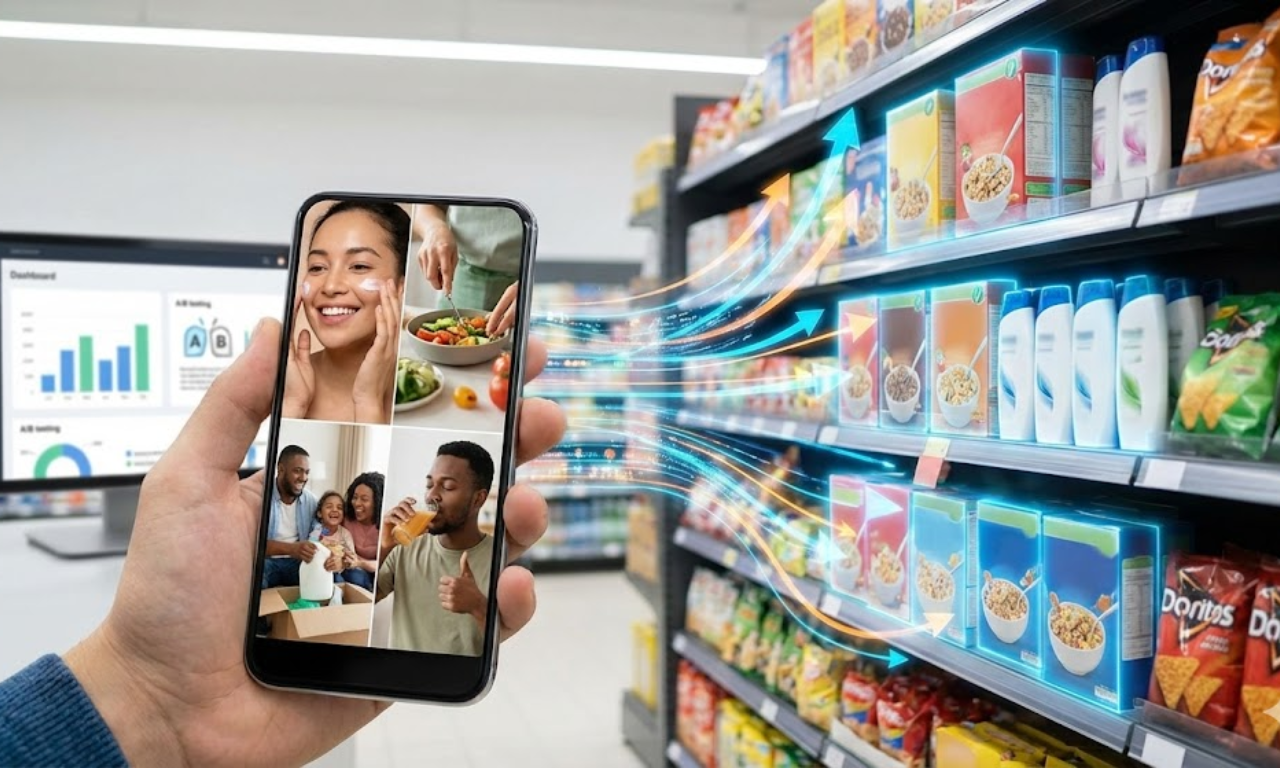
FMCG brands operate in one of the most competitive advertising landscapes, where consumer attention is fragmented and loyalty is fragile. Traditional creative cycles and long-format brand films once dominated mass advertising. But digital platforms have introduced a new pressure: consumers expect speed, authenticity, and relevance. As a result, FMCG growth increasingly depends on UGC ads FMCG performance, rapid experimentation, and agile creative optimisation.
Modern retail discovery now happens on mobile screens. Consumers watch product demos, real-life testimonials, and short-form sensory content before they ever walk into a store. This creates an environment where creative freshness, variety, and authenticity directly impact acquisition efficiency. Performance marketing is no longer a budgeting exercise; it is a creative experimentation system. FMCG brands that adopt this mindset are outgrowing those who rely on static ads and slow creative cycles.
Why FMCG Brands Can No Longer Depend on Traditional Advertising
The FMCG industry faces a unique challenge: high competition, low involvement categories, and constant product diversification. Many brands still depend on mass-media narratives, but digital platforms optimise for behaviour—rewarding creative relevance far more than legacy brand equity.
Key shifts reshaping digital FMCG advertising
The first shift is saturation. Hundreds of FMCG ads compete for the same consumer impressions every day. Only highly distinctive creatives break through. The second shift is rising acquisition costs. As more advertisers enter Meta and Google auctions, CAC optimization food brands becomes essential not just for food categories but across all FMCG segments. The third shift is creative fatigue. Digital ads lose relevance quickly, requiring constant refresh cycles.
Static brand campaigns do not align with this environment. FMCG brands need dynamic, flexible creative pipelines.
UGC Ads: The Most Effective Creative Format for FMCG Today
Across FMCG categories—beauty, home care, personal care, food, beverages, baby care, wellness—UGC has emerged as the dominant format for performance. It outperforms polished brand productions because FMCG products benefit from sensory demonstrations, real reactions, and peer-level relatability.
Why UGC drives superior FMCG performance
UGC communicates authenticity better than traditional ads. Everyday environments, real consumers, and unscripted reactions give FMCG brands credibility. Food and beverage brands benefit from taste tests and reaction videos. Beauty brands excel with routine demos. Home care brands perform well with functional demonstrations. This is why user generated content advertising has surpassed traditional creatives on key performance metrics such as CTR, view-through rate, and conversion probability.
In essence, UGC feels closer to content consumers already watch voluntarily.
How UGC Ads Improve Consumer Trust Across FMCG Categories
Trust is critical across FMCG verticals because many categories involve sensory, safety, or health-related decision-making. Real consumer voices lower psychological barriers.
Category-specific trust levers
Beauty and personal care rely on visible transformations and honest testimonials. Baby care brands succeed when parents see relatable families using their products. Wellness categories benefit from routine integration and step-by-step guidance. Home care thrives on before-and-after demonstrations. These sensory and functional cues are best conveyed through authentic UGC formats, making UGC ads FMCG performance a consistent growth driver.
Why CAC Has Become a Creative Problem, Not a Targeting Problem
FMCG brands have historically relied on segmentation and targeting sophistication to manage acquisition costs. But platform automation has made targeting increasingly uniform. Creative quality now determines whether ads win or lose auctions.
How creative influences CAC outcomes
Engaging hooks increase retention in the first few seconds, improving platform relevance scores. High CTRs lower CPC. Better conversion alignment reduces CPA. Collectively, these factors drive CAC efficiency. This is why CAC optimization food brands, beauty brands, home care brands, and wellness categories all require creative-first approaches, not targeting-first approaches.
Contemporary ad platforms reward creative innovation more than segmentation tactics.
Creative Testing Frameworks: The Scientific Approach to Scaling FMCG Advertising
FMCG growth depends on predictability. A strong creative testing engine ensures consistent discovery of winning ads. The shift from intuition to structured experimentation is essential for sustained ROI.
Core elements of a creative testing framework
A robust creative testing framework ads approach includes generating multiple creative concepts, isolating variables across messaging, hooks, and visuals, distributing controlled test budgets, and evaluating performance signals with discipline. Creatives are categorised into winners, moderate performers, and weak performers. Winners scale aggressively. Moderate performers are retested with variations. Weak creatives are deprecated immediately.
This scientific methodology transforms creative work into an iterative growth engine.
Why Meta and Google Reward Creative Experimentation
Meta and Google algorithms optimise for engagement and user satisfaction. They do not favour brands—they favour high-performing content. This makes experimentation mandatory for brands seeking stable growth.
Signals that platforms prioritise
View retention, click behaviour, scroll velocity, and post-click actions all influence delivery prioritisation. Creatives with strong early engagement see lower costs and better impression share. This is the foundation of Meta Google ads ROI optimization, where ROI improves because brand budgets are allocated to creatives that perform predictably.
Platforms behave like real-time feedback systems, amplifying content that holds attention.
What High-Performing FMCG Creatives Have in Common
Across categories, high-performing FMCG ads share certain behavioural patterns. These characteristics signal relevance and clarity to both consumers and platform algorithms.
Key ingredients of winning FMCG creatives
Strong hooks that immediately display the product or reveal a sensory or functional cue. Messaging that focuses on benefits rather than generic claims. Demonstrations that reduce uncertainty. Story formats that create emotional or practical resonance. Social proof that builds confidence. Simple CTAs that guide next steps.
These principles apply universally across beauty, food, personal care, home care, and wellness.
How FMCG Brands Should Build Their Creative Testing and Production Pipeline
A structured creative pipeline allows FMCG brands to keep pace with market changes and consumer behaviour.
Step 1: Build a High-Volume Creative Library
FMCG brands benefit from generating 15–30 creatives at once across multiple themes, formats, and creators. Variation increases the odds of identifying winners quickly.
Step 2: Run Creative Testing Sprints
Testing sprints involve placing small budgets, collecting early performance signals, and using structured scorecards to identify winners. Each sprint validates new angles.
Step 3: Scale Winning Creatives
Once clear performance indicators emerge, winners receive higher budgets and expanded audiences.
Step 4: Refresh Creatives Before Fatigue Sets In
FMCG categories fatigue quickly, often within 7–21 days. Regular refresh ensures stable CAC and consistent performance.
Step 5: Compound Learning Over Time
Each test increases understanding of audience preferences. This creates a data-backed creative flywheel.
Examples of High-Performing FMCG Creative Themes
Food and Beverages
Taste-test reactions, recipe integrations, and ingredient storytelling create strong sensory appeal.
Beauty and Personal Care
Routine videos, texture demonstrations, and influencer reviews drive trust.
Home Care
Functional comparisons, cleaning demonstrations, and before-and-after formats outperform other ad types.
Baby Care
Parent-led content, usage demos, and safety narratives provide reassurance.
Wellness and Health
Long-term routine building and energy or mood-based narratives increase conversion.
These themes reinforce why user generated content advertising has become core to FMCG performance.
How Creative Data Shapes Strategic FMCG Decisions
Every creative test becomes a micro-learning that informs brand strategy. Tracking metrics such as hook rate, CTR, add-to-cart cost, conversion cost, and fatigue curve creates a predictive model for future creative decisions.
Data-driven decision-making enables
Improved storytelling, better messaging architecture, more accurate consumer segmentation, and enhanced positioning. This creates a strong foundation for Meta Google ads ROI optimization, enabling predictable long-term scaling.
FAQs
1. What makes UGC ads consistently outperform traditional FMCG creatives?
Ans. UGC feels more human and demonstrates real product experiences, making it more persuasive across digital platforms.
2. How frequently should FMCG brands refresh their creatives?
Ans. Most categories require refresh cycles every 7–21 days, depending on spend and audience size.
3. What metrics matter most during creative testing?
Ans. Hook rate, click-through rate, add-to-cart cost, conversion cost, and creative decay curves indicate performance quality.
4. How does structured creative testing reduce CAC?
Ans. It allows brands to identify and scale only the best-performing creatives instead of spending broadly.
5. Why is creative experimentation important for Meta and Google performance?
Ans. Both platforms prioritise relevance and engagement, making creative quality the primary performance lever.








Industries
Growth
Operations
Technology