
Why Video Commerce Is Becoming the New Growth Engine for Marketplaces
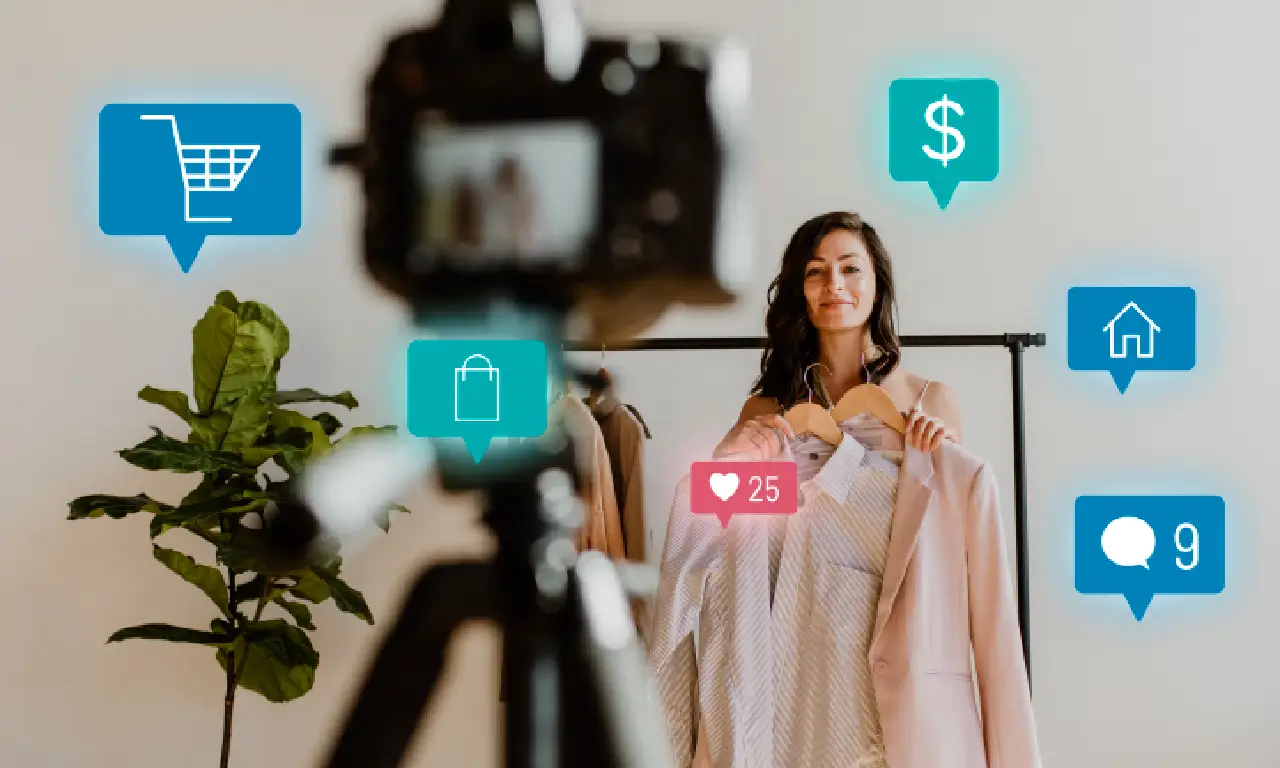
Online marketplaces are undergoing a fundamental shift. While static images once dominated product pages, consumer attention and buying behavior have moved dramatically toward video-first experiences. With Amazon Live, Flipkart Video, short-form product demos, livestream shopping, and influencer collaboration gaining momentum, video commerce is fast becoming the highest-converting asset category for marketplace sellers.
Yet despite its clear performance advantage, most brands still underutilize video or treat it as a superficial add-on rather than a central sales driver.This article examines why video is now the most persuasive medium across Amazon, Flipkart, and emerging marketplace ecosystems. It explores the behavioral psychology behind video-based buying, the evolution of marketplace video formats, the impact of video on sales velocity and organic ranking, and how brands can strategically deploy video content to influence algorithms and conversion.
The Rise of Video Commerce: Why the Marketplace Buyer Has Changed
For nearly a decade, e-commerce product discovery depended on static assets like photography, graphics, lifestyle images, and text-based descriptions. These assets were sufficient when buyers were familiar with the product category, researched independently, and relied on reviews and comparison tables. But the modern marketplace buyer behaves differently. Attention spans are shorter. Trust is harder to build. Competition has intensified. Marketplace search is overwhelmed with ads. And consumers prefer to watch rather than read.
The strongest proof comes from TikTok, Instagram Reels, and YouTube Shorts, where short-form commerce has exploded. People now discover products through 6–30 second videos demonstrating use-cases, benefits, and real-world outcomes. This deeply emotional, fast-moving, and personal format has recalibrated consumer expectations.
When these same consumers land on Amazon or Flipkart, they expect the same richness. They want clarity, proof, motion, human context, and real usage demonstrations. They want to see a product solve a problem, not just sit in a studio shot. Marketplaces have adapted to this shift: Amazon now pushes Amazon Live, Amazon Posts, shoppable videos on PDPs, and creator-led content; Flipkart has integrated short-form video commerce directly into its browsing flows.
The buyer has changed. The platforms have changed. Yet many brands have not.
Why Static Images Are No Longer Enough in 2025
Static imagery offers structure, it displays the product. But static content cannot:
- Communicate performance
- Demonstrate texture, size, or mobility
- Build trust
- Show comparison
- Tell a story
- Reduce perceived risk
- Trigger emotional buying
When a shopper faces infinite options on a marketplace, the burden of proof is critical. Images only validate what the product looks like, not how it works or feels in real life. Especially in categories like beauty, electronics, home improvement, fashion, and personal care, static images fail to remove hesitation.
By contrast, video demonstrates clarity, realism, and authenticity. It compresses the entire funnel: awareness, consideration, trust, persuasion into a few seconds. Videos help shoppers understand whether a product solves their problem, making the final buying decision quicker and more confident.
This is why marketplace algorithms reward video-rich listings with higher session duration, higher engagement, and better conversion, indirectly boosting organic ranking. Video is not just content, it is a ranking signal.
Amazon Live, Flipkart Video, and the New Marketplace Media Layer
Amazon Live has grown from a niche experiment to a powerful media ecosystem. Livestream commerce in Western markets continues to rise as brands mix entertainment with shopping. India has seen explosive growth in short video commerce due to regional creators, vernacular content, and easy mobile browsing.
On the other hand, Flipkart Video links entertainment directly into product exploration. During peak sale seasons, Flipkart Video significantly boosts product visibility, especially for mid-range categories where consumers want reassurance through demos.
The reason these formats work is simple: video shortens distance between discovery and decision. Instead of clicking through 8–10 images and reading copy, a shopper watches a 20-second demo showing the product in a real scenario. The need for research reduces dramatically, and the purchase intent strengthens.
When buyers engage with these marketplace video modules, they enter a path that is faster, higher intent, and algorithmically favored. Sellers that embed video into their content libraries such as lifestyle videos, UGC-style clips, product demos, unboxings, and livestream snippets, benefit from richer impressions and higher ranking opportunities.
Video as the Highest-Converting Asset Class
Across major marketplaces, conversion analytics consistently show that buyers who watch product videos convert at significantly higher rates than those who do not. Some internal advertiser reports suggest double-digit conversion increases when PDP videos are added to listings. While percentages vary by category, the direction is clear: video is the most persuasive asset.
Why? Because it activates multiple psychological triggers:
1. Reality over representation
Video shows real motion, behavior, texture, and size. It eliminates ambiguity and reduces perceived risk.
2. Emotional engagement
Movement captures attention instantly, more than any static image can.
3. Trust and authenticity
UGC-styled or influencer-driven videos replicate real usage, creating credibility and social proof.
4. Faster information transfer
A three-second clip can communicate multiple features simultaneously, reducing cognitive load on the buyer.
5. Storytelling advantage
Videos tell a product story: where it fits, who uses it, how it works, and why it matters.
When marketplaces detect higher conversion and session depth, they elevate the product’s ranking and visibility. Thus, video indirectly boosts organic search performance, ad efficiency, and sales velocity.
Why Most Brands Are Underutilizing Video Commerce
Despite the overwhelming performance advantage, most brands remain in a static-first mindset. Their content supply chain is built around image production and graphic design, not video creation. There are several reasons:
1. Misconception that video production is expensive
Brands assume video requires studios, actors, heavy equipment, and scripting. But marketplace videos often perform better when they look native, real, and user-generated.
2. Overemphasis on photography
Content teams think images are the “professional” standard and treat video as optional or secondary.
3. Lack of understanding of marketplace algorithms
Brands underestimate how significantly video influences session duration, click-through rate, and conversion.
4. Slow internal approval cycles
Companies often take weeks to create, edit, and approve video assets, far slower than the pace of marketplace competition.
5. Failure to build reusable video content libraries
Most brands don’t create modular videos that can flow across Meta ads, Amazon listings, influencer campaigns, and retargeting funnels.
As a result, brands lose out on video-led ranking boosts, lower CPCs, and stronger conversion across the funnel.
How Video Accelerates Marketplace Algorithms and Organic Ranking
On marketplaces like Amazon and Flipkart, the algorithm’s job is simple: show shoppers what they are most likely to buy. Video increases buying probability, which makes algorithms favor the listing.
The algorithmic impact of video arises from:
Higher listing engagement: Shoppers spend more time on PDPs with video, signaling interest and reducing bounce rate.
Higher conversion rate: When shoppers convert at higher rates, the product is deemed more relevant.
More branded searches: Videos used on external platforms often drive buyers to search for the brand on marketplaces.
Sales velocity growth: Since video content often initiates faster buying, the overall sales pace increases.
Better ad efficiency: When video-rich listings convert better, marketplace ad campaigns produce improved ROAS.
Collectively, these signals elevate ranking, giving brands sustained visibility without paying escalating CPCs.
The New Marketplace Video Formats Every Brand Should Adopt
Product Demo Video: A concise demonstration showing how the product solves a real problem. This is the most functional video format and the backbone of video commerce.
UGC-style Real-Life Clip: Shot on phone, raw, authentic, and human. This builds trust faster than polished videos.
Comparison or “Before/After” Explainer: Videos showing transformation or benefit are especially effective in beauty, home care, and lifestyle categories.
Founder-led Video: For premium or niche brands, a founder explaining the product adds credibility and establishes brand identity.
Livestream Highlights: Segments from livestream sessions demonstrating usage, answering questions, or showing unboxing.
Short Vertical Videos for Flipkart Video or Amazon Inspire: These replicate the TikTok/Reels experience and are highly discoverable.
The Economics of Video Commerce: Why It Cuts Costs and Increases Sales
Brands often focus on video as a creative task rather than a financial strategy. But video changes economics in three powerful ways:
-
Increased conversion = lower CPA
If video increases conversion, customer acquisition cost drops. -
Better organic rank = lower reliance on ads
Organic visibility reduces the need for expensive marketplace ad spend. -
Multi-use content = lower production cost per asset
A single video can be used across:
- Amazon PDP
- Flipkart Video
- Meta ads
- Google ads
- Influencer collabs
- Retargeting
- Brand store
- TikTok / Reels
The cost of video amortizes quickly, making it more efficient than static imagery alone.
How Regional and Vernacular Video Commerce Creates a Competitive Edge
Short-form vernacular content is exploding. In India especially, regional creators dominate engagement. Marketplace shoppers in Tier 2/3 cities respond strongly to local accents, familiar presentation styles, and culturally contextual examples.
Brands that integrate vernacular video commerce gain:
- Higher relatability
- Lower CPC in external traffic
- Faster trust formation
- Stronger organic ranking in regional delivery zones
- Better adoption during sale events
Video commerce is not just a format shift, it is a cultural shift.
The Future of Marketplace Commerce Is Video-First
By 2026, marketplaces will function less like catalogues and more like entertainment ecosystems. Amazon Inspire, Amazon Live, Flipkart Video, Myntra Studio, Ajio Clips, and YouTube Shopping are early indicators of a fully integrated video-led discovery environment.
The rise of video commerce represents one of the most significant shifts in marketplace selling. While static images help display the product, video sells it. It builds trust, reduces friction, increases conversion, boosts ranking, and accelerates sales velocity across Amazon and Flipkart. In an era where attention is scarce and competition is intense, video is the most efficient asset for communication, persuasion, and growth.
Marketplace brands that embrace video commerce now, through demos, UGC-style content, livestreams, short-form clips, and regional creators, will gain a defensible advantage. Those who stay image-heavy and video-light risk being outperformed by more adaptive competitors.
GrowthJockey helps brands build a complete video-commerce engine, from creative strategy to marketplace execution. Intellsys AdGPT ensures brands unlock data-driven clarity across 200+ advertising, CRM, and analytics platforms. It allows teams to ask questions in natural language and instantly receive insights, prioritized actions, and projected outcomes. Together, we empower brands to scale video-led marketplace growth with precision, confidence, and measurable performance lift.
FAQs
Q1. Why does video convert better than images on Amazon and Flipkart?
Ans. Video conveys real usage, emotional context, and live demonstration, reducing buyer hesitation and increasing trust.
Q2. Do marketplace algorithms actually reward video?
Ans. Yes. Higher engagement, longer session duration, and increased conversion from video content feed directly into ranking signals.
Q3. Is video production expensive for marketplace brands?
Ans. Not necessarily. UGC-style, smartphone-shot videos often outperform polished studio videos because they feel more authentic.
Q4. Which type of video works best for marketplace listings?
Ans. Short product demos, unboxing clips, and real-life usage videos consistently perform best across PDPs.
Q5. Should brands create separate videos for external ads and marketplaces?
Ans. A single modular video can serve both purposes. Marketplace-ready videos also perform well on Meta, Google, and influencer channels.








Industries
Growth
Operations
Technology