
From VR Test Rides to Online Deals: The Future of EV Retail Experience
For more than two decades, buying a two-wheeler in India followed the same predictable script. A customer visited a dealership, walked around the scooter, touched the body panels, asked a few questions, negotiated with a salesperson, and took a short test ride around a crowded block. The moment of purchase was physical, linear, and controlled entirely by the dealership environment. But the transition from internal combustion to electric mobility has shaken this script so profoundly that the entire category of automotive retail is undergoing a reinvention unlike anything we have seen before.
As electric vehicles become more software-driven, more app-centric, and more experience-led than conventional petrol scooters, the way people learn about EVs is fundamentally changing. Buyers no longer rely on a salesperson to explain torque, charging, battery life, or regenerative braking. They no longer want to touch a brochure to explore variants. They no longer want to imagine range, they want to simulate it. The modern customer, especially digital-native Gen Z and millennial buyers, wants clarity, control, visualization, and confidence before committing to purchase.
The Rise of the Virtual Showroom EV Ecosystem
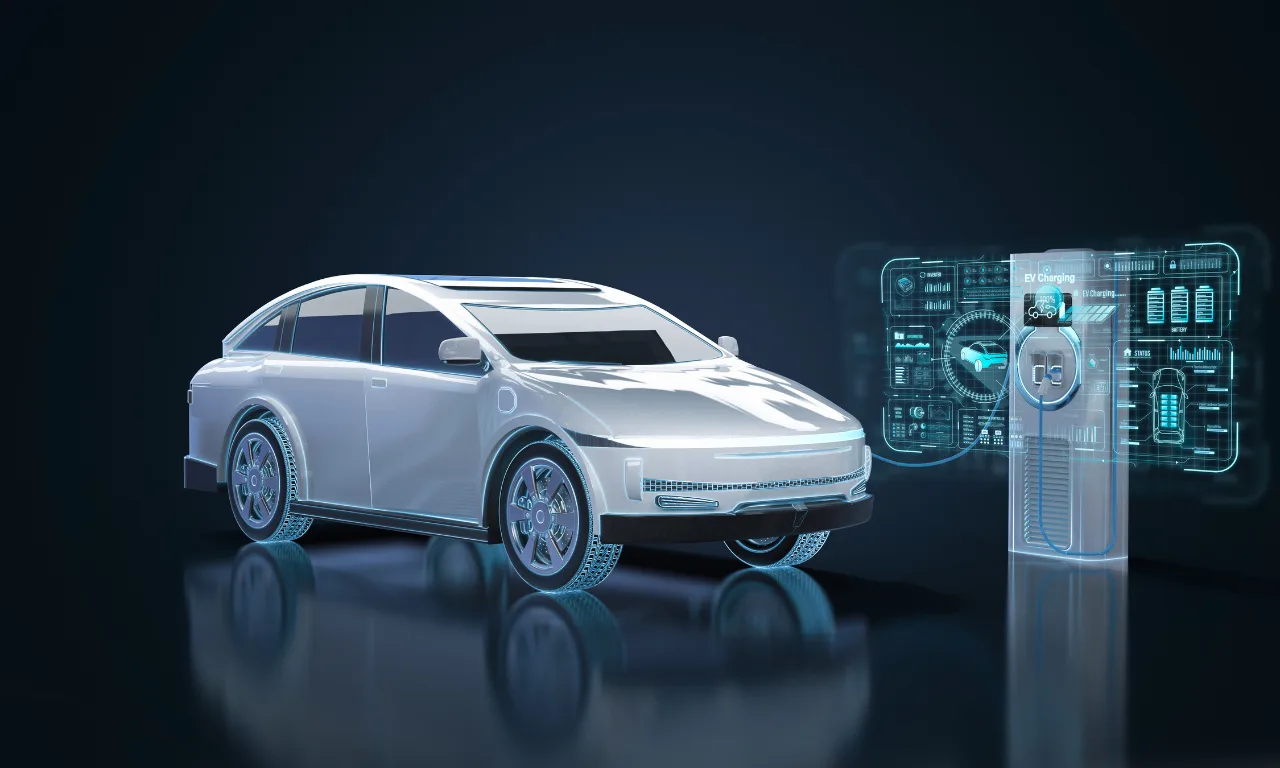
This shift is at the heart of the rise of the virtual showroom EV ecosystem, a new digital-first retail environment where discovery, comparison, and evaluation happen long before anyone steps into a physical dealership. These virtual showrooms, designed like interactive, three-dimensional environments, remove the friction of physical distance and time. A customer in a Tier-3 town no longer needs to travel 50 kilometres to see a new EV model. A buyer can now rotate a scooter in stunning detail, zoom into the dashboard interface, examine the charging port, hear synthetic motor sound profiles, and watch the headlights respond to clicks all through a phone.
Virtual showrooms replicate the dealership experience while enhancing it with deeper visualisation and on-demand accessibility. For EV buyers, this solves one of the biggest pain points: understanding the product before experiencing it physically.
VR Automotive Retail Experience: The New Test Ride
The transformation does not stop here. If virtual showrooms are the new front door, then VR automotive retail experience is the new test ride. Virtual reality test rides are revolutionising how customers emotionally connect with a vehicle before ever riding it. Instead of a two-minute circle around the dealership, a VR test ride places the customer inside dynamic riding scenarios: city traffic, open highways, uphill stretches, and heavy-load rides. They can feel the acceleration curve, understand regenerative braking, compare riding modes, and observe battery drain behaviour under different conditions.
The psychological impact is enormous. When riders “experience” an EV’s smoothness, power delivery, and intelligence in VR, their fears dissolve. Confidence replaces hesitation, curiosity becomes conviction. This shift is not speculative. Brands that implemented VR test rides in global markets saw conversion rates increase dramatically because VR allows customers to visualise the unseen which is the most powerful tool in EV marketing.
Immersive Vehicle Buying Experience: Turning Complexity into Clarity
But the most profound change in the EV buying journey lies in the rise of the immersive vehicle buying experience, a new paradigm where technology replaces confusion with clarity and transforms the act of purchasing into a deeply personalised decision-making process. EVs inherently generate more questions than petrol vehicles. Buyers want to understand smart features, app controls, real-world range, battery safety, warranty layers, charging availability, software updates, braking regeneration, and long-term value. Traditional dealerships are often ill-equipped to deliver this depth of explanation to every customer consistently. Digital immersive experiences solve this challenge elegantly.
Imagine a prospective buyer sitting at home, wearing a headset or simply using a web interface, and stepping into a beautifully designed virtual world where the EV brand narrates its story. The customer journeys through visual chapters showcasing battery engineering, motor assembly, quality tests, sustainability impact, charging infrastructure, and live telematics data. They witness the scooter disassembled into layers, understand how the battery responds to heat, watch simulations of charging patterns, and explore how the connected app works in real time. This level of immersion transforms the buying act into an emotional journey equal parts education and entertainment, yet powered by deep product understanding.
The 3D Vehicle Configurator: Personalisation as the New Standard
Then comes the next evolutionary leap: the rise of the 3D vehicle configurator online, which gives customers the ability to design their EV the way they design their smartphones. In today’s mobility landscape, personalisation is not a luxury; it is expected. A 3D configurator allows customers to change colours, switch batteries, add accessories, upgrade software features, and preview everything in real-time lighting and environment simulation. They can understand the price implication of every configuration as the model updates instantly. The configurator gives a sense of creative ownership. Suddenly the EV is not a generic scooter, it is my scooter. In psychology-driven sales, that shift is priceless.
Why Digital Tools Are Replacing the Dealership as the First Touchpoint
As these digital tools spread, the entire EV buying journey undergoes a dramatic rearrangement. Earlier, the first point of contact was a dealership visit. Now, the first point of contact is often a YouTube video, a virtual showroom, a VR ad, a WhatsApp chatbot, or a configurator link shared by a friend. In many cases, customers reach showrooms not to explore the scooter, but to confirm what they already know. The dealership becomes an experience centre not the educator, not the negotiator, not the explainer.
This shift moves the entire funnel online. Discovery, evaluation, explanation, and comparison happen in virtual spaces. Personalisation happens via the configurator. Emotional connection happens through VR. Confidence happens through virtual range simulation. Queries are answered by AI advisors running on WhatsApp or brand websites. Even negotiation once an in-person ritual moves online through pre-approved finance options and dynamic pricing engines.
The Seamless Transition Toward Online EV Deals
Once a customer reaches this level of clarity, the leap to online deals becomes natural. The idea that a ₹1 lakh e-scooter can be purchased online the way we buy a laptop or smartphone is becoming increasingly mainstream. This is because EVs have fewer mechanical variables and more software-driven reliability. Digital KYC, online financing, instant payment, home delivery, and app onboarding everything fits cleanly into a digital sales model.
For OEMs, the implications are massive. Online deals reduce dependency on dealership sales staff, expand reach across thousands of non-showroom towns, and enable direct-to-customer pricing without legacy negotiation frameworks. The digital funnel becomes a scale engine. A single virtual showroom EV can reach 100× more users than a physical one. A single configurator generates more qualified leads than ten dealerships. A single VR installation can convert hesitant buyers faster than any salesperson.
How AI and Operational Systems Power the Digital EV Funnel
AI intensifies this transformation. It monitors browsing behaviour, predicts buyer intent, identifies hesitation points, recommends battery variants based on commute distance, pushes personalised offers, answers questions conversationally, and connects the customer to the right dealer or executive at exactly the right moment. Tools like Intellsys.ai amplify this effect by analysing lead scoring, funnel drop-offs, content impact, time-to-conversion, and user behaviour patterns. Meanwhile, operational platforms like ottopilot, a business operating solution, ensure that dealers, sales teams, test ride fleets, service technicians, and corporate teams execute this digital funnel consistently across regions. Without such orchestration, digital retail collapses under operational inconsistency.
The Dealership of Tomorrow: Experience-Led, Not Transaction-Led
As EV retail becomes more immersive and more digital, dealerships evolve rather than disappear. Dealerships become experience pods with compact spaces featuring VR stations, configurator kiosks, charging demonstrations, smart vehicle app walkthroughs, and customer onboarding specialists. They become emotional touchpoints rather than transactional hubs. The majority of customer education has already been completed online. The dealership simply validates the experience and finalises delivery.
India’s EV Retail Future Will Be Digital, Immersive, and Customer-Designed
This transformation is not a theoretical future, it is an active shift. Customers today already begin their EV journeys online. More than half conduct all research digitally before speaking to a salesperson. Many schedule test rides through WhatsApp instead of calling a dealer. Configurator usage is surging. YouTube reviewers often influence buying decisions more than showroom advisors. VR is entering early adopters’ markets. EV buying behaviour is becoming more digital, more self-driven, more informed, and more immersive than ICE buying ever was.
The next decade of EV retail will not be defined by more showrooms but by deeper digital layers. Virtual showrooms will become the new first touchpoint. VR automotive retail experience will become the new persuasion engine. 3D configurators will become the new decision-making hub. Conversational AI will become the new salesperson. And online deals will become the new normal.
In this landscape, the winners will not be the brands with the biggest dealership networks, but the ones with the most intelligent digital retail stack, a unified funnel that connects virtual exploration, immersive experience, behavioural intelligence, and operational execution seamlessly.
GrowthJockey’s Vision for the Future of EV Retail
This is where GrowthJockey sees the future heading: toward deeply connected, tech-enabled purchasing journeys where experience drives understanding, understanding drives trust, and trust drives conversion. EVs are not just transforming mobility, they are transforming how India buys mobility. And those who build the immersive layer today will own the market tomorrow.
GrowthJockey is a venture architect helping EV and mobility enterprises build next-generation digital retail ecosystems. Through our intelligence engine Intellsys.ai, brands gain real-time insight into customer behaviour, funnel performance, VR engagement patterns, configurator usage, and decision triggers that shape EV purchases. Our operating layer ottopilot, a business operating solution, orchestrates dealer networks, sales operations, test ride fleets, and aftersales workflows to ensure seamless execution of digital-first retail strategies. Together, these systems help OEMs scale immersive, virtual, and online retail journeys that redefine how EVs are discovered, experienced, and purchased across India.
FAQs
Q1 What is a virtual showroom EV experience?
It is a three-dimensional digital environment where customers can explore EV models, features, specifications, and range simulations without visiting a physical dealership.
Q2 How does VR enhance automotive retail?
Virtual reality allows customers to “ride” an EV in simulated environments, experience acceleration, understand regenerative braking, and evaluate riding comfort in a psychologically safe and immersive way.
Q3 What is a 3D vehicle configurator online?
It is an interactive digital tool that lets buyers customise an EV’s colour, battery, accessories, variants, and feature packs while seeing real-time visuals and pricing updates.
Q4 Will online EV sales replace dealerships?
Dealerships will evolve, not disappear. They will become experience centres supporting a digital-first, online-led purchase funnel.
Q5 Why are immersive buying experiences important for EVs?
EVs are new, technology-heavy products. Immersive digital tools help customers understand complex concepts quickly, feel confident, and make informed decisions.








Industries
Growth
Operations
Technology