
How WhatsApp & Voice Bots Transform Consumer Interactions
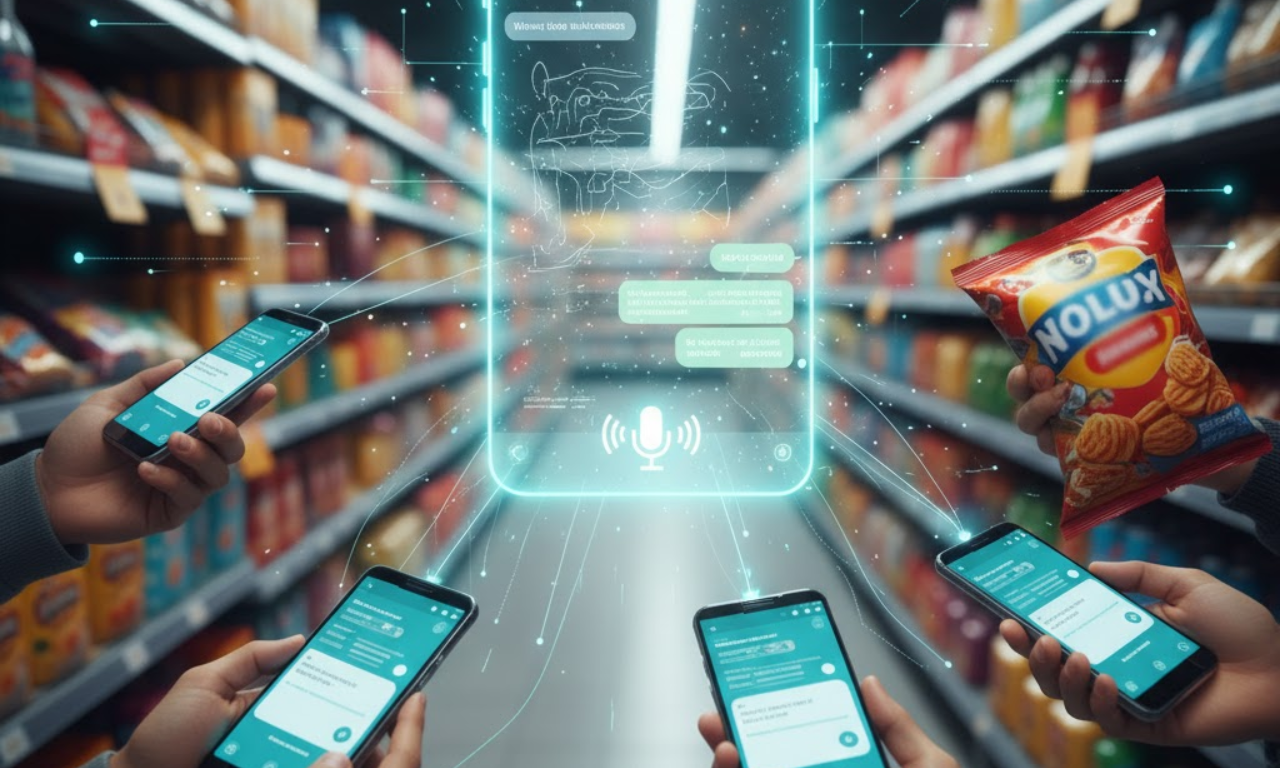
The FMCG industry is undergoing a structural shift in how it communicates, supports, and converts consumers. For decades, brands relied on retail touchpoints, mass marketing, and fragmented post-purchase journeys. But the rise of conversational commerce FMCG models, driven by WhatsApp, voice bots, and AI-powered assistants is redefining how consumers interact across discovery, purchase, and service.
As consumers seek immediacy, simplicity, and personal relevance, messaging apps have become the new CX frontier. WhatsApp alone has transformed from a communication tool into a full-funnel commerce and service engine, capable of enabling product discovery, guided selling, customer support, personalized recommendations, and instant feedback.
This shift is not a trend; it is a consumer behaviour rewrite. With over 500 million monthly active WhatsApp users in India, and increasing adoption of voice interfaces through mobile devices and smart speakers, FMCG brands now have a once-in-a-generation opportunity to build continuous, context-aware relationships with consumers.
Conversational touchpoints are becoming the new default interaction layer placing WhatsApp and voice bots at the center of modern Customer Experience (CX).
The New Reality: Why FMCG Needs Conversational CX Immediately
Traditional FMCG interactions are shallow, transactional, and one-directional. Brand websites are rarely visited, call centers feel outdated, and apps face high uninstallation rates. Meanwhile, consumers spend a disproportionate amount of time on messaging platforms.
Three macro shifts explain why conversational interfaces now dominate FMCG CX:
-
Frictionless interaction > app fatigue
Consumers prefer instant, lightweight conversations over downloading and navigating apps. -
Two-way communication beats broadcast marketing
Messaging allows brands to listen as much as they speak, creating a feedback loop. -
Voice interfaces match the diversity of India
Voice removes literacy, language, and tech barriers, critical for Tier 2–4 markets.
As a result, conversational commerce FMCG strategies are outperforming traditional digital methods in both engagement and responsiveness.
WhatsApp: The Fastest-Growing Channel in the FMCG CX Ecosystem
WhatsApp has quietly become the most powerful direct-to-consumer channel in India. For FMCG brands, it offers a unique combination of scalability, personalization, and ease of use. Consumers already use WhatsApp organically to ask questions, share product experiences, and seek recommendations. With structured workflows and AI, brands can now meet consumers exactly where they are.
Why WhatsApp dominates consumer preference:
-
No learning curve - every segment knows how to use it
-
High engagement - open rates exceed 90%, click rates ~35–45%
-
Natural behaviour fit - messaging feels casual, human, and effortless
-
Supports multimedia - images, short videos, catalogs, voice messages
This makes WhatsApp the most effective backbone for a modern WhatsApp commerce strategy.
How WhatsApp Transforms the FMCG Consumer Journey
WhatsApp collapses multiple consumer touchpoints, awareness, interest, purchase, support into a single conversational interface.
A. Discovery & Product Education
Consumers can explore products organically through guided flows.
They ask questions, view variants, compare benefits, and consume quick educational content.
Brands use WhatsApp to deliver:
-
Mini product explainers
-
How-to-use tutorials
-
Variant comparison flows
-
Ingredient and safety information
-
Personalized advice based on usage
This reduces pre-purchase hesitation and strengthens trust.
B. Sampling, Trial & Guided Path-to-Purchase
For high-competition categories like beauty, personal care, and food, WhatsApp simplifies trial management.
FMCG brands automate:
-
Sample registrations
-
Address collection
-
Trial reminders
-
Follow-up surveys
-
Direct purchase links
This turns product trials into structured, trackable funnels.
C. Replenishment & Habit Loop Reinforcement
WhatsApp excels at predicting and guiding routine purchases—critical for FMCG loyalty.
Replenishment journeys include:
-
Timely reminders based on consumption cycles
-
Personalised reorder prompts
-
Subscription nudges
-
Usage-based notifications
These interactions create reliable habit loops, reducing drop-off.
D. Complaint Handling & Issue Resolution
90% of consumers prefer solving problems through messaging over calling customer support.
This is where chatbot customer service becomes a game changer.
WhatsApp complaint flows enable:
-
Instant acknowledgment
-
Automated triage
-
Guided troubleshooting
-
Replacement or refund initiation
-
Satisfaction surveys
The result: dramatically faster resolution and higher CSAT.
The Rise of Voice Shopping: The Next Frontier
As smartphone use grows and digital accessibility deepens, voice interfaces are becoming mainstream. A voice shopping assistant provides consumers with hands-free, multilingual, intuitive support—particularly effective for households where:
-
Convenience is valued
-
Literacy levels vary
-
Elderly consumers influence purchases
-
Multilingual communication is needed
Voice bots remove effort from the interaction, making them ideal for high-frequency FMCG journeys.
Why Voice Bots Are Transforming FMCG Consumer Behaviour
Voice allows consumers to communicate naturally, without typing, reading, or navigating menus.
Key advantages of voice-led CX:
-
Higher accessibility
Works across literacy levels, regions, and languages. -
Speed
A spoken query is 3–4x faster than typing. -
Emotional resonance
Tone and empathy in voice build trust. -
Hands-free convenience
Critical for household or kitchen-based interactions.
Voice shopping assistants integrate with existing systems to provide personalised suggestions, reorder support, and customer service, all through natural conversation.
The CX Value Proposition: Why Conversational Commerce Works
The foundation of conversational commerce FMCG adoption is its unmatched CX impact.
Consumers feel:
-
Heard
-
Supported
-
Understood
-
Recognised
This human-like interaction builds stronger affinity than any static website or one-way advertisement.
Conversational channels excel because they:
-
Deliver responses instantly
-
Offer 24/7 availability
-
Provide a guided, low-effort path
-
Personalise content and recommendations
-
Close the loop between support and sales
Together, WhatsApp and voice bots become always-on CX companions.
AI: The Intelligence Layer Powering Conversational Commerce
The magic behind WhatsApp and voice bots is AI—not simply automation, but intelligence.
AI powers conversational CX in five ways:
-
Intent detection to understand needs
-
Recommendation engines for personalised choices
-
Sentiment analysis for better support
-
Consumption modelling for replenishment
-
Journey optimisation for continuous learning
This ensures that conversational experiences feel tailored, not templated.
The Business Impact: How Conversational CX Drives Retention & Revenue
FMCG brands using conversational commerce see measurable uplift across the funnel.
A. Higher Repeat Purchase
Replenishment reminders and frictionless reordering drive loyalty.
B. Increased Conversion
Guided selling and personalised nudges reduce decision fatigue.
C. Lower Service Cost
Chatbot customer service handles majority queries autonomously.
D. Better Product Feedback
Voice and chat interactions reveal real-time consumer sentiments.
E. Higher Lifetime Value
When interactions are simple, consumers stay longer.
Conversational channels move brands from transactional to relational marketing.
How FMCG Brands Can Adopt Conversational CX (Practical Framework)
Here is a structured, scalable approach based on your TRPC guidelines.
Step 1: Map Consumer Journeys
Identify high-friction steps:
-
Discovery
-
Usage education
-
Replenishment
-
Issue resolution
Step 2: Build WhatsApp Commerce Strategy
Integrate:
-
Guided shopping
-
Product education
-
Sampling journeys
-
Feedback loops
Step 3: Deploy Chatbot Customer Service
Automate:
-
FAQs
-
Troubleshooting
-
Complaint registration
-
Ticket closure
Step 4: Launch Voice Shopping Assistant
Support:
-
Multilingual queries
-
Order placement
-
Usage instructions
-
Routine building
Step 5: Continuously Optimise
Measure:
-
Response time
-
Resolution rate
-
Repeat purchase
-
CSAT
-
Drop-off points
This ensures conversational CX improves month after month.
Conclusion: The Future of FMCG CX Will Be Conversational
WhatsApp and voice bots are not side projects, they are becoming the primary consumer interface for FMCG brands. As expectations evolve, consumers will reward brands that simplify interactions, personalise experiences, and provide instant support.
Conversational commerce FMCG models will define the next decade of consumer experience. Brands that adopt it early will build stronger loyalty, reduce churn, and create meaningful long-term engagement.
FAQs
1. What makes conversational commerce so effective for FMCG brands? Ans. It simplifies consumer interactions by offering instant, personalised guidance on the platforms people already use daily.
2. How does WhatsApp improve the overall customer experience? Ans. WhatsApp enables fast, familiar, two-way communication that reduces friction across discovery, purchase, and support journeys.
3. What role do voice bots play in FMCG consumer engagement? Ans. Voice bots provide hands-free, multilingual assistance, making product discovery and support more accessible to diverse users.
4. Can conversational interfaces drive higher repeat purchase? Ans. Yes, predictive reminders, personalised suggestions, and guided reordering significantly strengthen consumer habit loops.
5. What capabilities do brands need to implement conversational CX? Ans. Brands need conversation design, AI intent detection, integrated CRM workflows, and analytics to optimise real-time interactions.









Industries
Growth
Operations
Technology