
How Digitised General Trade Is Reshaping FMCG Sales in India
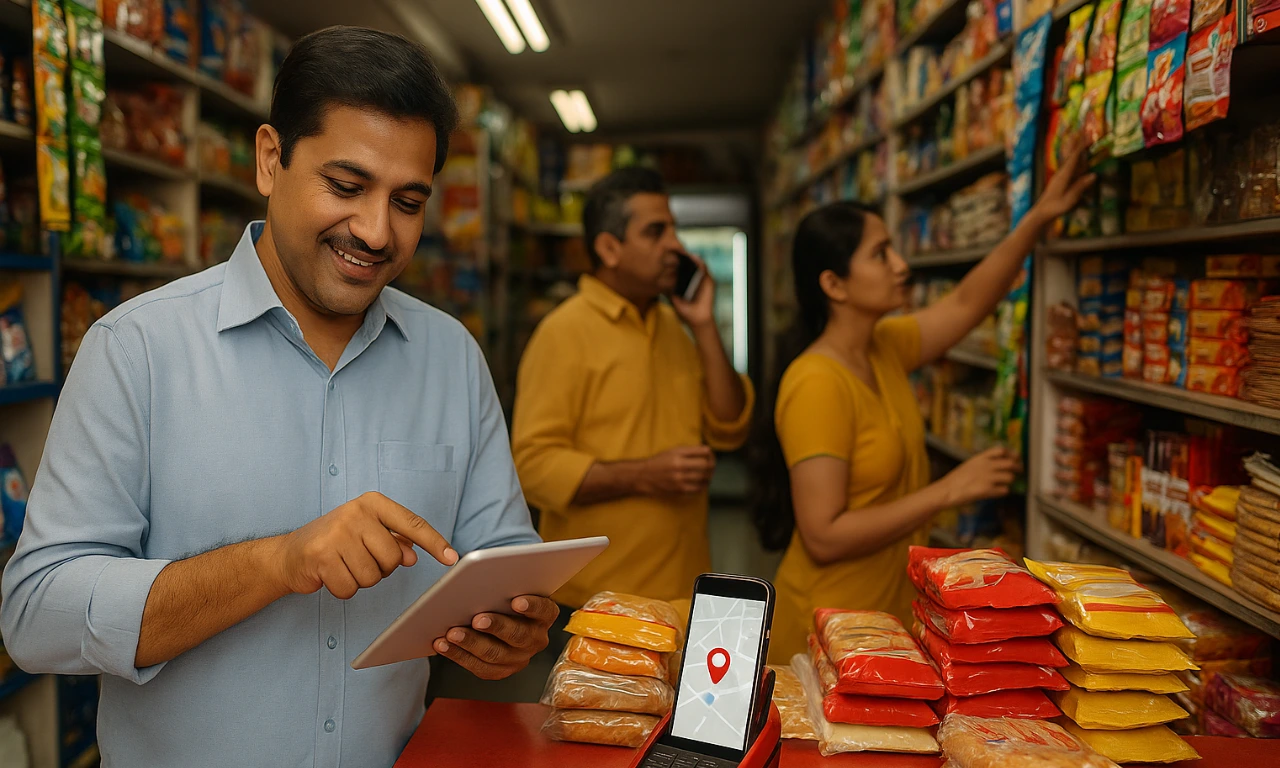
For decades, general trade has powered India’s ₹20-lakh-crore FMCG engine - an ecosystem of 13 million+ distributors, wholesalers, and kiranas. Despite the rise of modern trade and e-commerce, over 85 percent of FMCG sales still flow through this traditional network.
But the system that once ran on phone calls and paper invoices is now being rewired by technology. From UPI-linked payments to AI-driven order apps, a new wave of general trade digitization is transforming India’s most resilient distribution channel into a data-driven, real-time sales machine.
Digitisation isn’t about replacing people with platforms - it’s about enabling every distributor, wholesaler, and retailer to operate with precision, speed, and transparency.
Why General Trade Still Matters
Even as modern retail expands, India’s FMCG geography remains local. Rural and Tier-2 markets drive more than 60 percent of national demand. The kirana next door still supplies daily essentials faster than any online cart can.
-
Food & Beverage: Nearly 80 percent of cola, biscuit, and packaged-snack sales in small towns come through GT channels.
-
Personal Care: Over 60 percent of shampoo and soap volumes are sold via traditional retailers.
-
Household Essentials: Surface cleaners, detergents, and dishwash liquids rely on local distribution hubs for reach.
For FMCG leaders, the new priority is clear - digitise the channel that already owns consumer trust.
The Case for General Trade Digitization
General trade digitization means integrating ordering, invoicing, inventory, and payments through cloud and mobile systems.
The payoff is tangible:
-
20–25 percent faster billing through paperless orders.
-
15 percent lower product returns due to accurate stock visibility.
-
Real-time credit reconciliation reducing disputes and delays.
Examples leading the charge:
-
HUL Shikhar: connects 1.4 million retailers through AI-recommended order lists.
-
Marico OrderEasy: digitalizes distributor networks across 40 cities.
-
ITC e-Choupal 3.0: extends data-driven procurement and delivery to rural outlets.
Digitisation converts a once-opaque system into a transparent, responsive ecosystem - one where sales leaders see SKU movement by pin-code, not by quarter.
4. Distributor Digitalization - Strengthening the Supply Spine
Distributors remain the heartbeat of FMCG delivery. Distributor digitalization now gives them the tools to act like micro-ERP hubs.
Earlier: orders scribbled on notepads, manual reconciliation, and delayed dispatch.
Now: smartphone dashboards, automated e-invoicing, GPS-tagged van routes, and AI-based demand alerts.
Benefits observed:
-
100 percent traceable orders and deliveries.
-
Predictive stock replenishment reducing stock-outs by 30 percent.
-
20 percent faster payment cycles via integrated UPI systems.
Sub-industry examples:
-
Reckitt Benckiser digitised 8 000 Dettol and Finish distributors using Salesforce-linked DMS.
-
Britannia unified 20 000 van-sales points under one ERP.
-
Godrej Consumer Products tracks daily performance of rural distributors through analytics dashboards.
Together, these systems form the digital spine connecting factories to storefronts.
Digital Distribution Wholesale - Connecting Brands to Markets in Real Time
Wholesale has entered the digital era. Platforms such as ElasticRun, ShopKirana, and Udaan act as digital distribution wholesale networks linking FMCG brands with millions of small retailers.
Their model aggregates multiple brands, allowing shop owners to place all orders on one platform - anytime, anywhere.
Advantages for FMCG companies:
-
3× faster entry into new geographies.
-
Lower logistics cost via shared fulfilment.
-
Real-time market intelligence across 500 000 retailers.
India’s digital-wholesale segment is projected to reach ₹1.5 lakh crore by 2028, growing 35-40 percent CAGR . Wholesale is no longer a volume-only game; it’s a real-time data loop that accelerates brand reach.
Trade Channel Management — From Relationship-Driven to Data-Driven
Trade channel management now blends people, process, and platform. FMCG leaders manage both relationships and data flows.
Modern GT systems prioritise:
-
Unified customer view across distributor, wholesaler, and retailer levels.
-
AI-based route optimisation for sales reps and vans.
-
Digital claim settlement reducing trade-promotion leakage.
Examples:
-
Colgate-Palmolive automates scheme payouts through CRM dashboards.
-
Dabur identifies under-served micro-clusters via GT analytics.
-
HUL aligns trade incentives with outlet-level digital performance metrics.
Impact:
-
+18 percent sales-rep productivity
-
+12 percent outlet coverage
-
Faster promo reconciliation reducing working-capital stress.
Digitised trade channels blend the human strength of relationship selling with the precision of analytics.
Digital Ordering System FMCG - The New Sales Engine
The most visible front of this revolution is the digital ordering system FMCG firms now deploy.
Apps and chatbots enable 24×7 ordering - replacing weekly calls with instant clicks.
Measured impact:
-
60–70 percent reduction in manual order errors.
-
25 percent increase in order frequency.
-
40 percent drop in distributor call time.
Examples:
-
Nestlé Smart Order integrates directly with SAP for instant billing.
-
P&G Retail Connect uses WhatsApp-based ordering plus UPI payments.
-
Godrej NXT offers digital claim upload and delivery tracking for retailers.
For distributors, it means predictable demand; for brands, faster sell-through.
Challenges and Enablers
Persistent challenges:
-
Data silos between distributors and manufacturers.
-
Low digital adoption in smaller towns.
-
Limited analytics capability at the field-force level.
Rapid enablers:
-
ONDC integration: open-API access for B2B ordering.
-
GST e-invoicing: enforcing end-to-end transaction digitisation.
-
Cloud-based DMS: low-cost SaaS tools such as Bizom, FieldAssist, Brego.
-
Digital India & 5G rollout: enabling real-time connectivity even in Tier-4 markets.
Once distributors and retailers experience tangible ROI - faster turnover, fewer returns - adoption becomes self-propelling.
The Road Ahead - From Digitised Trade to Intelligent Commerce
The next phase moves from digitised to intelligent general trade.
By 2030, more than 70 percent of GT transactions are expected to involve at least one digital touchpoint.
Upcoming shifts:
-
AI-led pricing and forecasting that adjust promotions by micro-market.
-
Voice-based order assistants for rural retailers.
-
Predictive logistics routing cutting lead times from 72 to 24 hours.
FMCG companies will evolve from monitoring “sell-in” numbers to optimising “sell-through velocity.”
The Future of General Trade Is Phygital
General trade remains India’s most powerful FMCG engine - and now it’s becoming its smartest.
Digitisation has unified distributors, wholesalers, and retailers into one connected network capable of real-time decision-making.
For business leaders, the imperatives are clear:
-
Adopt unified trade channel management systems across all territories.
-
Drive distributor digitalization to ensure data visibility from plant to counter.
-
Invest in digital ordering systems that empower retailers, not overwhelm them.
When data flows freely across every node of India’s trade network, sales velocity becomes a function of intelligence - not guesswork. The channel that built India’s FMCG success story is now engineering its next growth curve.
GrowthJockey’s Perspective
GrowthJockey believes the digitisation of general trade marks a turning point in India’s FMCG growth story. It signals a shift from transactional selling to intelligent commerce, where relationships, data, and technology coexist to drive real-time market responsiveness. The strength of India’s FMCG future lies not in replacing human networks, but in equipping them with digital intelligence - an approach that is increasingly essential for founders learning how to start an FMCG business in today’s evolving trade landscape.
As trade systems become more connected, the edge will belong to companies that blend local agility with digital foresight. GrowthJockey sees this convergence as the next growth multiplier - transforming every distributor and retailer into a smart node in a self-learning, data-driven ecosystem.
FAQs
1. Is general trade still relevant for FMCG brands in 2025?
Ans Yes, over 85 percent of FMCG sales in India still come through general trade.
2. Can digital tools really improve distributor efficiency?
Ans Yes, digital dashboards and e-invoicing reduce delays and increase traceability.
3. Are small-town retailers adopting digital ordering apps?
Ans Yes, adoption is rising rapidly with UPI payments and smartphone penetration.
4. Will AI forecasting replace human sales judgment?
Ans No, it complements field experience with data-driven accuracy.
5. Can general trade digitisation help reduce FMCG working-capital stress?
Ans Yes, faster claim settlement and real-time reconciliation improve cash cycles.




Industries
Growth
Operations
Technology