
Best Sustainable Startups: Future of Green Innovation & Impact in 2026
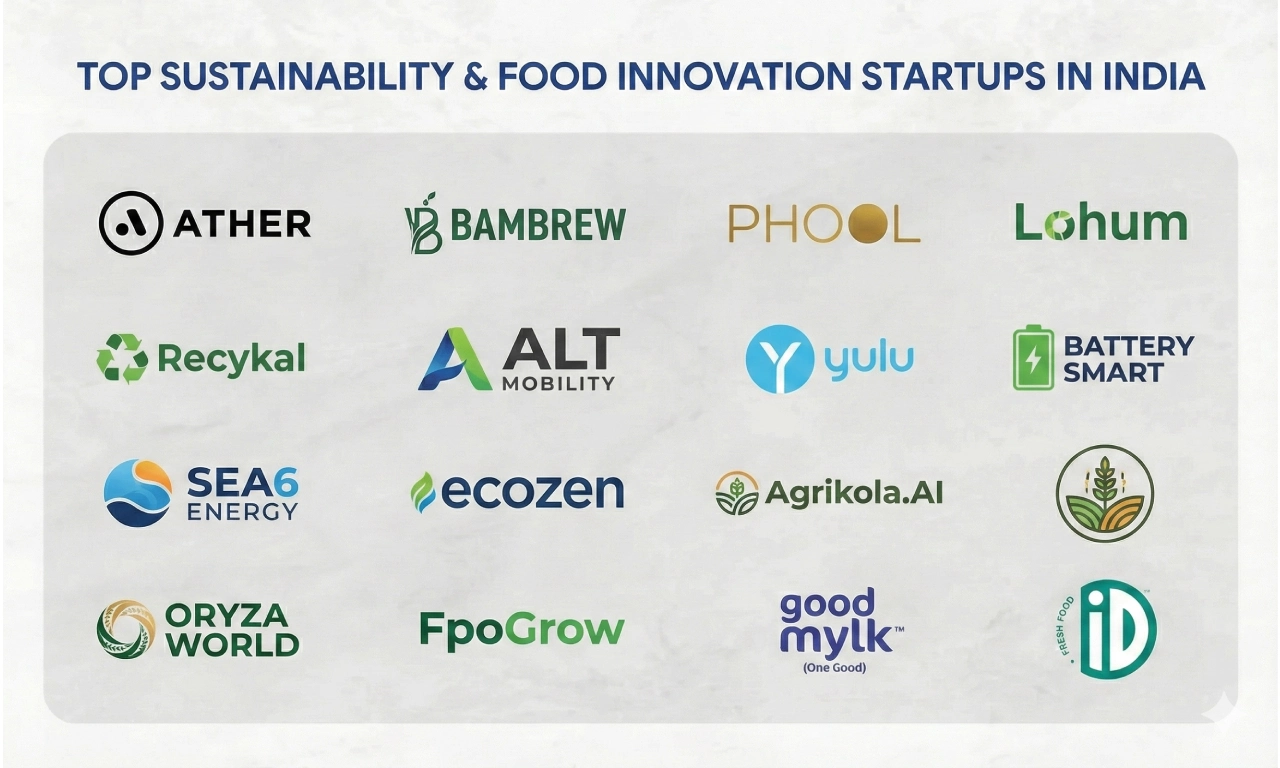
The global sustainable startup ecosystem has matured from a fringe movement into a multi-billion dollar investment category. In 2024-2025, cleantech funding in India alone surged 43% to $2.6 billion, while global venture capitalists are prioritizing sustainability as a non-negotiable investment thesis. For founders, this convergence of market demand, regulatory support, and capital availability creates unprecedented opportunities to build billion-dollar businesses while solving existential environmental challenges.
What is a Sustainable Startup?
A sustainable startup is fundamentally different from a conventional business because it embeds environmental, social, and economic sustainability into its core operating model from inception. Unlike traditional companies that retrofit sustainability into existing operations, sustainable startups design profitability and planet-positive impact simultaneously.
Sustainable startups span three interconnected dimensions:
Environmental Sustainability focuses on reducing resource depletion, minimizing waste, and regenerating natural systems. Companies like Bambrew (biodegradable packaging), Ather Energy (electric mobility), and Sea6 Energy (ocean biomass) eliminate resource extraction while creating competitive cost advantages through waste valorization and renewable inputs.
Social Sustainability addresses fair labor practices, community development, and equitable value distribution. Phool's model employs 1,000+ women from marginalized communities to handcraft incense from temple flower waste, turning environmental remediation into livelihood creation.
Economic Sustainability ensures long-term profitability without relying on unsustainable extraction or perpetual external capital. The most defensible sustainable startups achieve unit economics superior to legacy competitors-Recykal's AI waste management platform generates revenue from materials others discard, creating negative-cost raw material economics.
This triple-bottom-line framework differentiates genuine sustainable startups from greenwashing - superficial environmental claims without structural business transformation.
Why Sustainable Startups Are Accelerating Globally
Three converging macro trends explain the explosive growth of sustainable startups:
Regulatory Tailwinds: Governments worldwide have shifted from voluntary sustainability to mandatory compliance frameworks. The EU's Green Deal, India's Startup India and Production-Linked Incentive schemes, and the US Department of Energy's $2 trillion clean energy investment have created market demand where regulations now drive adoption. Regulatory certainty reduces customer acquisition friction - sustainability is no longer a premium positioning, it's table-stakes.
Consumer Demand Inflection: Younger demographics (Gen Z, Millennials) now comprise 50%+ of purchasing power in developed markets and 30%+ in emerging markets. Urban India's 700+ million internet users increasingly demand transparent, ethical, and environmentally responsible products. Food startups like iD Fresh Food and Slurrp Farm exploit this demand through direct-to-consumer channels, eliminating intermediaries and capturing margin while building brand loyalty.
Capital Availability at Scale: Sustainable startups raised $12.6 billion globally in 2024[1], with India accounting for $2.6 billion (up 43% YoY). Impact investors, government grants, and top VC funds are now competing to deploy capital in climate tech, with dry powder exceeding deal flow in many sectors. This creates a founder's market—patient capital is available for startups willing to tackle hard technical and scaling problems.
Categories of Sustainable Startups Reshaping Markets
The sustainable startup ecosystem clusters around distinct problem categories, each addressing unique market gaps:
Clean Energy & Power
Renewable energy startups like Oorjan Cleantech, Fuergy, and Axis Sky Renewables are democratizing solar adoption through software optimization and hardware innovation. Oorjan's rooftop solar solutions use AI to design installations for optimal generation, reducing system costs 20-30% below traditional installers. Fuergy's "BrAIn" software monitors consumption patterns and load-balances energy, reducing customer bills by 25-40%. These startups compete on margin, not just ideology - renewable energy is now cheaper than fossil fuels in most geographies.
Circular Economy & Packaging
Packaging startups represent the largest category by deal count[2] (35+ active companies globally). The core insight: single-use plastic extraction is subsidized by society's disposal costs. Reuseall's returnable packaging platform, Bambrew's mycelium-based materials, and Kelpi's seaweed bioplastics flip the economic equation - reusables become cheaper than disposables at scale. Bambrew's recent $10.3M raise ($90 Cr) signals investor conviction: the company is targeting ₹120 Cr revenue and profitability within 12 months, with clients like Shoppers Stop and Puma already scaling their packaging infrastructure. Learn more about how circular manufacturing is building a zero waste future.
Sustainable Agriculture & Food
Agriculture startups address the sector's largest problem: feeding 10 billion people by 2050 using 50% less water and 75% less land. Vertical farming startups (Bowery Farming, Smart Microfarms) achieve 10-20x yield per square foot versus traditional farms with 95% less water. Food startups like Slurrp Farm (millet-based children's nutrition) and alternative protein companies (Goodmylk, Wakao Foods) shift diet composition away from resource-intensive animal agriculture. Oryza World's peer-to-peer farming platform connects small farmers to knowledge networks, data tools, and buyers - addressing India's agricultural fragmentation with AI-driven precision.
Waste-to-Value & Biotech
Phool's transformation of 800M metric tonnes of annual temple flower waste into incense, leather, and fertilizer demonstrates the waste-as-feedstock model. Lohum's battery recycling at 1 GWh capacity closes the EV supply chain loop, recovering critical lithium, cobalt, and nickel - materials that cost $5-8/kg in virgin mining but can be recycled at $2-3/kg. Recykal's AI-powered waste management connects waste streams to industrial buyers, creating markets for materials previously landfilled.
Electric Mobility & Transport
EV startups have graduated from niche positioning to scale. Ather Energy (₹4,871 Cr funding) manufactures India's leading smart scooter with 2,685+ employees and charging infrastructure (Ather Grid) spanning 75+ cities. Yulu's 100,000+ e-bikes deployed across Bengaluru and Mumbai demonstrate micromobility's viability for last-mile urban transport. Battery Smart's 1,000+ battery swapping stations are solving range anxiety—a critical adoption barrier for EVs in price-sensitive Indian markets.
Top 20 Sustainable Startups: Innovating for Impact
| Rank | Startup Name | Category | Headquarters | Funding Raised | Founded | Current Stage |
|---|---|---|---|---|---|---|
| 1 | Ather Energy | EV Mobility | Bengaluru | ₹4,871.61 Cr ($500M+) | 2013 | Public Limited |
| 2 | Bambrew | Sustainable Packaging | Bengaluru | ₹90 Cr ($10.3M) | 2019 | Growth Stage |
| 3 | Phool | Waste-to-Products | Kanpur | $9.4M+ | 2017 | Series A+ |
| 4 | Lohum | Battery Recycling | Greater Noida | $100M | 2019 | Growth Stage |
| 5 | Recykal | Waste Management (AI) | Hyderabad | $35.5M | 2019 | Series B |
| 6 | Alt Mobility | EV Leasing | Mumbai | $50M | 2017 | Growth Stage |
| 7 | Yulu | Micromobility | Bengaluru | $124M | 2017 | Growth Stage |
| 8 | Battery Smart | EV Battery Swapping | Delhi | $45M | 2019 | Series A |
| 9 | Sea6 Energy | Ocean Biomass | Kochi | $27.4M | 2018 | Growth Stage |
| 10 | Ecozen | Climate-Smart Solutions | Pune | $23M | 2016 | Pre-Series B |
| 11 | Oryza World | Sustainable Agriculture | Hyderabad | Undisclosed | 2024 | Seed |
| 12 | FpoGrow | Agriculture Tech | Pune | Undisclosed | 2025 | Pre-Seed |
| 13 | Agrikola.AI | Sustainable Agriculture | Barcelona, Spain | $300K | 2023 | Seed |
| 14 | iD Fresh Food | Fresh Food D2C | Bengaluru | ₹338 Cr ($41M) | 2011 | Series D |
| 15 | Goodmylk (One Good) | Plant-Based Dairy | Bengaluru | $1.8M | 2017 | Seed Extension |
| 16 | StepChange Inc | Sustainability Consulting | Bengaluru | Undisclosed | 2022 | Early Stage |
| 17 | Reuseall | Returnable Packaging | Bengaluru | Undisclosed | 2023 | Early Stage |
| 18 | Oorjan Cleantech | Renewable Energy | Bengaluru | Undisclosed | 2018 | Growth Stage |
| 19 | Slurrp Farm | Health Snacks | Gurugram | ₹59.9 Cr ($7.2M) | 2016 | Series B |
| 20 | TagZ Foods | Healthy Snacks | Bengaluru | $3.2M | 2015 | Pre-Series A |
Top 20 Sustainable Startups: Detailed Profiles
1. Ather Energy: India's EV Mobility Leader
Website: ather.in | Headquarters: Bengaluru | Funding: ₹4,871.61 Cr ($500M+)
Founded: 2013 | Founders: Tarun Mehta, Swapnil Jain | Employees: 2,685+
About: Ather Energy manufactures India's most advanced electric two-wheelers with integrated software intelligence and charging infrastructure. The company operates 450+ cloud-powered charging hubs (Ather Grid) across 75+ Indian cities, serving a user base exceeding 500,000 customers. Beyond vehicles, Ather has built a complete EV ecosystem addressing customer pain points around range anxiety, charging access, and total cost of ownership.
Business Model: Ather generates revenue through vehicle sales (₹1.2-1.8 Lakh per unit), charging subscription revenue (₹450/month for unlimited access), and battery-as-a-service partnerships with fleet operators. The company recently launched a battery swapping pilot in partnership with OEM partners, converting fixed asset depreciation into recurring service revenue.
USP: Ather's defensible moat combines hardware integration with data intelligence. Every scooter transmits real-time telemetry (battery health, consumption patterns, charging behavior) to cloud systems that optimize grid capacity, personalize user experience, and enable preventative maintenance. This data network effect creates switching costs—users are embedded in the ecosystem through the charging network, app integration, and predictive services.
Key Metrics (2025):
-
Annual vehicle sales: 150,000+ units
-
Market valuation: ₹8,000+ Cr
-
Ather Grid charging hubs: 450+ across 75+ cities
-
Employee strength: 2,685+
Recent Milestones:
-
Launched Ather Rizta (premium scooter) in 2024
-
Expanded manufacturing to Hosur, Tamil Nadu
-
Targeting IPO in 2025-26
2. Bambrew: Plastics' Greatest Competitor
Website: bambrew.com | Headquarters: Bengaluru | Funding: ₹90 Cr ($10.3M)
Founded: 2019 | Founders: Vaibhav Anant, Kunal Prasad | Employees: 250+
About: Bambrew manufactures fully compostable packaging materials from bamboo fiber, agricultural waste, seaweed, and recycled paper. The company serves 500+ clients across FMCG, e-commerce, personal care, and food & beverage sectors, including brands like Shoppers Stop, Puma, and Global Desi. Each ton of Bambrew material replaces 1.2 tons of single-use plastic.
Business Model: Bambrew operates a B2B2C model manufacturing custom packaging for brands in bulk, then enabling direct-to-consumer sales of branded Bambrew products. Revenue per ton ranges from ₹150-200 (vs. ₹80-100 for conventional plastic), justified by premium positioning and environmental certifications.
USP: Unlike competitors using algae or agricultural byproducts, Bambrew's multi-material approach enables customization for specific applications - soft mailing bags require different fiber composition than rigid food containers. The startup combines mechanical engineering with biomaterial science, resulting in products structurally identical to plastic but 100% home-compostable within 12 weeks.
Key Metrics (2025):
-
Annual revenue run-rate: ₹40-50 Cr
-
Customer base: 500+ across 8+ countries
-
Production capacity: 1M units/month (expanding to 2M by year-end)
-
Carbon footprint: 80% lower than plastic equivalents
Recent Milestones:
-
Raised ₹90 Cr from Ashok Goel (ex-MD, Essel Propack) and Japanese VC Enrission
-
Launched D2C brand for consumer products
-
Expanded into North America and Middle East markets
3. Phool: Transforming Temple Waste into Luxury
Website: phool.co | Headquarters: Kanpur | Funding: $9.4M+
Founded: 2017 | Founders: Ankit Agarwal, Abhay Singh | Employees: 500+
About: Phool upcycles 800M+ metric tonnes of annual temple flower waste into incense, organic fertilizer, and Fleather (leather from flowers). The company partners with 500+ temples across Uttar Pradesh, employing 1,000+ women from self-help groups to handcraft products while preventing 7,600 kg of flower waste and 97 kg of toxic chemicals from polluting the Ganga daily.[3]
Business Model: Multi-revenue stream—incense sales (₹300-500/box at D2C, ₹150-200 wholesale), organic fertilizer licensing, Fleather material licensing to fashion brands, and sustainability consulting. The incense category generates 60% of revenue, with margins expanding as manufacturing scales.
USP: Phool's integrated social impact system is difficult for competitors to replicate. The startup certifies products under Fair for Life, Fairtrade, and Ecocert standards - rare for Indian startups. Each incense stick sold funds skill-building for artisans and environmental restoration. Bollywood endorsement and IIT Kanpur collaboration provide credibility.
Key Metrics (2025):
-
Annual revenue: ₹20-25 Cr
-
Incense production: 10M+ sticks/year
-
Women employed: 1,000+ across 50+ villages
-
Temple partnerships: 500+
Recent Milestones:
-
Invented Fleather (patent pending)—breaking into luxury materials market
-
Expanded to 50+ cities with omnichannel distribution
-
Secured backing from Sixth Sense Ventures and impact investors
4. Lohum: Battery Recycling at Scale
Website: lohum.com | Headquarters: Greater Noida | Funding: $100M
Founded: 2019 | Founders: Arun Mittal, Rajat Verma, Justin Lemmon | Employees: 600+
About: Lohum specializes in lithium-ion battery recycling and battery pack manufacturing, processing 10,000 tonnes of batteries annually (equivalent to powering 50,000 EV sedans yearly). The company operates a 4 GWh combined capacity recycling facility with proprietary NEETM technology that recovers 95% of battery materials at 99.5% purity, creating a circular supply chain for critical EV raw materials.
Business Model: Revenue streams include battery recycling services (processing used batteries for material recovery), battery pack manufacturing (using recycled and new cells), and energy storage solutions. The company targets global expansion with facilities planned across US and Europe to serve the accelerating EV supply chain.
USP: Lohum's NEETM (high-yield lithium extraction) technology is chemistry-agnostic, capable of recycling batteries of every cell chemistry. This enables the company to process diverse battery types without retrofitting, reducing operational complexity. The startup's integrated approach - from collection to reuse to recycling closes the loop on EV green supply chains while generating 40-60% cost savings versus virgin mining.
Key Metrics (2025):
-
Monthly recycling capacity: 80 tonnes
-
Daily battery packs manufactured: 300-400 units
-
Processing capacity: 4 GWh combined
-
International expansion: Nepal operations launched
Recent Milestones:
-
Raised $54M Series B from Singularity Growth, Baring PE, Cactus VC
-
Secured $14M funding to expand recycling capacity to 1M units annually
-
Planned ₹200 Cr automated facility launch
5. Recykal: AI-Powered Waste Management
Website: recykal.com | Headquarters: Hyderabad | Funding: $35.5M
Founded: 2019 | Founders: Abhay Deshpande, Abhishek Deshpande, Ekta Narain, Anirudha Jalan, Vikram Prabakar | Employees: 250+
About: Recykal is India's first cloud-based waste management platform connecting waste generators (FMCG companies, IT firms, hospitality) with 675+ recyclers and 620+ brand partners. The company has diverted 1M+ metric tonnes of waste from landfills, prevented 12B plastic bottles, 100,000 MT of metal, and 90,000 MT of paper/e-waste from reaching landfills.
Business Model: Two-pronged revenue model: (1) marketplace commission on waste transactions between generators and recyclers, and (2) SaaS fees from enterprise customers for Extended Producer Responsibility (EPR) compliance and tracking. Recykal also partners with 50+ companies for take-back programs, creating new revenue from compliance mandates.
USP: Recykal's AI-driven platform provides complete supply chain traceability - customers track waste collected, recycling routes, water saved, and carbon metrics through real-time dashboards. By organizing India's informal waste sector (historically fragmented across thousands of small operators), Recykal creates network effects where larger waste volumes attract better recyclers, improving margins for all stakeholders.
Key Metrics (2025):
-
Waste channeled: 1M+ metric tonnes
-
Brand partnerships: 620+
-
Recyclers on platform: 675+
-
Operational states: 30+ across India
-
Annual Recurring Revenue: $5M+
Recent Milestones:
-
Named Tech Pioneer by World Economic Forum (2022)
-
Recognized in Fortune Change the World 2023 list
-
Google featured Recykal in CircularNet AI case study
-
Economic Times India's No. 1 Growth Champion (2023)
6. Alt Mobility: Fleet EV Leasing
Website: altmobility.io | Headquarters: Mumbai | Funding: $50M
Founded: 2017 | Founder: Arun Sreyas | Employees: 400+
About: Alt Mobility operates a fleet-first EV adoption model, leasing electric two and three-wheelers to ride-hailing and delivery operators. The company removes capital expenditure barriers for drivers transitioning to EVs by offering battery-as-a-service leasing, enabling drivers to earn 1.5x more per trip versus ICE vehicles while reducing total cost of ownership by 40%.
Business Model: Alt Mobility owns vehicle and battery assets, leasing them to drivers on a pay-per-km or monthly subscription basis. Revenue comes from asset depreciation spreads, battery maintenance contracts, and data monetization (trip analytics, route optimization, driver insurance). This model shares revenue risk with operators while ensuring Alt's asset utilization.
USP: Alt Mobility's differentiation lies in risk transfer drivers pay per km driven rather than owning assets, reducing capital lock-up and enabling rapid EV scaling across India's fragmented transport sector. By owning batteries separately, Alt controls battery lifespan, maintenance, and eventual recycling, creating a closed-loop battery economy.
Key Metrics (2025):
-
Fleet size: 15,000+ vehicles
-
Operating cities: 8+ metro areas
-
Driver earnings: 40-50% higher than ICE peers
-
Battery swap stations: 50+ across major cities
Recent Milestones:
-
Expanded to Middle East and Southeast Asia
-
Partnerships with major ride-hailing operators
-
Series B funding completed
7. Yulu: Micromobility Scaling
Website: yulu.bike | Headquarters: Bengaluru | Funding: $124M
Founded: 2017 | Founders: Amit Gupta, RK Misra, Naveen Dachuri, Hemant Gupta, Anuj Tewari (CFO, elevated to co-founder in 2023) | Employees: 1,000+
About: Yulu operates India's largest shared electric micromobility platform with 45,000+ dockless e-bikes and e-cycles deployed across 20+ cities. The company has facilitated 240M+ green deliveries, saved 32M kg CO2 emissions, and travelled 850M km collectively, becoming India's first EBITDA-profitable shared e-mobility company in 2024.
Business Model: Multi-pronged: (1) per-ride revenue from users (₹5-15 per ride), (2) monthly subscription plans for heavy users, (3) B2B deliveries with e-commerce platforms, and (4) Yuma Energy (battery-as-a-service joint venture with Magna International) generating 1M+ monthly battery swaps. ARR reached $30M in FY2025.
USP: Yulu's integration with delivery platforms (Dunzo, Urban Company) creates demand-side pull vs. supply-side push common to bike-share competitors. The company's partnership with Bajaj Auto (manufacturing partner) and Magna International (battery technology) provides capital-efficient scaling. EBITDA profitability at scale (rare for micromobility globally) signals unit economics maturity.
Key Metrics (2025):
-
Active vehicles: 45,000+
-
Monthly active users: 4M+
-
Cities operational: 20+
-
Annual Recurring Revenue: $30M
-
Battery swaps (Yuma): 1M+ monthly
Recent Milestones:
-
Became India's largest EBITDA-profitable shared e-mobility company (2024)
-
IPO target: FY2026
-
$2.9M additional funding from Magna International
-
Expanded internationally to Indonesia, Thailand
8. Battery Smart: EV Battery Swapping Infrastructure
Website: battery-smart.com | Headquarters: Delhi | Funding: $45M
Founded: 2019 | Founders: Siddharth Sikka, Pulkit Khurana (IIT Kanpur alumni) | Employees: 200+
About: Battery Smart operates India's largest EV battery swapping network with 1,600 stations across 50+ cities, processing 1 lakh+ daily swaps (86M+ total swaps to date). The company enables e-rickshaw and e-2W drivers to swap depleted batteries for fully charged ones in under 2 minutes, eliminating range anxiety and overnight charging downtime.
Business Model: Partner-led model where Battery Smart provides battery swap station licenses to local entrepreneurs (petrol pump owners, repair shops), handling battery procurement, charging infrastructure, and maintenance. Revenue comes from per-swap fees (₹15-25 per swap) and monthly battery subscription plans. Drivers save 40% on vehicle capital cost by not owning batteries.
USP: Battery Smart's interoperable battery architecture works across 200+ vehicle models from 10+ OEM partners, creating a universal refuelling ecosystem for EVs. The one-kilometer station density target (vs. traditional charging's 5-10 km gaps) replicates petrol station convenience, accelerating driver adoption. By owning battery health data, Battery Smart predicts degradation and optimizes battery allocation across stations.
Key Metrics (2025):
-
Swap stations: 1,600 across 50+ cities
-
Daily swaps: 100,000+
-
Total swaps: 86M+
-
Partner-operator network: 1,600+ entrepreneurs
-
Drivers served daily: 70,000+
Recent Milestones:
-
Surpassed 1 lakh daily swaps (August 2025)
-
Raised $45M Series A funding
-
Expanded interoperability partnerships with 10+ OEMs
-
Target of 1 station per 1 km radius in metro areas
9. Sea6 Energy: Ocean Biomass for Biofuels
Website: sea6energy.com | Headquarters: Kochi (R&D), Bangalore (Operations) | Funding: $27.4M
Founded: 2010 | Founders: Nelson Vadassery, Sailaja Nori, Sowmya Balendiran, Sayash Kumar, Shrikumar Suryanarayan (MD) | Employees: 150+
About: Sea6 Energy develops sustainable seaweed cultivation (via proprietary SeaCombine technology) and processing to produce biofuels, bioplastics, feed additives, and agricultural biostimulants. The company partners with HPCL for biofuel production and operates large-scale mechanized seaweed farming in tropical waters, replacing land-intensive biomass.
Business Model: Revenue comes from (1) biofuel licensing to energy companies, (2) agricultural biostimulant sales to farmers, (3) animal feed additives for aquaculture, and (4) bioplastic material licensing. Seaweed cultivation requires no freshwater, fertilizers, or pesticides, creating negative cost raw materials vs. traditional biomass.
USP: Sea6's SeaCombine technology enables mechanized seaweed cultivation at 1/10th the cost of manual farming, creating scale previously impossible for ocean-based biomass. The company's partnership with HPCL signals demand from major energy players for drop-in biofuels (no refinery modifications required). Seaweed's rapid growth rate (20x faster than terrestrial crops) enables climate-impact metrics unachievable with traditional agriculture.
Key Metrics (2025):
-
Seaweed cultivation area: 1,000+ hectares planned
-
Biofuel production: Early-stage pilot scale
-
Agricultural customers: 5,000+ farmers
-
Feed additive partnerships: Major aquaculture companies
Recent Milestones:
-
Partnership with HPCL for biofuel production scaling
-
Met Adani leadership to discuss seaweed scaling
-
Expanded biostimulant sales across South India
-
Scaled from lab to pilot production
10. Ecozen: Climate-Smart Agricultural Solutions
Website: ecozensolutions.com | Headquarters: Pune | Funding: $23M (current round), $30M+ total
Founded: 2016 | Founders: Devendra Gupta, Prateek Singhal, Vivek Pandey (IIT Kharagpur alumni) | Employees: 200+
About: Ecozen develops climate-smart deeptech solutions for agriculture, including Ecofrost (solar-powered decentralized cold storage) and Ecotron (solar irrigation with embedded IoT). The company has deployed 450+ cold storage units and 70,000+ solar pumping solutions, improving incomes for 100,000+ farmers while enabling 1B+ kWh of clean energy generation.
Business Model: Hybrid revenue - asset sales (cold storage units, solar pumps), SaaS fees for IoT monitoring and predictive analytics, and energy savings sharing (farmers pay portion of electricity savings). EBITDA positive with ₹100+ Cr annual revenue and expanding geographic footprint across Africa and Southeast Asia.
USP: Ecozen's integrated approach combines hardware (cold chains, solar systems) with IoT intelligence (real-time monitoring, predictive maintenance) and financial innovation (savings-sharing models). This enables smallholder farmers to adopt climate-smart practices without large upfront capital, capturing value through operational efficiency.
Key Metrics (2025):
-
Ecofrost units deployed: 450+
-
Farmers using Ecotron: 70,000+
-
Annual revenue: ₹100+ Cr (EBITDA positive)
-
Clean energy generated: 1B+ kWh
-
Farmers impacted: 100,000+
Recent Milestones:
-
Secured $23M debt funding from Nuveen, US DFC, responsability Investments
-
Launched Eco-Freeze, Atta Chakki, Ecotron Omni product line
-
Expanded manufacturing capacity for export markets
-
Launched new product portfolio in 2025
11. Oryza World: Peer-to-Peer Sustainable Farming
Website: oryza.world | Headquarters: Hyderabad | Funding: Undisclosed | Founded: 2024 | Founder: Srinivas V | Employees: 50+
About: Oryza World creates a peer-to-peer agri-ecosystem platform connecting farmers, agricultural partners, and government bodies to promote sustainable farming practices. The platform provides farmers with access to educational resources, AI-driven agronomic insights, and farm data analytics for climate-smart decision-making.
Business Model: Multi-sided marketplace - revenue from smallholder farmers via mobile app subscriptions (basic/premium tiers), B2B services for farm input suppliers, and government contracts for agricultural policy pilot programs. The platform captures value through knowledge aggregation and matching efficiency.
USP: Oryza's peer-to-peer platform architecture (farmer-to-farmer learning networks) combined with institutional partnerships creates a holistic sustainability ecosystem. By integrating manufacturers, suppliers, retailers, and financiers, the platform reduces friction across agricultural value chains while promoting eco-friendly adoption through peer influence.
Key Metrics (2025):
-
Platform users: Scaling from seed stage
-
Agricultural partnerships: Growing institutional network
-
Geographic focus: Telangana, expanding pan-India
Recent Milestones:
-
Launched in 2024 with focus on sustainable farming adoption
-
Secured institutional partnerships with government agencies
-
Building out AI intelligence for farm advisory
12. FpoGrow: Agriculture Tech for Farmer Collectives
Website: fpogrow.com | Headquarters: Pune | Funding: Undisclosed | Founded: 2025 | Founders: Undisclosed | Employees: 75+
About: FpoGrow is a agriculture startup in India that develops farm-to-fork ERP solutions for farmer producer organizations (FPOs), enabling collective aggregation, supply chain transparency, and market linkage. The platform helps FPOs optimize cultivation planning, reduce post-harvest losses, and access institutional markets at scale.
Business Model: SaaS model - FPOs pay monthly/annual subscriptions for access to ERP platform, advisory services, and market linkages. Revenue expands through value-added services (quality certification, storage solutions, insurance) offered via partner integrations.
USP: By providing FPOs with digital operating systems, FpoGrow enables smallholder farmer aggregation at scale without requiring formal corporate structures. This unlocks supply chain efficiencies and premium pricing for organized smallholder production.
13. Agrikola.AI: Chemical-Free Crop Protection
Website: agrikola.ai | Headquarters: Barcelona, Spain | Funding: $300K | Founded: 2023 | Founder: Ricard Pardell | Employees: 45+
About: Agrikola.AI develops autonomous electric unmanned ground vehicles (UGVs) equipped with advanced sensors, AI-driven crop/weed management, and patent-pending UVC and laser-based crop protection systems. The company eliminates chemical pesticides while reducing carbon footprint through precision agriculture powered by robotics and big data.
Business Model: Hardware sales (autonomous UGVs leased or sold to farmers), software licensing for predictive AI analytics, and service contracts for autonomous operation management. Expansion into EU/US agricultural markets with phytosanitary compliance.
USP: Agrikola's chemical-free approach using photonic actuators and precision lasers offers differentiation in increasingly regulated agricultural markets. By combining robotics with AI-driven prediction, the company enables single-plant treatment precision, reducing input costs while eliminating chemical residues.
Key Metrics (2025):
-
Prototype UGVs: Field testing in Catalonia
-
Technology readiness: Pilot-to-commercialization phase
-
Market focus: EU organic farming expansion
14. iD Fresh Food: Fresh Food D2C Supply Chain
Website: idfreshfood.com | Headquarters: Bengaluru | Funding: ₹338 Cr ($41M)
Founded: 2011 | Founders: Undisclosed | Employees: 800+
About: iD Fresh Food manufactures and delivers fresh, daily-use food products (dosa batter, idli batter, parathas, naan) directly to consumer homes and restaurants. The company controls the entire supply chain from sourcing to manufacturing to hyperlocal delivery, ensuring freshness and eliminating traditional retail intermediaries.
Business Model: B2C direct-to-consumer model via app/website plus B2B restaurant supply. Revenue from product sales, premium subscription plans, and B2B volume contracts. The capital-light manufacturing model (contract manufacturing in regional hubs) enables rapid geographic expansion.
USP: iD Fresh's transparency on freshness (products manufactured same-day, delivered within 24 hours) and clean-label positioning (no preservatives, additives) justify premium pricing (20-30% above retail). The company's distribution density in select cities (next-day delivery at scale) creates switching costs.
Key Metrics (2025):
-
Operating cities: 15+
-
Daily manufacturing: 100+ tonnes
-
Customer base: 500,000+
-
Employee strength: 800+
15. Goodmylk (One Good): Plant-Based Dairy
Website: nourishyou.in | Headquarters: Bengaluru | Funding: $1.8M
Founded: 2017 | Founders: Abhay Rangan, Veena Rangan, Radhika Datt | Employees: 100+
About: Goodmylk (rebranded as One Good) manufactures plant-based dairy products (cashew/oat milk, peanut yogurt, plant-based butter) at 40-50% lower costs than competitors. The company targets price-sensitive consumers transitioning to veganism by making plant-based affordably accessible across urban India.
Business Model: D2C subscriptions (recurring revenue), retail partnerships (Godrej Nature's Basket, specialty stores), and B2B food service. Manufacturing at scale enables margin expansion as production volumes increase, improving unit economics.
USP: One Good's founder philosophy combines activism (animal rights) with entrepreneurship, creating mission-aligned team and customer base. The company's affordability positioning (₹150-200 vs. ₹250-350 for competitors) targets price-sensitive early adopters, critical for category adoption in India.
Key Metrics (2025):
-
Active subscriptions: 300+
-
Fulfilled orders: 25,000+
-
Retail locations: Growing across specialty grocers
-
Manufacturing partners: Multiple regional facilities
Recent Milestones:
-
Rebranded to One Good (2024)
-
Expanded retail presence significantly
-
Scaling production capacity
16. StepChange Inc: Sustainability Consulting & SaaS
Website: stepchange.earth | Headquarters: Bengaluru, Boston | Funding: $4M (recent round from BEENEXT, Global Founders Capital)
Founded: 2022 | Founders: Ankit Jain, Dr. Sidhant Pai | Employees: 120+
About: StepChange is a climate tech SaaS platform enabling enterprises to measure, manage, and disclose ESG principles & metrics with science-backed carbon accounting. The company maintains India's largest carbon accounting database (75,000+ emission factors) customized for India's industrial sectors, supporting climate transition planning at scale.
Business Model: SaaS subscription model (enterprise customers like SBI, ICICI Bank, ITC), consulting for ESG foundations and climate transition strategies, and premium analytics for Scope 3 emissions. Expanding to mid-market and SME segments with simplified product offerings.
USP: StepChange's region-specific carbon accounting (rare globally) addresses India's unique industrial profile. By productizing climate consulting (historically expensive and slow), the company democratizes access to climate intelligence for mid-size enterprises unable to afford legacy consulting.
Key Metrics (2025):
-
Enterprise customers: SBI, ICICI Bank, ITC + 20+ others
-
Carbon accounting factors: 75,000+ India-specific
-
Funding raised: $4M+ recent round
-
Growth: High-growth trajectory
Recent Milestones:
-
Raised $4M from BEENEXT and Global Founders Capital
-
Expanded India carbon accounting models
-
Targeting mid-market SME segment with lower-cost products
17. Reuseall: Returnable Packaging Ecosystem
Website: reuseall.in | Headquarters: Bengaluru | Funding: Undisclosed
Founded: 2023 | Founders: Shravan Kumar, Siddharth Chinnaswamy Nandakumar, Vivek Anand (IIT Bombay) | Employees: 60+
About: Reuseall is India's first full-stack returnable packaging platform enabling brands and retailers to replace single-use packaging with reusable containers. The system handles collection, cleaning, recirculation, and rewards consumers for returns - making reusables as convenient as disposables.
Business Model: B2B2C platform—brands/retailers pay per container circulated, while consumers earn rewards for returns. Revenue comes from packaging operations fees, logistics, and cleaning services. The unit economics flip single-use costs (storage, disposal) into revenue.
USP: Reuseall's closed-loop system (brands → consumers → cleaning → redistribution) creates network effects where larger deployment drives down cost per cycle. By owning cleaning facilities and recirculation logistics, Reuseall controls the entire system, ensuring material recovery and quality.
Key Metrics (2025):
-
Retail deployments: 5+ with 50+ kg plastic saved in pilots
-
Focus: Fast-moving consumer goods, e-commerce packaging
-
Expansion: Building logistics and cleaning infrastructure
Recent Milestones:
-
Launched pilot with Zepto (50+ kg plastic saved in one month)
-
Expanded to 5 retail stores
-
Building in-house cleaning facility capacity
18. Oorjan Cleantech: Renewable Energy Platform
Website: oorjan.com | Headquarters: Bengaluru | Funding: Undisclosed (estimated $20M+)
Founded: 2018 | Founders: Gautam Das, Manjesh Nayak (IIT, ISB alumni, ex-Citibankers) | Employees: 130+
About: Oorjan is a technology-enabled renewable energy platform providing premium rooftop solar solutions with AI-driven optimization. The company offers multiple financing models (Capex, loan, PPA, BOOT, PAYG) to residential, commercial, and industrial customers across 15+ states.
Business Model: Hybrid revenue - solar EPC margins (engineering, procurement, construction), financing origination fees, and recurring monitoring/optimization SaaS fees. Asset-light model via partner financing enables rapid scaling without balance sheet constraint. Founders scaling similar renewable platforms can draw from proven solar business scaling strategies.
USP: Oorjan's proprietary IoT-based remote monitoring enables predictive maintenance, real-time performance optimization, and consumer-friendly dashboards. This converts commoditized solar into a managed service, improving customer retention and enabling premium pricing.
Key Metrics (2025):
-
Solar projects commissioned: 150+ MWp
-
Geographic coverage: 15+ states/union territories
-
Customer base: Residential, commercial, industrial
Recent Milestones:
-
Expanded to Jharkhand and new states
-
Growing institutional partnerships for financing
-
Scaling operations across tier-2/3 cities
19. Slurrp Farm: Health Snacks for Kids
Website: slurrpfarm.com | Headquarters: Gurugram | Funding: ₹59.9 Cr ($7.2M)
Founded: 2016 | Founders: Shauravi Malik, Meghana Narayan, Umang Bhattacharyya | Employees: 200+
About: Slurrp Farm manufactures millet-based, nutritionally-optimized snacks and breakfast options for children, combining traditional recipes with superfoods (ragi, jowar, amaranth, lentils). The company emphasizes clean labels—no preservatives, artificial additives, or excess sugar—targeting health-conscious parents.
Business Model: D2C (subscriptions, e-commerce), retail partnerships (premium grocery chains, online marketplaces), and B2B distribution to airlines and hospitality. Expansion into pancake/dosa mixes and adult-targeted products.
USP: Slurrp Farm's positioning combines nutritional credibility (co-founder Meghana has public health expertise via McKinsey) with taste appeal (kids' blind taste tests drove flavor selection). By reviving indigenous millets, the company taps growing superfood trends while supporting smallholder millet farmers.
Key Metrics (2025):
-
SKUs: 12+ core products + pipeline of 12+ new products
-
Distribution: Retail + D2C across major metros
-
Revenue growth: Strong trajectory (Series B stage)
-
Customer retention: High via subscriptions
Recent Milestones:
-
Expanded product lines: pancake mixes, dosa mixes, millet drinks
-
Launched in premium hotels and airlines
-
Series B funding completed
20. TagZ Foods: Healthy Snacks with Clean Labels
Website: tagzfoods.com | Headquarters: Bengaluru | Funding: $3.2M
Founded: 2015 | Founders: Undisclosed | Employees: 150+
About: TagZ Foods manufactures low-fat, clean-label savory snacks (chips, noodles) with minimal salt, sugar, and zero artificial ingredients. The company targets health-conscious consumers willing to pay premium (20-30% above conventional snacks) for nutritionally superior alternatives.
Business Model: D2C e-commerce (primary channel), retail partnerships with premium grocery chains, and subscription plans. Margins improve as brand awareness scales and production volumes increase, enabling geographic expansion beyond tier-1 metros.
USP: TagZ's clean-label positioning (real vegetables, no artificial flavors) and transparent sourcing appeal to aspirational consumers. Unlike legacy snack brands, TagZ competes on health and ingredient quality, not just price.
Key Metrics (2025):
-
Product range: Multiple SKUs across snack categories
-
Distribution: Online-first, expanding retail
-
Customer segments: Urban health-conscious consumers
Recent Milestones:
-
Growing D2C customer base
-
Expanding retail presence in premium stores
-
Product line extensions in development
Funding & Capital Access for Sustainable Startups
The sustainable startup ecosystem offers more diverse capital pathways than traditional startups:
Government Grants & Subsidized Funding (India)
Startup India Seed Fund (SISFS): Up to ₹50 lakhs grants for prototypes and proof-of-concept. Applications processed via startupindia.gov.in with 90% approval rate for climate tech pitches.
Pradhan Mantri Mudra Yojana (PMMY): Collateral-free loans up to ₹10 lakhs for MSEs in sustainability sectors.
Production-Linked Incentive (PLI) Scheme: 4-12% incentives for manufacturing renewable energy equipment, EV components, and advanced chemistry cells. Ather Energy and Lohum leverage this scheme for capital-intensive manufacturing expansion.
SAMRIDH Scheme: ₹40 lakhs grants for market entry backed by ISRO/DST for startups with deep tech solutions.
SIDBI Green Fund: Dedicated debt financing from Small Industries Development Bank of India for climate tech ventures, with favorable rates (6-9% vs. 12-15% market rates).
Impact Investors & ESG-Focused Funds
Impact investors like Blume Ventures, Avaana Capital, and cKinetics prioritize sustainable startups, offering patient capital (5-7 year horizons) with flexibility on exit timelines. These investors accept lower IRRs in exchange for measurable environmental/social impact. Phool and Recykal both secured impact investor backing, trading some financial returns for credibility and networks.
Venture Debt for Capital-Light Scaling
Sustainable startups with revenue and clear unit economics can access venture debt at 2-5% monthly interest rates (vs. traditional bank loans at 12%+). Companies like Yulu and Oorjan Cleantech use venture debt to fund inventory/capex before venture rounds, extending runway and de-risking dilution.
Challenges Sustainable Startups Face
Scaling Costs & Capital Intensity
Hardware-heavy sustainable startups (Ather, Lohum, Battery Smart) require massive capex for manufacturing, requiring ₹50-100+ Cr raises per production line. Software-first startups (Recykal, Oorjan, Oryza) scale more efficiently but often lack direct revenue until reaching critical mass.
Solution: Hybrid models combining asset-light core operations with capital-intensive manufacturing partnerships (contract manufacturing) reduce balance sheet burden while maintaining control. Ather's battery manufacturing partnership with Hero MotoCorp exemplifies this.
Regulatory Unpredictability
Sustainable startups often operate in gray regulatory zones. Subsidies on Electric Vehicle Loans fluctuate, plastic bans are inconsistent across geographies, and biotech certifications vary by country. Startups must invest heavily in government relations and regulatory compliance, increasing pre-revenue burn.
Solution: Focus on geographies with stable, supportive regulatory frameworks first (India, EU, California). Diversify revenue across regions to reduce single-market policy risk.
Customer Acquisition Complexity
Sustainable products often require behavioral change or premium pricing. B2B customers (brands, retailers) demand proof-of-impact and certification audits before scaling orders. B2C customers expect price parity with conventional alternatives, limiting margin expansion.
Solution: Build direct relationships with sustainability-motivated anchors (impact funds, ESG-compliant corporations, institutional buyers). Phool's partnerships with eco-conscious retailers and Bambrew's focus on e-commerce giants demonstrate this playbook.
Talent Scarcity
Manufacturing, supply chain, and regulatory expertise in sustainable sectors is scarce relative to demand. Sustainable startups often recruit from legacy industries (traditional automotive for EV startups, oil & gas for renewable energy), requiring cultural translation.
Solution: Offer meaningful green business idea equity upside, emphasize mission, and build around mission-driven early employees willing to trade salary for impact.
Building Your Sustainable Startup & GrowthJockey's Approach
The sustainable startup revolution is no longer about choosing between profit and purpose - the most valuable companies are those that achieve both. India's ₹2.6 Cr cleantech funding (up 43% YoY), global venture capital interest in climate tech, and consumer demand for sustainable products create unprecedented opportunities for founders.
For Founders: 70%+ of global industries remain fragmented and unoptimized for sustainability. The opportunity isn't just disruption - it's category creation. Start with customer discovery, not capital raises. Validate sustainability metrics and willingness-to-pay before manufacturing scale. Build defensible moats through proprietary materials, supply chain control, or network effects.
For Investors: Sustainable startups now represent the fastest-growing asset class in venture capital. Focus on teams with operational depth, markets with >$10B TAMs, and business models where sustainability is structural, not marketing positioning.
GrowthJockey partners with sustainable startup founders to accelerate from validation to scale, embedding operational discipline and data-driven intelligence at every stage. Whether you're launching a green business idea, building renewable energy infrastructure, or disrupting legacy supply chains, we help you architect the venture-scale business that solves tomorrow's problems today.
Contact GrowthJockey to discuss your sustainable startup's next phase of growth and build India's next climate tech unicorn.
Related Blogs
If you’re exploring startup ideas, business models, or sector-specific opportunities, the guides below can help you go deeper. Each resource covers a different stage or industry within the startup ecosystem - making it easier to compare ideas, understand execution paths, and identify opportunities relevant to your goals.
FAQs: Sustainable Startups Explained
Q1. What's the difference between a sustainable startup and a green startup?
A sustainable startup embeds environmental, social, and economic sustainability into its core business model from inception - all three pillars are structural, not bolted-on. Green startups may focus primarily on environmental impact without equivalent attention to long-term profitability or social equity.
Q2. How long does it take a sustainable startup to achieve profitability?
Hardware-heavy sustainable startups (EVs, renewable energy) typically require 5-7 years and ₹50-100 Cr+ to reach profitability due to manufacturing setup costs. Software-first startups like iD Fresh Food, digital platforms like Recykal) can achieve profitability in 3-4 years at ₹10-20 Cr raise.
Q3. What's the biggest challenge sustainable startups face?
Customer adoption. Sustainable products often cost 20-40% more than conventional alternatives, require behavioral change, or operate in immature markets. Overcoming customer inertia requires either regulatory tailwinds (mandated bans on single-use plastics) or massive education/brand-building spend.
Q4. Can sustainable startups achieve venture-scale returns (10x+)?
Yes, but the path differs from traditional startups. Sustainable startups succeed through category creation (Phool invented Fleather; Bambrew redefined packaging economics), regulatory arbitrage (battery recycling advantages if EV mandates increase), and shift-to-premium positioning.









Industries
Growth
Operations
Technology