
Future of Mobility : PR + Influencer Strategies That Work for EVs
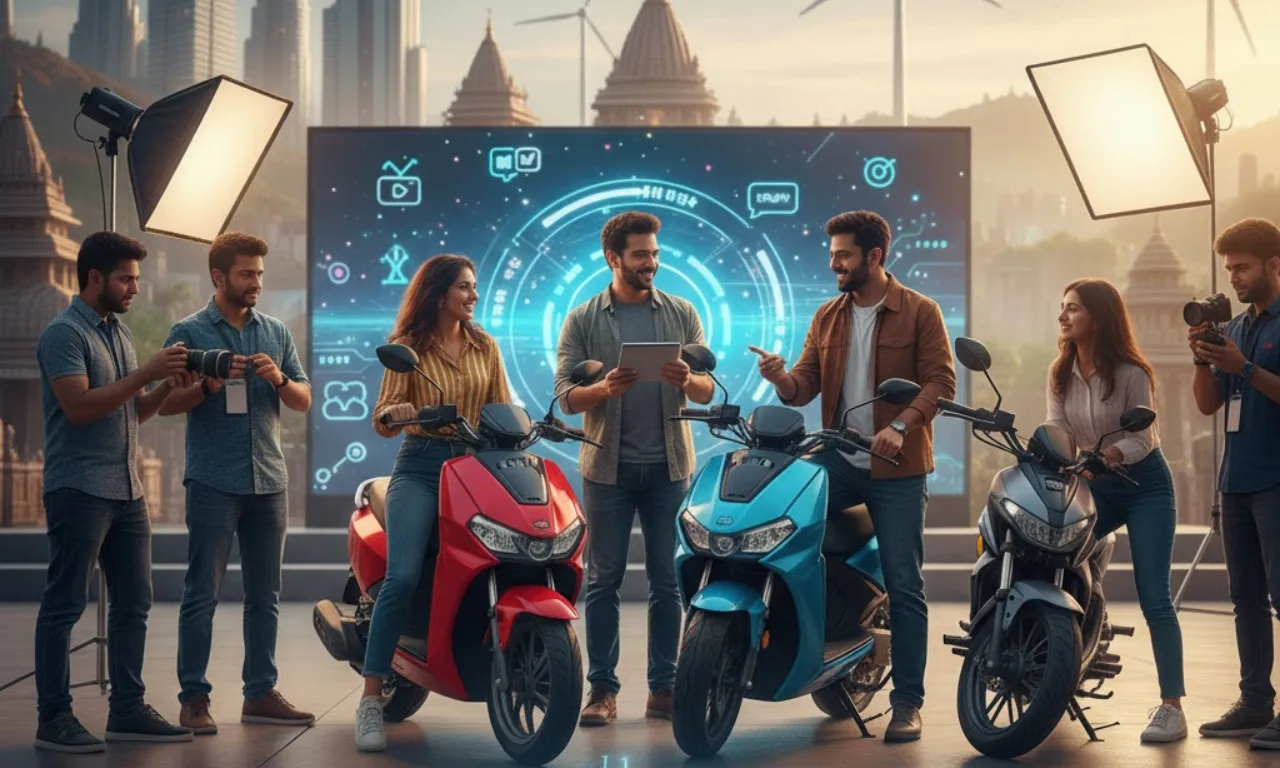
Traditional automotive PR was designed for spec sheets and launch events.
EV PR is about education, reassurance, and community engagement.
Customers today ask smarter questions:
-
Will my EV battery last beyond five years?
-
How fast can I charge at home?
-
What happens if my car breaks down in a Tier-2 city?
PR teams must answer these questions proactively through transparent communication, expert partnerships, and owned content.
For EV brands, every article, quote, or thought-leadership piece should build one message: We know what we’re doing, and we’re here to stay.
1. Anchor Your Brand in a Clear Mission
Before investing in campaigns or influencer deals, define your brand purpose.
A clear mission helps every stakeholder from investors to customers understand what makes your brand distinct.
Top EV players in India have done this well:
-
Tata Motors Electric: democratizing green mobility.
-
Ather Energy: building the future of intelligent riding.
-
Mahindra Electric: making India self-reliant in clean tech.
Your narrative should balance technology with emotion. Purpose attracts attention, but consistency builds trust.
2. Build Thought Leadership, Not Product Hype
The EV ecosystem runs on education. Publishing data-backed insights, whitepapers, and expert commentary establishes authority and attracts both media and investors.
Use real metrics charging uptime, energy savings, total cost of ownership to lead conversations about EV adoption and efficiency.
Every statistic you share reinforces confidence. Every quote from leadership reinforces credibility.
3. Choose Influencers Who Educate, Not Entertain
In EV marketing, influence is about trust transfer, not virality. Micro and mid-tier creators who actually use EVs riders, reviewers, fleet owners, and sustainability advocates build authentic engagement.
Instead of one high-budget celebrity, collaborate with 10 credible voices who speak the language of your customers.
Ask them to document real experiences: range consistency, service quality, charging convenience. Audiences trust honest imperfection more than polished perfection.
4. Build Community-Based Advocacy
The most effective PR for EVs often comes from owners themselves. Encourage early adopters to share stories, reviews, and charging experiences on social media.
Facilitate owner clubs, local meet-ups, or community drives.
These networks act as micro-media ecosystems, spreading authentic advocacy at zero acquisition cost.
Platforms like WhatsApp and Telegram can host real-time updates, discussions, and referral rewards creating an always-on engagement loop.
5. Leverage Tier-2 and Tier-3 Voices
India’s next wave of EV adoption will emerge from Tier-2 and Tier-3 cities.
These markets don’t just need product awareness—they need social validation.
Regional influencers, vernacular media, and local case studies make a bigger impact here than national campaigns.
Translate your brand narrative into local languages. Highlight nearby charging infrastructure and dealer service readiness. When the message speaks the audience’s language, credibility skyrockets.
6. Synchronize PR and Influencer Timelines
PR and influencer efforts must operate as one ecosystem.
Press stories and creator content should amplify each other rather than compete for attention.
A smart approach:
-
Launch product news via PR first.
-
Let influencers validate the story through usage.
-
Use owned channels (blog, YouTube, LinkedIn) to close the credibility loop.
When the flow is coordinated, campaigns compound instead of cannibalizing.
7. Measure Reputation, Not Just Reach
The success of EV marketing isn’t in views or likes—it’s in sentiment shift.
Track how public perception moves over time:
-
Are media stories more positive?
-
Are influencer comments more credible?
-
Are users more confident post-purchase?
AI-driven tools can now quantify tone, trust, and engagement quality.
This ensures every PR and influencer rupee delivers measurable brand equity.
8. Integrate Communication with Business Intelligence
PR is no longer separate from operations it’s part of the customer experience.
This is where platforms like **Ottopilot ** become critical.
Ottopilot is a business operating solution designed for OEMs and EV enterprises.
It helps manage dealer networks, sales teams, and corporate operations, ensuring every communication and action flows from one unified dashboard.
When marketing, dealer performance, and service quality align under one ecosystem, credibility turns into consistency and consistency into conversion.
The GrowthJockey View: From Storytelling to Systems
At GrowthJockey, we believe that EV brands don’t just need PR they need narrative systems.
Stories, data, and operations must sync seamlessly to create compounding credibility.
Through Intellsys.ai, we help EV OEMs analyze market sentiment, media visibility, and engagement quality in real time.
And with **Ottopilot *, we enable EV enterprises to align internal operations, dealer performance, and communication workflows to scale brand trust.
Together, they make reputation measurable and sustainable.
GrowthJockey is a venture architect that helps OEMs and EV startups build credibility, efficiency, and growth through data-driven storytelling.
We architect systems that integrate PR, influencer marketing, and business operations into a single, measurable growth engine.
With platforms like Intellsys.ai for analytics and **Ottopilot ** for Business operations, we empower brands to turn visibility into trust and trust into traction.
FAQs
Q1. Why do EV brands need PR and influencer strategies?
Ans. Because EVs require education and social proof. PR builds credibility while influencers humanize the ownership experience.
Q2. How can smaller OEMs compete with big players in PR?
Ans. By using regional storytelling, community-led advocacy, and consistent thought leadership over expensive media buys.
Q3. What makes Ottpilot relevant to PR operations?
Ans. It unifies dealer, sales, and corporate operations ensuring PR and customer engagement stay aligned with real business performance.
Q4. How can brands measure PR and influencer ROI?
Ans. Through sentiment analysis, earned media visibility, referral leads, and customer retention improvement.








Industries
Growth
Operations
Technology